
THE “CITY DIFFERENT” CAN BE DECEIVING. With a relaxed pace and deep roots in art and landscape, Santa Fe may seem unassuming at first, but it quickly reveals a vibrant personality. Renowned for a thriving arts scene, a rich cultural heritage and a striking natural setting, the city draws travelers who appreciate refined experiences and authentic local character.
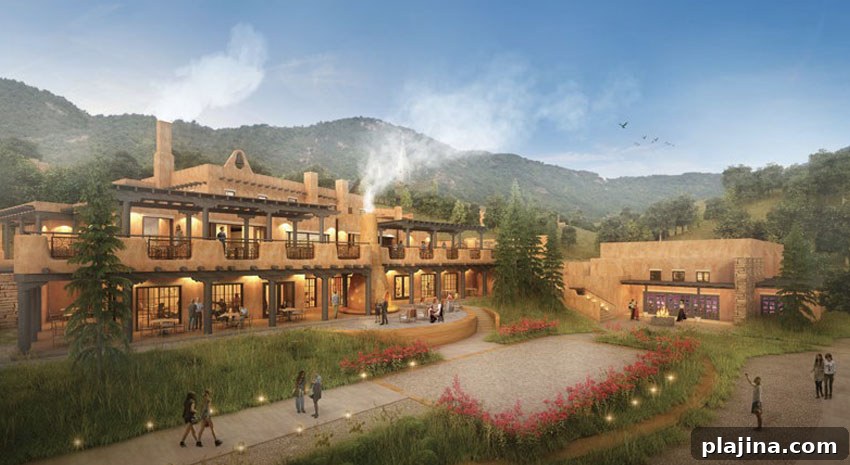
Bishop’s Lodge Resort and Spa, located just minutes from downtown, has elevated Santa Fe’s luxury offering. The property, with origins as a private retreat in the 1860s for Archbishop Jean-Baptiste Lamy, has undergone a thoughtful transformation into a high-end ranch-style resort that embraces the region’s natural beauty while delivering refined amenities and personalized service.
Managed by Auberge Resorts Collection, which oversees a group of internationally recognized properties, the 312-acre Bishop’s Lodge was redesigned by architect Nunzio Desantis and lead developer Richard Holland to blend contemporary comfort with the surrounding landscape. The renovated resort features 92 guestrooms, 12 private residences (casitas) and three upscale glamping tents, and it is positioned as an elevated destination for travelers seeking both relaxation and outdoor adventure.
Beyond a spa, pool and fitness studio, the resort offers direct access to hiking and mountain biking trails and provides horseback riding instruction and trail rides into the adjacent Santa Fe National Forest. A manmade trout habitat fed by a natural spring creates an on-site fly-fishing experience suitable for beginners and a preview for fishing in private streams and waters available to guests, according to John Volponi, general manager and vice president of Bishop’s Lodge.
The resort’s signature restaurant, Sky Fire, will showcase a menu developed by chef Dean Fearing, a leading figure in Southwestern cuisine. An artist-in-residence program further enhances the resort’s cultural offerings, giving guests opportunities to observe and learn from rotating artists who teach and display their work on the property.
A distinctive Bunk House residence—designed with 12 separate bedrooms and a shared living room—adds variety to the lodging options and makes the property well suited to corporate retreats and group stays. Meeting and event facilities include a 3,000-square-foot indoor venue that subdivides into three spaces and a 4,500-square-foot outdoor area with a stage, supporting weddings, conferences and special events of many kinds.
“What makes Bishop’s Lodge unique,” Volponi notes, “is that it is five minutes from downtown Santa Fe, so guests can enjoy the city’s amenities and, moments later, be immersed in a completely different natural world.”
Santa Fe Municipal Airport will host an AOPA Fly-In Sept. 14–15, an event that brings the Aircraft Owners and Pilots Association to communities where members live and fly. The fly-in will include seminars, exhibits, barbecues and a pilot town hall and is expected to provide a significant local economic boost while highlighting efforts to protect general aviation freedoms.
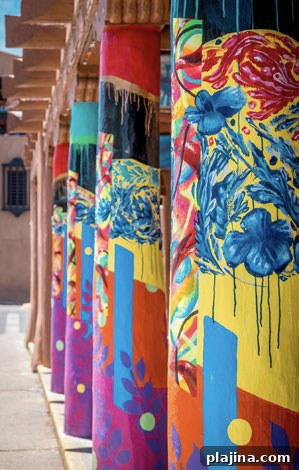
Colorful columns in the downtown plaza © SANDY MARAK | DREAMSTIME.COM
Art and creativity are central to Santa Fe’s identity. The city supports a robust arts economy—one of the largest in the country—so visitors commonly explore its many galleries, museums and cultural institutions. SITE Santa Fe, a contemporary art museum located downtown, is in the midst of its multi-year SITElines program, presenting biennial exhibitions that offer new perspectives on art from across the Americas.
The current SITE exhibition, Casa Tomada, opened in August and runs through Jan. 6, 2019. Featuring 23 artists from eight countries, the show includes work by Melissa Cody, a seventh-generation Diné (Navajo) weaver; painter Victor Estrada; and Buenos Aires native Fernanda Laguna, who works in cardboard and paper. Casa Tomada—translated as “House Taken Over”—explores ideas of property, boundaries and belonging through a range of contemporary practices.
Transportation options in Santa Fe have expanded to meet growing demand. New Mexico Black Car, for example, provides reliable ground transportation to and from the municipal airport with professional drivers and a fleet of Mercedes-Benz vehicles, addressing a previous gap in convenient local transit for visitors.
Santa Fe has long attracted both business and leisure travelers. Recent investments in hospitality, cultural programming and transportation continue to strengthen the city’s reputation as a refined, multidimensional destination.
SCENIC DRIVES
Make time for a scenic drive while you’re in northern New Mexico. The High Road to Taos is a 67-mile byway that departs Santa Fe northward on US-84/US-285 toward Pojoaque, then follows Nambe Road and winds northeast through small villages, pine forest and some of the state’s most notable adobe churches before arriving at Ranchos de Taos. The route reconnects with US-68 and returns via Española, so allow several hours to savor the route and stops along the way.
The Jemez Mountain Trail is another rewarding drive for a few hours or a full day. Leaving Santa Fe on US-84 toward Pojoaque, take State Road 502 and then head west toward Los Alamos. After approximately 10 miles take New Mexico State Route 4 toward Bandelier National Monument and White Rock to enjoy rugged scenery, volcanic rock formations and ancestral sites. At US-550 you can continue north toward Cuba to follow the full 163-mile trail or head south toward Albuquerque to conclude the drive.