
Sitting in one of Gundel’s seven private second-floor dining rooms, it was easy to imagine the restaurant as it once was a century ago, before the Nazis turned it into a stable for Wehrmacht horses and the Soviets commandeered the kitchen for the national catering ministry.
At the time, Budapest was among the fastest-growing cities in Europe: a modern, class-conscious metropolis boasting the largest parliament building in the world and continental Europe’s first underground metro line, today a designated World Heritage site.
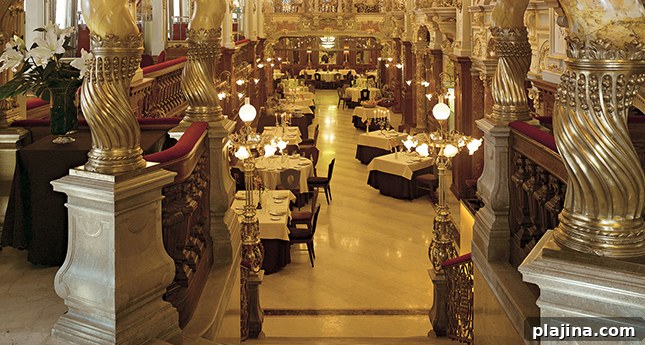
One of the city’s surviving landmarks is Café New York, built in 1894 by the New York Life Insurance Company. Under its Venetian chandeliers and marble columns, poets, painters, writers and musicians once gathered, and its eclectic interiors were compared to the palace of Ludwig II, the famously eccentric King of Bavaria.
Closed in 2001, Café New York was restored and reopened in 2006 by the Italian Boscolo Group as part of the New York Palace luxury hotel. The five-star property sits on the Grand Boulevard in Pest’s lively 7th district, a short walk from the magnificent Hungarian State Opera House, one of Europe’s most ornate and acoustically refined venues.
Though I didn’t attend an opera on this trip, I did enjoy an exceptional performance by the world-renowned Rajkó Folk Ensemble and Orchestra at the Danube Palace. Blending Roma music with traditional dance, the troupe—dressed in vivid costume—delivered an energetic, playful show that made the $27 ticket feel like a bargain. Later I wandered to Restaurant 21, a cozy newcomer tucked into the cobbled streets of the Castle District, where I savored a steaming bowl of goulash and a tender baked goose leg—classic, comforting Hungarian fare.
Still, it was Gundel that most fully transported me. Between the candlelight, the crystal, and servers in crisp white uniforms, the experience felt like a meticulous reenactment of a finer, bygone era. “No one deserves a good tomorrow who does not savor and preserve the past,” wrote George Lang, the New York restaurateur who set about restoring Gundel to its former splendor in 1992.
In his autobiography, No One Knows the Truffles I’ve Seen, Lang—born to Jewish parents in a small town south of Budapest—recounts the unlikely sequence of events that allowed him to survive a Nazi labor camp, emigrate to New York, and build a career at establishments such as the Waldorf-Astoria and the Four Seasons before consulting for international hotel groups.
Lang also tells the story of reviving Gundel’s classic cuisine: inventive preparations like sauerkraut baked with catfish and fish sausage, braided and grilled pork tenderloin, carp aspic with fogas dumplings, and the pastries that made Hungary famous. “We all agreed that we must have a dessert selection that would reduce strong men to indecisive ninnies,” he wrote.
I confess to some indecision over the dessert menu, lingering for several minutes before choosing. Then, in a single eager stretch, I devoured an apple strudel in five generous bites.
Gundel’s restoration and the broader revival of Budapest’s historic cafés and concert halls speak to a city that honors its past while engaging the present. From the grandeur of Café New York to the intimate energy of Restaurant 21 and the vibrant performances at the Danube Palace, Budapest offers visitors a layered experience: architectural splendor, culinary tradition, and living cultural expression that together make the city memorable.
Whether you come for opera, folk music, or a perfectly made strudel, Budapest’s blend of history and hospitality continues to charm. In dining rooms and concert halls alike, the city’s past is preserved and tasted, heard and seen—reminding visitors that savoring history can be as nourishing as any meal.