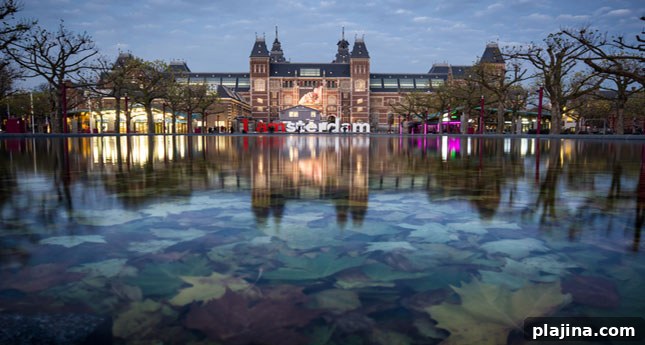
A renovation that took a decade to complete will receive a royal unveiling in a few weeks when Queen Beatrix of the Netherlands presides over the official reopening of the Rijksmuseum.
The formal ceremony is scheduled for April 13 and will begin at midday. Following the official proceedings, the museum will open its doors to the public free of charge until midnight, offering an extended opportunity to explore the refreshed spaces.
The extensive restoration of the 19th-century building includes a new entrance hall that improves visitor flow, the addition of an Asian pavilion to expand the museum’s cultural scope, and a carefully redesigned garden. These updates are integrated with conservation work and modern visitor facilities while preserving the museum’s historic character.
Inside, the Rijksmuseum houses more than 8,000 works of art and objects that trace 800 years of Dutch art and history. Masterpieces by Frans Hals, Jan Steen, Johannes Vermeer and Rembrandt van Rijn are displayed in chronological order, allowing visitors to follow the development of artistic styles and cultural change across centuries.
The reorganization emphasizes storytelling through the collection: galleries are arranged to create a clear sense of historical progression, with important works positioned to highlight shifts in technique, subject matter and social context. The museum’s conservation and curatorial teams have used the renovation as an opportunity to present works in environments that support long-term preservation while enhancing public engagement.
New visitor amenities within the restored building include improved circulation routes, updated lighting and climate control systems, and public spaces designed to welcome a broad audience. The Asian pavilion broadens the museum’s narrative by connecting Dutch history with wider global influences, presenting artworks and artifacts that reflect trade, cultural exchange and shared histories.
The garden and exterior improvements provide a peaceful setting that complements the museum’s interior experience. Landscaping was designed to respect the historical setting while offering a contemporary, accessible outdoor space for visitors to enjoy between exhibitions and events.
The Rijksmuseum’s reopening marks a milestone in the preservation and presentation of cultural heritage, combining careful restoration of historic architecture with thoughtful upgrades that support modern museum practice. The special reopening day — capped by free public access until midnight — gives visitors a rare chance to experience the renewed museum in its first hours after the ceremony.