
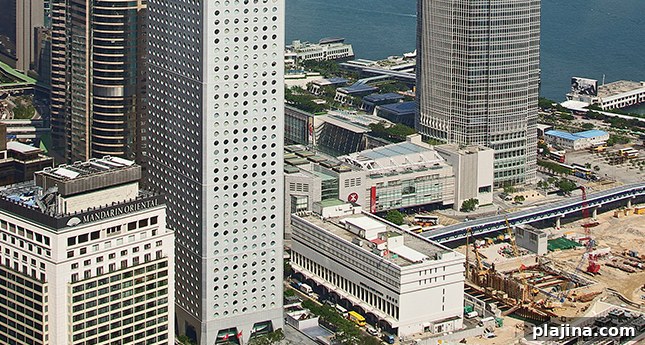
The view of Hong Kong’s Victoria Harbour from either the Kowloon Peninsula or Hong Kong Island captures the energy and contrasts of this compelling city. For first-time visitors, it presents one of the world’s most exciting cityscapes; for returning travelers, it’s a quick way to gauge what has changed while admiring the constant flow of boats, buildings and activity.
More than a decade after Hong Kong became a Special Administrative Region of China, much of the city’s character remains intact. Its vibrancy endures and the population has grown roughly 15 percent, reaching about 7 million people in just 426 square miles — an area about one-third the size of Rhode Island. The density is striking when you consider more than half of that land is country park or unsuitable for development, forcing the city to build upward rather than outward.
Among the city’s more than 7,500 skyscrapers, the International Commerce Centre (ICC) in West Kowloon now tops the skyline. At 1,588 feet with 118 floors, the ICC creates a new gateway opposite its sister tower, the 1,374-foot International Finance Centre (IFC) on Hong Kong Island. A Ritz-Carlton set to open on the top floors and a public observation deck on the 100th floor mean more people can enjoy panoramic views that were once reserved for the kites that wheel above the harbor.
Visible signs of Hong Kong’s success are abundant: bustling streets and packed high-rises, container ships and barges transporting goods for export, and the proximity of Mainland China just a short trip away. The city’s economy is driven by financial services, import/export trade, tourism and shipping and logistics — together accounting for roughly 60 percent of Hong Kong’s gross domestic product.
Hong Kong’s economic fortunes are closely tied to mainland developments. China’s strong growth has helped the city recover from recession, and recent quarters have shown renewed expansion. Policymakers and business leaders are watching for the effects of stimulus changes and potential economic bubbles, yet many local entrepreneurs see China’s expanding middle class and wealthy consumers as a major market for goods and services.
Trade has defined Hong Kong since the British established control of the island in 1841. Around the harbor from the ICC, in Tsim Sha Tsui, a vestige of that era survives: the former marine police headquarters, built in 1883 and carefully restored as Hullet House, a boutique hotel. The stone structure retains much of its heritage while offering modern comforts — daily tours, restaurants and a few guest suites. Former police cells have been transformed into the Mariners’ Rest bar, and the old stables are now a casual grill. In a peaceful courtyard that once housed carrier pigeons, Loong Toh Yuen serves Cantonese dishes in an atmospheric setting.
The hill behind the former station has been reimagined as 1881 Heritage, a faux-Victorian shopping arcade that adds another retail destination in a city known for its enthusiastic shoppers. Last year Hong Kong welcomed nearly 30 million visitors, including close to 18 million from the mainland. Shopping remains a top priority for many visitors, who come for designer goods, fashion, jewelry and even luxury apartments. Recent concerns about product quality in some Chinese-made goods have also led middle-class mainland consumers to make day trips for everyday necessities.
Taking the Star Ferry from Tsim Sha Tsui to Central, passengers see a shoreline reshaped by reclamation and new road links between the Hong Kong Convention and Exhibition Centre and the IFC. Nearby Exchange Square houses the Hong Kong Stock Exchange, one of the largest exchanges in Asia and among the most significant in the world.
The Central Business District showcases landmark architecture, from I. M. Pei’s Bank of China Tower to Norman Foster’s HSBC headquarters. In a symbolic move earlier this year, HSBC’s chief executive relocated to Hong Kong, reaffirming the bank’s historical ties to the city where it was founded in 1865. Statue Square and the 1912 Legislative Council Building speak to Hong Kong’s institutional heritage, while the government is relocating operations to a new central headquarters at Tamar on the waterfront. The new complex, set between the financial district and the People’s Liberation Army headquarters, will reflect Hong Kong’s evolving civic priorities and offer commanding views of the harbor.
Info To Go
Hong Kong International Airport (HKG) sits about 21 miles from Central. Travelers can reach downtown via the Airport Express train (about 25 minutes) or by metered taxi (roughly 30–45 minutes). Departing passengers may check in at Kowloon and Hong Kong Airport Express stations.
Diversions
With limited time, visitors can still experience highlights of Hong Kong. For an elevated perspective, the Peninsula Hong Kong offers helicopter “flightseeing” tours followed by refined afternoon tea or a multi-course meal in The Lobby of this storied hotel.
For scenic harbor views, the iconic Star Ferry remains hard to beat — an affordable, short ride between Tsim Sha Tsui and Central. The traditional red-sailed Aqua Luna junk provides photogenic evening cruises and weekend trips to Stanley, where visitors find markets, the Hong Kong Maritime Museum, historic Murray House and relaxed international dining.
Kowloon’s Temple Street Night Market is a lively patchwork of stalls selling watches, bags, clothing and kitschy souvenirs. For refined local design, Shanghai Tang offers upscale Chinese-inspired fashion, while G.O.D. (Goods of Desire) blends contemporary design with witty Hong Kong-themed products and gifts.
The Peak Tram climbs to the island’s highest point for stellar views. At the summit, the Peak Tower offers a viewing platform and shops, and nearby restaurants such as Pearl on the Peak, Café Deco and The Peak Lookout provide memorable meals. A one-hour loop walk around the hilltop is a pleasant way to stretch your legs before descending by tram, taxi or bus.
Traditional rickshaw pullers are a memory, but the Rickshaw Bus hop-on-hop-off service offers a convenient way to explore Central, Sheung Wan, Wan Chai and Causeway Bay with a day pass.
Lodging
InterContinental Hong Kong
A landmark 495-room hotel with dramatic harbor views and notable dining options, including Alain Ducasse’s Spoon, The Steak House and Nobu. Located on Salisbury Road in Kowloon.
Island Shangri-La, Hong Kong
An elegant hotel with 562 guest rooms, award-winning restaurants and complimentary Internet. The executive floor includes a rooftop garden. Found at Pacific Place in the Admiralty area.
Langham Place Hotel Hong Kong
A contemporary luxury hotel in Mongkok offering 665 guestrooms, tech-forward amenities and a 24-hour executive lounge at Club L. Conveniently located on Shanghai Street.
Dining
Café Gray Deluxe
Chef Gray Kunz presents refined European-inspired dishes with excellent value and sweeping city views from Level 49 of The Upper House at Pacific Place.
Lung King Heen
A three-Michelin-starred restaurant at the Four Seasons serving exquisite contemporary Cantonese cuisine, dim sum and tasting menus that showcase the region’s culinary depth.
La Pampa
A well-regarded Argentine steakhouse in SoHo known for high-quality cuts and a relaxed atmosphere, close to the Mid-Levels escalator.