
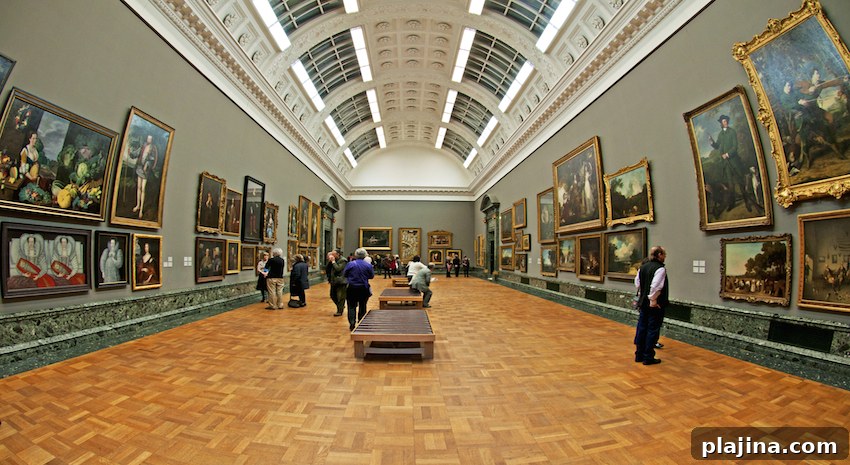
Through Oct. 1, Tate Britain in London presents “Queer British Art,” the museum’s first major exhibition devoted specifically to British artists and works that reflect queer lives and experiences from 1861 to 1967. That period is historically significant: it covers years when many queer people faced severe social, legal and cultural discrimination. The exhibition gathers photographs, drawings, paintings and films by artists such as John Singer Sargent, Dora Carrington, Duncan Grant and David Hockney, with works that explore political themes, erotic expression and everyday domestic life. A programme of related events runs alongside the displays, including a workshop at The Black Flamingo Open Studio (through June 14) and a presentation by actor, writer and LGBTQ rights advocate Alan Cumming on how the arts shape public perception and drive change (May 14).
The exhibition is structured around five pivotal queer narratives from British cultural history. One gallery highlights Sappho, anchored by Simeon Solomon’s painting Sappho and Erinna in a Garden at Mytilene, which evokes ancient themes of female desire and poetic friendship. Another section recounts the troubled relationship of playwrights Joe Orton and Kenneth Halliwell, a story that ended in a tragic murder-suicide and raises questions about creativity, fame and marginalization.
Visitors will also encounter the collaborative work and lives of Claude Cahun (born Lucy René Mathilde Schwob) and Marcel Moore (born Suzanne Malherbe), whose experiments with photography and identity challenged norms of gender and authorship. The exhibition presents the long artistic partnership of Charles Ricketts and Charles Shannon, whose shared life and creative output offer insight into queer networks in late 19th- and early 20th-century Britain. Dora Carrington appears as an unconventional and versatile figure: a painter who also worked as a potter, muralist, filmmaker and quilter, and whose varied practice included book design, inn signs and decorative tiles.
Complementing the works on display, the Tate’s exhibition page features a short, four-minute film in which actor Ian McKellen reflects on gender and sexuality from a personal viewpoint, adding a contemporary voice to the historical sweep. Together, the artworks and accompanying programme create a layered portrait of queer British lives, highlighting resilience, creativity and the complex ways artists negotiated identity and public life across more than a century.