
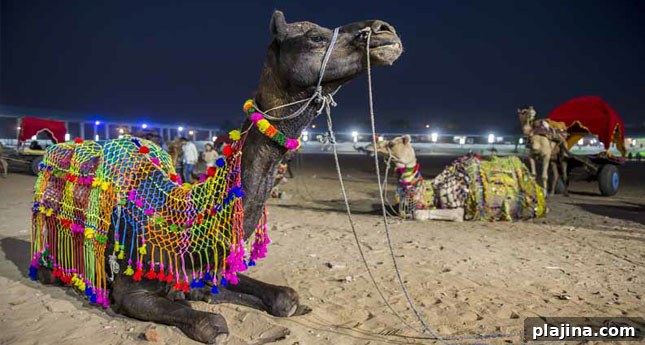
Each autumn the small town of Pushkar in Rajasthan comes alive for the annual Pushkar Fair, a colorful mix of commerce, devotion and celebration. This year’s festivities run from Oct. 30 through Nov. 6, when thousands of visitors — and countless camels, horses and other livestock — transform the normally quiet lakeside town into a lively hub of activity.
Pushkar is both a pilgrimage site and a market. Situated on the shores of Pushkar Lake and home to the Temple of Brahma, the town draws devotees who believe that bathing in the sacred waters and offering worship at the temple are acts of spiritual merit. At the same time, the fair serves as a major livestock trading event, where farmers and traders come to buy, sell and show animals.
The fair’s main attractions are built around livestock: camels, horses, sheep and cattle are displayed and traded, and many owners take great pride in grooming and decorating their animals with bells, beads and ornate trappings. Camel races, parades and beauty contests are among the most photogenic highlights, offering striking scenes of color and pageantry.
Beyond the animal fairs, the event features a wide array of cultural entertainments. Traditional music and folk dance performances fill the evening air, while puppet shows and sporting competitions add variety to the program. Rows of stalls line the streets, where local artisans sell handicrafts, textiles and regional specialties, creating a vibrant marketplace that blends practical trading with tourist browsing.
Ritual bathing is another central element of the festival. On a designated day, devotees gather before dawn on the banks of Pushkar Lake to perform prayers and purification rites. Led by priests, worshipers chant and then enter the water, following a ritual believed to cleanse the soul and bring spiritual benefit.
Whether visitors come for commerce, culture or religious observance, the Pushkar Fair offers a memorable experience. The combination of sacred rites, lively markets and traditional performances provides a unique window into Rajasthan’s heritage and rural life, making the fair a compelling destination for travelers seeking color, spectacle and meaning.