
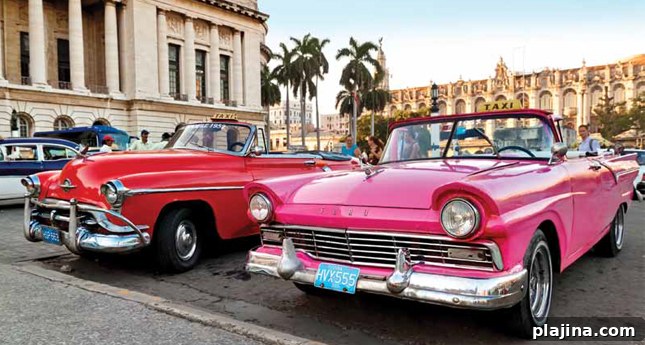
Exiting Havana’s airport, the first impression is unmistakably Cuban: a line of gleaming 1950s cars parked beneath a billboard bearing Che Guevara’s iconic face. This scene captures the island’s unique mix of old-world charm, socialist history and growing private enterprise, visible in family-run restaurants known as paladares and small businesses operating out of front yards.
When I visited on a people-to-people program, U.S. travelers could not legally bring home Cuba’s fragrant hand-rolled cigars. Since then, changes to the Cuban Assets Control Regulations announced by the U.S. administration and implemented in mid-January have relaxed some restrictions. These amendments created general licenses for many travel-related transactions within the 12 authorized categories of travel, which previously required specific licensing. Approved categories include family visits, educational activities, artistic performances, professional research and meetings, among others.
Still, because the long-standing embargo remains in place, tourism purely for leisure is not permitted for U.S. citizens, including travel routed through third countries such as Mexico or Canada. People-to-people trips organized by tour companies continue to be the primary lawful avenue for Americans wishing to visit Cuba. These structured programs require special authorization and are coordinated with Cuban authorities. They are designed to facilitate meaningful interactions with local Cubans that most visitors would not encounter independently. On my trip with the Grand Circle Foundation, our itinerary included conversations with jazz musicians, meetings with established visual artists, visits with young students at a cultural center, and playing dominoes with elders. We watched a debut performance by one of the early private contemporary dance ensembles and later shared lunch with the performers.
As relations evolve, many travel companies, airlines and hotel groups are evaluating opportunities to serve travelers to Cuba. Online travel tools such as KAYAK have added Cuban hotels and flights to search results while noting restrictions that still apply. Insurance options have been limited in the past, but companies like APRIL International began offering travel protection policies for travelers originating in the United States, including cruise passengers stopping in Havana. Until broader banking access is available, many Americans visiting Cuba rely on cash because most U.S. credit cards remain unusable on the island.
Airlines are preparing for the possibility of expanded scheduled service, though approvals from both U.S. and Cuban authorities are required. JetBlue has said it will introduce scheduled service to Cuba as soon as regulations allow; it already operates multiple weekly charter flights from Tampa, Florida, primarily carrying Cuban-Americans visiting family. Cuba Travel Services announced a second direct flight between New York (JFK) and Havana with JetBlue, adding weekend-friendly options for East Coast travelers. United Airlines has expressed intent to launch non-stop service from Newark and Houston, pending government approval. American Airlines, which runs numerous charters to Cuba from Miami and Tampa, has also stated an interest in initiating scheduled flights when legally permitted.
Hotel companies are monitoring developments closely. Marriott International has noted Cuba’s potential to complement Caribbean destinations with a distinctive cultural offering, comparing the island’s opening to the transformation seen in Eastern Europe in the 1990s. InterContinental Hotels Group emphasized that they are still assessing how renewed diplomatic relations and regulatory changes will impact the hotel sector and broader tourism market in both the short and long term.
Plaza Vieja, or Old Square, in Old Havana © Toniflap | Dreamstime.com
Preserving Havana’s architectural heritage is a major concern among Cuban planners and architects. While walking the Prado—one of Havana’s main thoroughfares—our group passed beautifully restored storefronts, yet only a few blocks away many buildings were crumbling. Mario Coyula, an architect and urban planner who was involved in the revolution, warned that unmanaged development could threaten the historic character of Old Havana if pressure to build modern tourist accommodations leads to demolition of significant structures.
Before tourism expands dramatically, infrastructure upgrades will be essential. Travelers are advised not to expect the same level of conveniences found in the United States or Western Europe. At the elegant Hotel Nacional de Cuba, a room may charm with historic details while suffering intermittent hot water; in more remote locations such as Baracoa, accommodations can be basic, sometimes in converted historic buildings that emphasize authenticity over modern amenities.
News of improved U.S.-Cuba relations has increased interest in people-to-people travel among those eager to see the island before large-scale changes arrive. Canadians and Europeans already visit Cuba in large numbers, frequently bypassing Havana for coastal resorts where European hotel groups have partnered with Cuban entities to build new properties.
Organizations that have offered people-to-people itineraries for years report renewed demand. The Grand Circle Foundation, which has operated such programs since 2011, saw a surge in bookings after high-profile announcements about re-establishing diplomatic ties. Program directors report that once the initial rush settled, these itineraries became a steady part of their offerings, but renewed public attention has made space limited.
People-to-people programs vary in focus—some emphasize urban exploration in Havana, others center on music, art and cultural history, and some highlight Cuba’s revolutionary heritage. Adventure and nature operators are also creating specialized routes; for example, some companies now include national parks and natural reserves in their Cuba itineraries to showcase the island’s ecological diversity.
Industry leaders acknowledge that the president’s executive actions moved relations forward, but lasting change that would enable unrestricted tourism requires further adjustments to U.S. law. Congress would need to modify parts of the embargo to permit full commercial tourism activities. Until then, carefully regulated people-to-people exchanges and incremental policy shifts will shape travel between the United States and Cuba.
For now, travelers who visit Cuba encounter a destination balancing preservation and change: vibrant cultural life and warm hospitality alongside infrastructure and regulatory limits that are evolving but not yet fully resolved.