
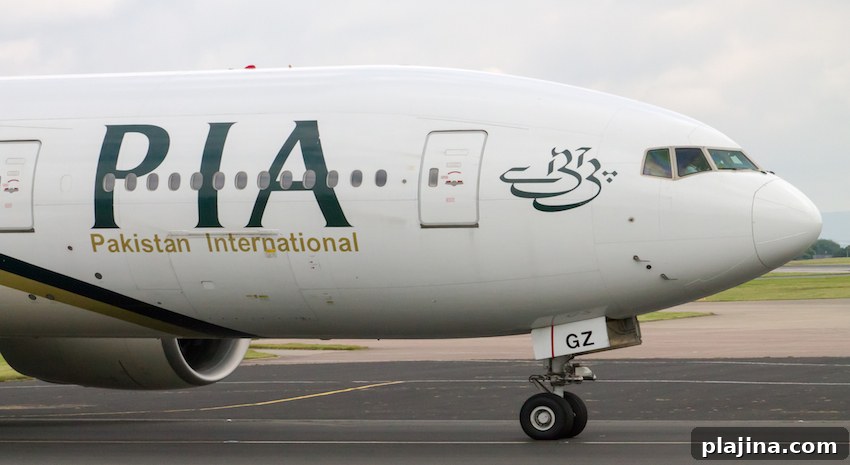
An investigation has been launched after seven additional passengers allegedly boarded a Pakistan International Airlines flight from Pakistan to Saudi Arabia in January.
According to reports, the individuals used handwritten boarding cards to gain access to the aircraft and remained standing in the aisle for the duration of the more than three-hour flight. Officials are investigating how the flight on Jan. 20 was permitted to depart with 416 passengers when the aircraft’s certified capacity is 409. The presence of extra passengers is treated as a serious air safety breach because standing passengers would not have access to oxygen in the event of an emergency.
“After takeover when I came out of the cockpit, Ms. Turab informed me that there were some extra people who [had been] boarded by the traffic staff. I also noticed some people were those who were categorically refused jump seats by me at the check-in counter before the flight,” said Anwer Adil, the flight’s captain. “I had already taken off and the senior purser did not inform me about extra passengers before closing the aircraft door.”
Captain Adil also said the official passenger manifest did not list the extra passengers and by the time the discrepancy was discovered the aircraft was already airborne. Rather than turning back, the flight continued on to Medina (MED).
Airline and airport authorities have opened a formal probe to determine how security and boarding procedures were bypassed, who authorized the additional boarding, and whether staff failed to follow established checks. Investigators will review security footage, boarding records and staff testimony to establish responsibility and identify any procedural failures.
Potential consequences for those found responsible could include disciplinary action, retraining, and operational changes to prevent a recurrence. The incident highlights the importance of strict adherence to boarding procedures, accurate passenger counts, and clear communication between ground staff and the cockpit to ensure passenger safety.
Regulators and the carrier are reported to be examining whether current safeguards—such as verification of boarding passes, use of electronic manifests, and gate-level controls—were properly applied. Until the investigation is concluded, officials say appropriate action will be taken once responsibility is determined.