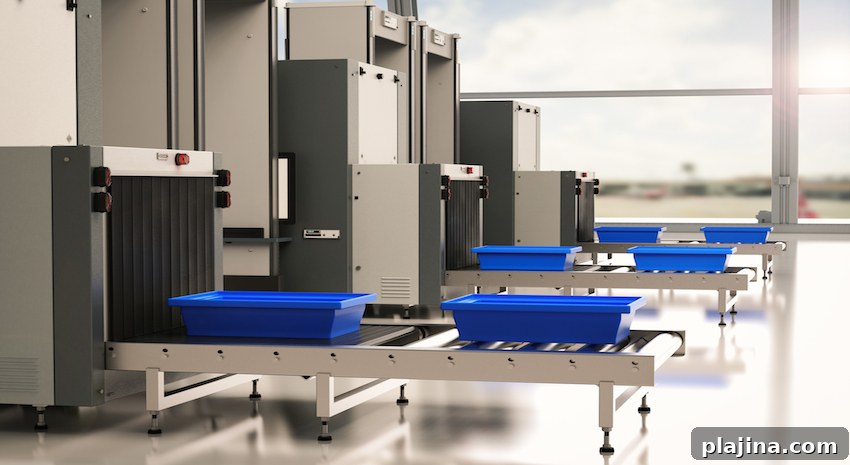
Among the many ways germs can spread between travelers at an airport, one often-overlooked route is the plastic security tray. While people rush to remove electronics, shoes and items from pockets, they frequently handle trays that have been touched by hundreds or thousands of other passengers. To reduce this risk, an airport in Ohio has implemented a technological solution designed to limit transmission from this common touchpoint.
Akron-Canton Airport partnered with a local hospital to develop and install self-cleaning security trays. Each tray is fitted with an orange padding on the base and handles. The padding contains nano-crystals that trigger a light-activated chemical reaction with cleaning power that exceeds that of traditional disinfectants such as bleach. When exposed to light, the material breaks down and neutralizes contaminants on its surface. According to the developers, the self-cleaning effect endures for up to 90 days before the padding needs to be replaced.
Since adopting these trays, the project’s creators intend to expand distribution of the same material to thousands of airports worldwide. By targeting a routine touchpoint—security trays—this approach aims to reduce the likelihood of disease transmission at checkpoints and provide an additional layer of protection for travelers, complementing regular cleaning protocols and personal hygiene practices.
Replacing or retrofitting existing trays with light-activated padding can be a practical option for airports looking to improve cleaning efficiency without dramatically increasing labor or chemical use. The technology works continuously wherever adequate light is present, which makes it well-suited for the bright environments common in security screening areas. Maintenance involves periodic replacement of the padding according to manufacturer guidelines, a simpler step than more frequent manual disinfection schedules.
While no single intervention eliminates the risk of infection entirely, reducing contamination on frequently touched surfaces is a proven strategy to lower transmission. Self-cleaning tray technology offers a passive, ongoing form of surface sanitation that supports broader public health efforts at transportation hubs. Travelers can further protect themselves by practicing hand hygiene after handling common surfaces and by following airport health recommendations.
Adopting targeted technologies like self-cleaning trays represents one tactic among many to make airports safer and healthier for the traveling public. By combining such innovations with established cleaning routines and individual preventive behaviors, airports can reduce one of the subtle but meaningful routes through which germs spread during travel.