
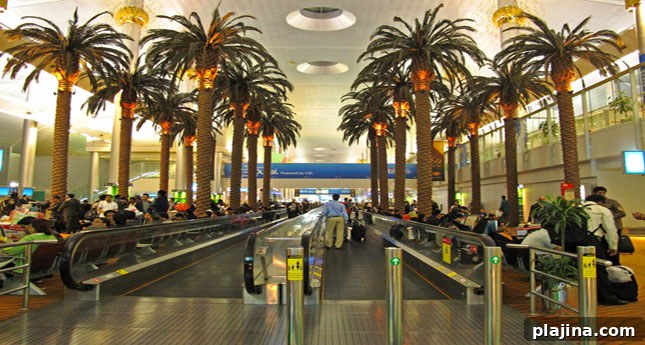
Dubai International Airport (DXB) has been identified as the fastest-growing airport in the world according to data from OAG, a leading provider of airline industry analysis. The airport’s rapid expansion reflects sustained growth in passenger and seat capacity driven by regional carriers and increasing global connectivity.
OAG’s Frequency and Capacity Trend (FACT) statistics for April 2013 reveal DXB added 757,000 more available seats in April 2013 than in April 2012. These figures also indicate that Dubai International has expanded capacity at an average rate of around 12 percent per year since 2004, highlighting a decade of consistent growth and rising airline activity.
John Grant, executive vice president of OAG, noted that much of Dubai International’s capacity increase has been fuelled by the expansion of Emirates, the Dubai-based carrier. Over the 12 months leading up to April 2013, Emirates launched nine new destinations, which translated into nearly 22,000 additional seats introduced each day—an important contributor to the airport’s overall growth profile.
The same FACT report ranked other fast-growing airports in the region and beyond. Kuala Lumpur International Airport (KUL) was listed as the second-fastest growing airport, adding 552,000 seats year over year. Istanbul Atatürk Airport (IST) ranked third, increasing capacity by 529,000 seats between April 2012 and April 2013.
These rankings illustrate broader trends in global aviation: major hub airports that serve fast-expanding carriers tend to see the largest capacity gains. Such growth supports increased route options, higher flight frequencies, and greater connectivity for passengers traveling to and from these gateways. For airports and airlines, substantial year-over-year seat growth can signal rising demand, strategic network expansion, and investment in infrastructure and services to accommodate expanding traffic.
Dubai International’s position at the top of the list underscores the city’s role as a major transit point between Europe, Asia, Africa, and the Americas. Continued capacity increases at DXB and other growing hubs reflect both airline network strategies and shifting travel patterns, emphasizing the importance of hub development in the global aviation landscape.