
For gearheads of a certain age (please don’t call us old-timers), there’s a question to savor: which racetrack is the greatest in the world?
Memories come back easily. We remember favorite televised races, afternoons in the bleachers as V8 engines screamed by in a blue haze, and the rare, unforgettable moments behind the wheel on a fearsome circuit.
Some names roll off the tongue like poetry: Laguna Seca in California with its infamous corkscrew, Spa in Belgium where the weather can be as challenging as the layout, Monza in Italy with its blistering speeds, Silverstone in England where champions are crowned, and Le Mans in France, the ultimate endurance trial.
That list is only an introduction. The debate usually ends in the Rhineland forests of western Germany, on a course that stretches roughly 13 miles with about 187 corners and brutally fast straights. “The Green Hell,” as some call it, or automotive paradise to others — the Nürburgring.
This is a racetrack from another era, when every race felt like a life-or-death gamble. A mistake in the trees could hurl a driver into unforgiving forest, and because the Nordschleife is so long, help often took minutes to arrive. Around 200 competitors have died here and many more were seriously injured.
In the 1980s a shorter, safer circuit was created and the long Nordschleife was removed from top-level series, but that didn’t end its appeal. Racers and enthusiasts still come from around the world.
For those who want to drive the famous route, the track offers public sessions: individual laps are available for about $37, four laps for roughly $137, or 25 laps for around $710. You can take your own car or use one of the local rental services that specifically include the Nürburgring in their contracts.
If you prefer the thrill without the pressure, several “taxi” services will put you in the passenger seat with an experienced race driver — often in high-performance cars — with hot-lap prices starting near $341.
When gearheads discuss cars and circuits there’s an undercurrent of nostalgia. The older machines sounded louder, felt more dramatic, and tracks once demanded more from both man and machine. The yearning to turn back time is strong.
In effect, for three days each summer that yearning becomes real. From Aug. 8–10, the sights and sounds of a glorious past are revived at the Nürburgring as more than 500 drivers compete in cars spanning seven decades. The Oldtimer Grand Prix is an unapologetic celebration of racing’s pioneering years — before modern safety regimes and emission rules reshaped the sport.
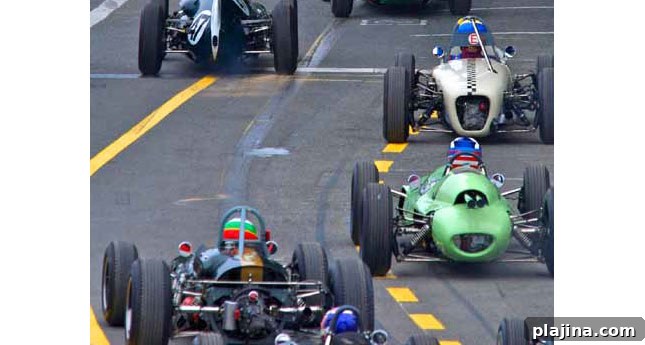
On race day, 1920s Bugattis sit alongside 1930s Chryslers and Alfa Romeos, while Ferraris and Jaguars from the 1960s charge toward the first corner. Classic Formula 1 machines roar back to life, their engines and chassis reminding spectators what racing once felt like.
Why does that spectacle move grown men to tears? It isn’t mere nostalgia. When these historic cars line up and rev, there’s a deeper message. Whether we’re behind the wheel or watching from the grandstands, there’s a sense of shared purpose between drivers and machines.
We may be called old-timers, but at the Nürburgring, as the engines scream and the old machines carve through the trees, it feels possible once more to believe in a long, thrilling road ahead.