
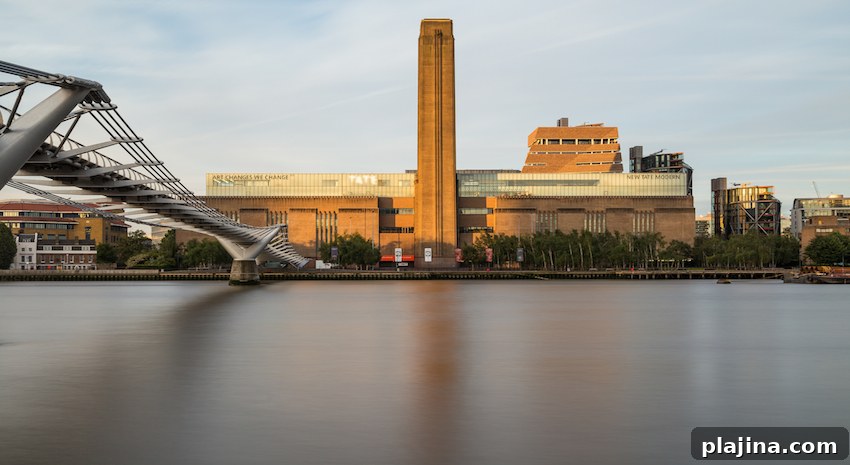
Nov. 23–April 2, 2018, the works of Italian painter Amedeo Modigliani will be on view at the Tate Modern in London. Spanning the artist’s career from his arrival in Paris in 1906 through his later challenges to the era’s strict artistic mores and conventions, the exhibition brings together close to 100 works. A dedicated section highlights Modigliani’s nudes, widely regarded as some of his most notable and compelling paintings. When these works were shown at the artist’s only solo exhibition in 1917 at Berthe Weill’s Paris gallery, they provoked an outcry over indecency that led to police intervention — and ultimately helped spark a new chapter in modern figurative painting.
The exhibition features important loans from major museums, including Seated Nude (1917) from the Royal Museum of Fine Arts Antwerp and Reclining Nude (c. 1919) on loan from the Museum of Modern Art, New York. Visitors will also encounter a selection of lesser-known works from Modigliani’s sculptural period, such as early carvings made before World War I, alongside paintings showing the influence of Paul Cézanne, Henri de Toulouse-Lautrec and Pablo Picasso.
In partnership with HTC VIVE, the show includes a virtual reality experience that uses archival materials and immersive technology to recreate Modigliani’s Paris. This virtual environment offers visitors a chance to explore the artist’s world and gain a deeper sense of the places and atmospheres that shaped his creative development.
Curators have arranged the display to trace Modigliani’s artistic evolution: from his early Paris years, where he absorbed contemporary currents and experimented across media, to his distinctive late style characterized by elongated forms, simplified features and a hauntingly direct approach to portraiture and the nude. The selection balances well-known masterpieces with intimate, lesser-seen pieces, providing a rounded picture of an artist who negotiated between tradition and innovation.
Beyond the celebrated nudes, the exhibition highlights Modigliani’s portraits and figure studies, which reveal his sustained interest in human presence and psychological depth. The combination of paintings, drawings and sculptures illustrates how Modigliani moved between materials and methods, adapting influences from his contemporaries while forging a recognizable visual language. The show also considers the social and artistic circles that surrounded him in Paris, offering context for his friendships, collaborations and the critical reception that followed his lifetime.
Overall, the Tate Modern presentation aims to provide both newcomers and long-time admirers with a comprehensive, engaging view of Modigliani’s oeuvre. By uniting major loans, rare works and an innovative virtual recreation of his Paris, the exhibition seeks to illuminate the artist’s creative process and the cultural landscape of early 20th-century Europe, underscoring Modigliani’s enduring impact on modern art.