
During the spring and summer months in Denmark, Copenhagen’s city center can become extremely busy with music concerts, museum exhibitions, dining hotspots and MICE events. For visitors seeking a quieter alternative, the relatively new North Harbour district—Nordhavn—offers a relaxed and appealing option away from the crowds.
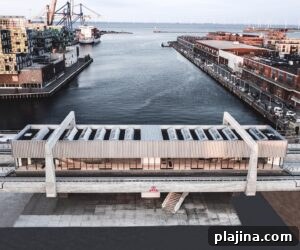
The transformation of Nordhavn from an industrial and warehouse area into a modern waterfront neighborhood is part of Copenhagen’s gradual expansion toward the sea. Conceived as an urban archipelago, Nordhavn is planned as a series of dense, diverse neighborhoods in the northern part of metropolitan Copenhagen, designed to grow one island at a time.
© Filipipi Phucko
Rather than dictating every detail, the Nordhavn masterplan provides a flexible framework intended to inspire future urban development. This adaptive approach addresses a key challenge in city planning: meeting present-day needs while anticipating environmental pressures that will shape the future.
Much of Nordhavn’s identity comes from its use of reclaimed land and water. By subdividing the harbor into intersecting canals and basins, planners have created new islands of varying sizes. Water surrounds and threads through the area, producing human-scale neighborhoods that retain a strong connection to the sea and reflect the district’s maritime heritage.
© Daniel Rasmussen
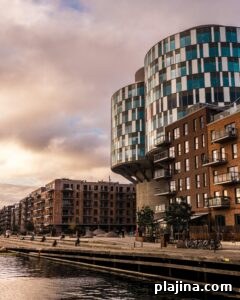
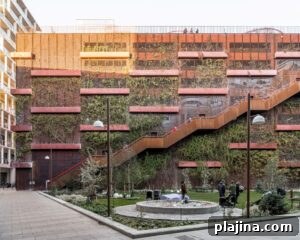
Small, man-made islands such as Kronløbsøen have emerged throughout the development. The Århusgadekvarteret neighborhood welcomed its first residents in 2015 and has since grown into a lively district with cafés, restaurants, shops and programming from the Danish Architecture Center. The urban grid in Nordhavn is deliberately oriented to capture sunlight and minimize wind exposure, creating comfortable, livable public spaces.
In just a few decades, Nordhavn has evolved from an industrial harbor into a vibrant waterfront area accommodating around 40,000 residents and providing workspace for a similar number of employees. Its origins trace back to the late 19th century, when Copenhagen extended the harbor northward to support growing trade and industry. Today, the neighborhood blends modern housing—often converted from mid-century warehouses—with floating workshops, waterside sports facilities and new dining venues, making it an ideal area to explore by rented bicycle.
The district has also seen new hotel development. Hotel Frihavnen opened in June 2025, offering 28 rooms that combine functional design with a minimalist aesthetic. Audo House operates as a hybrid boutique hotel, restaurant, café, concept store, library and event space, adding cultural and hospitality variety to the area.
For an unconventional stay, The Krane repurposes a former industrial coal crane into an intimate, high-design retreat for two. Housed in the crane’s former engine room, the room features modern Danish furniture and access to two terraces with sweeping views of the old industrial harbor, a local sailing club and the Øresund Strait.
© Rasmus Hjortshoj @coaststudio
Dining and cultural life are thriving as well. NordhusCPH, run by a young cultural collective, blends communal dining with concerts, workshops and events. Communal dinners are served Thursday through Saturday, featuring colorful plates made from fresh, seasonal ingredients inspired by global culinary traditions. As part of their sustainable approach, a portion of each bill supports Foodprint Nordic’s work on regenerative agriculture and sustainable food systems.
Nordhavn is highly bikeable, and many residents use bicycles for daily travel. Public transport is convenient too: the city’s Metro line connects Copenhagen Central Station with Nordhavn Metro Station in about 15–20 minutes on the M3 or M4 lines, with frequent departures that make the district easy to reach from the city center.