
Ever wanted to discover the next hot spot before anyone else and get in on the ground floor? A brief window for that kind of opportunity may have just opened — literally — in the Arabian Sea.
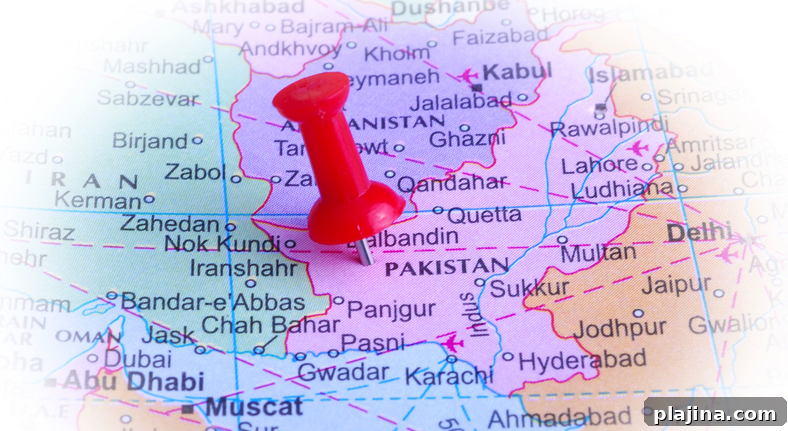
On Sept. 24, a 7.7-magnitude earthquake in southwestern Pakistan produced a newly formed island off the coast of Gwadar. Pakistani researchers who sampled soil from the formation have warned local fishermen to avoid the area for now, since the island’s stability and long-term viability remain uncertain.
“There are stones and mud,” said Mohammed Danish, a geologist with the Pakistani Navy, speaking to Pakistan’s GEO TV. “Gases are still emitting.” The presence of gases and loose material suggests the feature could be unstable.
People who visited the site reported the island measures roughly 100 feet wide by 25 feet long, with an average elevation near 60 feet. Those dimensions, however, reflect a temporary accumulation rather than durable, consolidated rock.
Seafloor eruptions that produce ephemeral islands are known to occur in this region. “For earthquakes in this part of the world, along the coast of Pakistan and Iran, it’s not an uncommon phenomenon,” said Bill Barnhart, a research geophysicist at the U.S. Geological Survey. He cited similar islands that briefly appeared after seismic events in 2011, 2001 and 1945 before sinking back beneath the waves.
“These islands disappear because they’re large piles of mud and sediment that erupt onto the seafloor and rise above sea level,” Barnhart explained. “With storms and normal wave action they get washed away pretty quickly. They’re not necessarily made of hard rock. We expect this one will likely be gone within a couple months.”
Whether viewed as a rare, short-lived curiosity or a brief chance to explore new shoreline, the emergence of this island is a striking reminder of the dynamic forces at work along plate boundaries and coastal margins. For now, authorities urge caution: the loose sediments, ongoing gas emissions and potential for rapid erosion make the formation unsafe for casual visitors or fishing operations.
As researchers continue to monitor the site, studies of its composition and behavior will help clarify how long it might persist and what hazards it poses to nearby communities and marine traffic. Even if it proves transient, the event adds to scientific understanding of how seismic activity can reshape coastlines and briefly create new land above the sea.