
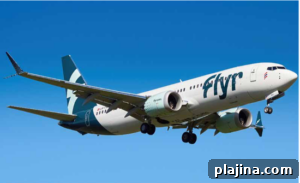
PHOTO: © ADRIAN OLSTAD
The landscape of startup airlines has expanded rapidly in recent years. A spring 2021 report from the IBA, a leading aviation data and advisory consultancy in England, recorded more than 130 startup airlines planning to launch by the end of 2022, with many initiatives across the Americas and Europe. That wave followed a string of successful 2021 launches such as U.S.-based Avelo Airlines and Breeze Airways, and Norway’s Flyr. The IBA attributed part of the boom to aircraft and crew availability after the pandemic grounded large portions of global fleets.
“Flyr started up during the pandemic, when aircraft were available at an affordable price and at a time when it was easy to recruit the most competent people within the industry,” said Anita Svanes, vice president of Communications, Public Affairs & Sustainability at Flyr.
By spring 2022 the center of new airline activity had shifted toward the Asia Pacific region: IBA reported that 63 percent of startups planned to begin operations in 2022 and 2023 there, a major increase compared with the previous year. New carriers in that region include Greater Bay Airlines in Hong Kong and Akasa Air in India.
Greater Bay Airlines launched in July 2022 and operates routes to Bangkok (BKK) and Taipei (TPE), with plans to add Tokyo (NRT). Akasa Air, backed by high-profile investors and former Jet Airways executives, operates a large fleet of Boeing 737 MAX aircraft.
IBA’s analysis showed the share of startup airlines in the Americas falling from 23.4 percent in 2021 to 7 percent in 2022, while Europe’s share declined even more steeply. Still, indicators in the United States point to opportunities for new, lower-cost carriers: they often succeed by offering fares below those of legacy operators while serving underserved markets.
A December 2022 report from Airlines for America (A4A), which represents major U.S. commercial airlines, noted that low-cost and ultra-low-cost carriers continue to expand their domestic networks, bringing more affordable options to a growing number of markets.
“Robust competition in the U.S. airline industry has generated unprecedented levels of affordability and accessibility, benefitting the customer at every level,” said Marli Collier, communications manager at A4A.
Some startup carriers have become notable success stories. Breeze Airways, which planned to launch in 2020 but delayed until 2021, was founded by JetBlue creator David Neeleman. Breeze positions itself as a customer-friendly low-cost option focused on flexibility and convenience.
“We were excited about launching a brand from scratch that people really loved,” said Lukas Johnson, chief commercial officer at Breeze Airways. “One of the key things we focused on was the flexibility that people want when they travel. That’s why you can change or cancel your flights within 15 minutes of departure for no charge, which is wildly popular.”
Breeze also markets itself as the first U.S. carrier to offer free family-assigned seating. The airline serves dozens of cities across more than 100 routes, including nonstop services such as San Francisco to Charleston and other point-to-point connections that bypass traditional hubs.
Houston-based Avelo Airlines is another example of a startup that found a distinct niche. Founded by Andrew Levy, a cofounder of Allegiant Air, Avelo focused on serving smaller, underserved airports with low fares while operating full-sized jets.
“Creating a long-lived airline from scratch is extremely difficult,” said Travis Christ, head of marketing at Avelo. “You’ve really got to have almost a magical business plan. There are examples that succeeded — ValueJet evolved into AirTran and later was acquired by Southwest; JetBlue had its own successful formula.”
Christ emphasized that a clear, sustainable model is essential. Some carriers that combined low fares with small aircraft or premium service found the mix unsustainable. Recent failures such as Aha! Airlines and its operating partner ExpressJet, which filed for bankruptcy in August 2022, highlight the risks: they cited weak demand and high costs, especially fuel, and questioned the economics of operating smaller aircraft with limited seat counts.
Avelo’s strategy prioritized operating from convenient secondary airports like Burbank (BUR) instead of larger hubs such as Los Angeles International, serving communities that previously experienced high fares. The carrier targeted markets such as Eureka, Santa Rosa and Redding, and expanded to East Coast airports like New Haven (HVN) and West Palm Beach (PBI), focusing on leisure and visiting friends and relatives traffic.
“We were able to serve small, convenient airports at low fares they’d never had before,” Christ said. “Big jets, high quality, reliable service, and our own maintenance capabilities—combined with selective outsourcing where needed—have made the formula work across the country.”
Startups overseas have also targeted demand for domestic and regional travel. Canada Jetlines launched in September 2022 with service between Toronto Pearson and Calgary, operating Airbus A320 aircraft and aiming to expand its fleet in the coming years to serve leisure routes to the United States, the Caribbean and Mexico.
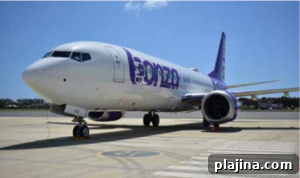
© BONZA
In Australia, Bonza—founded by former Virgin Blue executive Tim Jordan—aims to stimulate new domestic tourism markets. Jordan noted that most of Bonza’s initial routes serve regional centers that previously lacked connections, offering low fares intended to make travel more accessible across the country.
“Our commitment to low-cost flights will allow more Aussies to travel domestically, making us an airline for the many, not the few,” Jordan said, emphasizing that the carrier’s network focuses on routes not currently served by other airlines or low-cost operators.
Jordan also pointed to growing local demand: research and industry data indicate many Australians want to explore their own country more than before the pandemic, and population growth in regional centers supports Bonza’s plan to connect communities and stimulate new tourism markets. At press time, the airline was still finalizing regulatory approvals and a start date.
Norway’s Flyr targets leisure travelers and some business traffic, offering affordable connections between Norwegian cities and major European destinations such as Paris, Rome, Brussels, Berlin and Barcelona. Flyr’s initial focus is on domestic routes, with the intent to increase frequencies and expand into business segments over time.

PHOTO: © FLY ATLANTIC
On the transatlantic front, Northern Ireland’s Fly Atlantic plans a low-cost long-haul operation based at Belfast International Airport, offering direct flights to North America and a range of British and continental European destinations.
“We’re launching in 2024, and circumstances may have changed a little by then, but at a time when recession is looming in a number of major economies, I think air travel will be dominated by a drive to find value for money,” said Andrew Pyne, CEO of Fly Atlantic. He expects many passengers to trade down from full-service airlines to lower-cost alternatives, particularly on North Atlantic routes.
Fly Atlantic intends to stimulate inbound tourism to Northern Ireland from North America and capture traffic between Europe and North America by offering better value. The airline’s growth plan envisions a fleet of about 18 aircraft and service to roughly 35 destinations by 2028, carrying some 4.5 million passengers annually, split about evenly between European and North American routes.
Like many low-cost startups, Fly Atlantic is positioning itself to serve travelers who are frustrated by high fares and mediocre service on legacy carriers, offering a focused, value-driven alternative in the evolving post-pandemic market.