
Cosmopolitan Montréal, where most residents speak both French and English and effortlessly switch between the two, has an ever-present current of energy beneath the surface.
The city is the most bilingual metropolis in North America and, after Paris, one of the world’s largest French-speaking cities. Located on an island in the St. Lawrence River, Montréal is home to roughly 1.7 million people. Named for Mount Royal at its center, the city is compact and easy to navigate.
Travelers arrive at Montréal–Trudeau International Airport, which serves more than 70 international and 25 domestic destinations and handles numerous U.S. and international flights daily. Downtown is less than 20 minutes away by car. Once in the city, visitors find public transit, walking and cycling practical and efficient options for getting around.
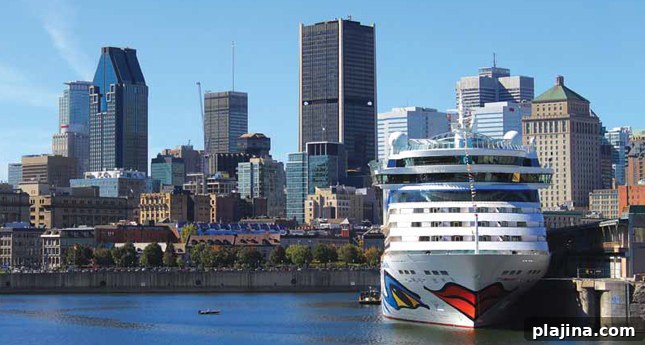
Montréal’s position on the St. Lawrence River makes it the closest major port to North America’s industrial heartland, supporting a busy container port on the Eastern Seaboard and an active marine terminal that welcomes thousands of cruise passengers each year. Major cruise operators call at the terminal, contributing to the city’s maritime activity.
As a center for civil aviation, Montréal hosts the headquarters of several international aviation organizations, reinforcing its global connections in the industry.
The city attracts high-tech firms and film productions alike. Montréal regularly secures dozens of special effects contracts each year for major films, and it hosts around 50 modern film studios, including one of North America’s largest, Studio H at Mel’s Cité du Cinéma just minutes from downtown.
Old Montréal’s cobblestone streets and historic architecture have served as backdrops for films such as The Curious Case of Benjamin Button, X-Men: Days of Future Past, 300 and Life of Pi. The city is also gaining renown for its video game industry and visual effects expertise; many of the industry’s animation and effects tools were developed in Montréal.
In May 2013, École de technologie supérieure and McGill University launched the Quartier de l’innovation, or Innovation District. Known as the QI, this neighborhood functions as a living laboratory to encourage collaboration among researchers, companies, citizens and cultural organizations.
Route 27 food truck outside the Olympic Stadium © Martial Genest | Dreamstime.com
Griffintown is one of the city’s fastest-changing neighborhoods. Once an industrial area along the Lachine Canal, it’s undergoing steady development and adaptive reuse of warehouses. Trendy restaurants such as Le Richmond and Grinder are drawing crowds with craft beers and artisanal menus, while boutiques and galleries are opening rapidly. Street food is now part of Montréal’s culinary scene after a long ban was lifted in 2013; a pilot program in 2014 launched dozens of food trucks, and the presence of mobile vendors continues to grow.
Tourism is a major economic driver. In Canada, Montréal ranks second only to Toronto in visitor numbers. In 2014 the city welcomed roughly 9.2 million tourists, accounting for a significant share of national arrivals. Tourism spending and hotel occupancy rose that year, reflecting growing interest from leisure and business travelers alike.
Conventions and conferences are important to Montréal’s visitor economy. For several years the city has ranked highly for hosting international events in the Americas. The Palais des congrès, Montréal’s convention center, welcomed large numbers of delegates and continues to draw business tourism, generating substantial economic impact through room nights and associated spending.
Colorful interior of Le Palais des congrès de Montréal © Pierre Leclerc | Dreamstime.com
Montréal is also a city of festivals and celebrations, with more than 100 events each year. Summer highlights include the Festival International de Jazz de Montréal, Just for Laughs, FrancoFolies and the Canadian Grand Prix. Winter brings MONTRÉAL EN LUMIÈRE, a festival of light, food, arts and performance that turns the cold season into a festive occasion.
Things to Do in Montréal
The city is made up of distinct quartiers, from historic Old Montréal with its Notre-Dame Basilica and cobblestone streets to the creative, bohemian Plateau Mont‑Royal with its casual cafés and independent shops. Walking and cycling are among the best ways to discover neighborhoods; Bixi, the city’s bike-share service, provides convenient rental stations around town.
For a broad orientation, hop-on, hop-off tourist buses operate across key districts, stopping at attractions such as the Latin Quarter, Old Montréal and Mont Royal lookouts. These tours offer an easy way to see the city over a day or two.
Mont Royal is the city’s green heart. Designed by Frederick Law Olmsted, who also planned New York’s Central Park, this urban park and nature reserve is a favorite spot for hiking, biking, picnics and relaxing outdoors.
Notre-Dame Basilica of Montréal exterior © Brianglobal | Dreamstime.com
Montréal’s architecture blends the old and the new. The city was the first in North America designated a UNESCO City of Design and features landmarks such as the Notre‑Dame Basilica, built in the early 19th century. The city’s cultural life mixes tradition and modern creativity, from major religious and historic sites to contemporary festivals and public art.
Nightlife in Montréal is lively, with many bars open until the early hours and an abundance of outdoor terraces in warm weather. For a concentrated nightlife experience, Saint-Laurent Boulevard offers dozens of bars, lounges and clubs between Sherbrooke Street and Mont‑Royal Avenue.
CHECKING IN WITH ERIC FORNIER
Partner in the Moment Factory
Why should business travelers come to Montréal? What makes the city unique?
Montréal continually reinvents itself. Innovation is embedded in the city through universities, research, cross-industry collaboration and a steady influx of talent. Combined with a bilingual, cosmopolitan culture and a compact urban setting, these strengths make Montréal attractive for business travelers.
What is the most exciting thing going on in Montréal right now?
The city celebrates a long history of major events like Expo 67 and the 1976 Olympics. Looking ahead to milestones such as the city’s 375th anniversary, many cultural and public projects are planned across sectors.
What’s the next hot neighborhood?
Griffintown stands out as an evolving neighborhood where more people are choosing to live and embrace urban life.
What places do you recommend for visitors in their free time?
It depends on the season: enjoy terrace dining in May, hike Mont Royal in autumn for the foliage, join winter festivals in Old Montréal, or bike through the city when the weather permits.
Montréal lights up the night during the annual winter festival. © Mario Beauregard | Dreamstime.com
Montréal Info to Go
Montréal–Trudeau International Airport (YUL) is about 20 minutes by car from downtown. Ground transport includes the 747 Express bus, multiple taxi services with set fares, shuttle options and rental cars. Public transit and other shared services make arriving and moving around the city straightforward.
Montréal: Just the Facts
Time Zone: GMT -4 (EDT)
Phone Code: Country code: 1; city codes: 438 or 514
Currency: Canadian dollar
Entry/Exit Requirements: U.S. citizens require a valid passport
Official Languages: French and English
Key Industries: Aerospace, pharmaceuticals, biotechnology, medical technology, information and communications technology
Where to Stay in Montréal
Loews Hôtel Vogue Located in downtown, this nine-story luxury hotel offers European-inspired service and amenities, including a Parisian-style bistro. 1425 rue de la Montagne
Ritz-Carlton Montréal A century-old icon of luxury featuring fine dining and upscale facilities, including a rooftop terrace and indoor pool. 1228 Sherbrooke St. W.
Sofitel Montréal Golden Mile With Victorian accents and a central location beside McGill University and the Montréal Museum of Fine Arts, this hotel combines elegance and convenience. 1155 Sherbrooke St. W.
Restaurants in Montréal
Balsam Inn A popular downtown spot known for creative cocktails, small plates and an open kitchen featuring a brick oven. 1237 rue Metcalfe
Restaurant Europea Chef Jérôme Ferrer crafts refined tasting experiences in a converted Victorian townhouse, backed by attentive service. 1227 rue de la Montagne
Le Richmond Located in vibrant Griffintown, Le Richmond offers northern Italian–inspired cuisine with a focus on authentic ingredients. 377 Richmond St.