
The principality of Monaco is barely larger than half of New York’s Central Park. Yes — the entire country, from its elegant casinos to its sun-drenched promenades, would easily fit within the green space of Manhattan and still leave room for recreation.
Cradled between the steep Maritime Alps and the Mediterranean Sea, Monaco stretches roughly three miles in length and is never more than a mile across. Nearly every buildable inch has been developed. This compact state contains some of the world’s most valuable real estate, and at its heart lies Monte Carlo, a district synonymous with luxury, glamour and refined leisure.
The ruling Grimaldi family has carefully cultivated Monaco’s allure, exploiting its status as a self-governing enclave on the French Riviera. Favorable tax laws draw the wealthy and famous. An iconic casino attracts high rollers. The harbor is a magnet for superyachts. Upscale visitors crowd the palace-like hotels and spend freely in exclusive boutiques. Even the narrow, winding streets serve as a spectacular stage for motor racing.
Given Monaco’s tiny size and steep terrain, its deep connection to motorsport might seem improbable today. Yet the relationship goes back to the earliest days of the automobile rather than being a modern marketing ploy to boost tourism in quieter months.
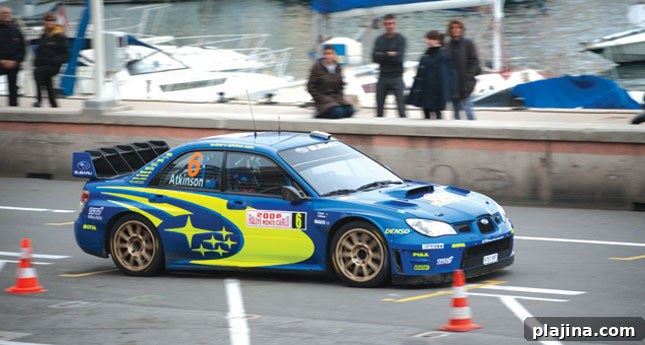
The principality’s passion for fast cars is nearly as old as the industry itself. The Automobile Club of Monaco dates to 1890, predating the first American automobiles by several years. From 1894 onward, competitions featuring motorcycles and automobiles were organized, and in January 1911 the famed Monte Carlo Rally was launched.
Affectionately called the Monte, the event traditionally began simultaneously in several European cities, with all routes converging on Monaco for a combined finish. For many early entrants, simply reaching the principality was as challenging as any contest: the journey tested machines and drivers against harsh weather and rugged roads, culminating in one of the toughest stretches — the Col du Turini.
The Col du Turini, a mountain pass in the southern Alps, is notorious for its hairpin turns and steep drop-offs. Tackled in winter during the rally’s famed “Night of Long Knives,” the pass becomes a dramatic trial under darkness, where piercing headlamps cut through freezing air and relentless snow.
This month marks the 82nd edition of the Monte Carlo Rally, holding a place on the World Rally Championship calendar after the event resumed following interruptions during the world wars. The Monte serves as the opening round of the 2013 World Rally Championship, and two weeks after the professionals race state-of-the-art cars, a colorful procession of historic rally cars arrives for the Monte Carlo Historic Rally, converging from Glasgow, Reims, Copenhagen, Warsaw and Barcelona.
Enthusiasts insist the historic rally preserves the authentic spirit of the Monte. Like the earliest editions, the event emphasizes endurance and navigation over outright speed, testing both driver and machine in a manner closer to the rally’s origins.
On Feb. 1, the last of the vintage entrants will reach Monte Carlo, adding to the city’s characteristic soundtrack: the clink of casino chips, the spin of roulette wheels, the gentle lap of the Mediterranean against luxury yachts, and the deep, thrilling roar of engines as they accelerate along the principality’s narrow streets.