
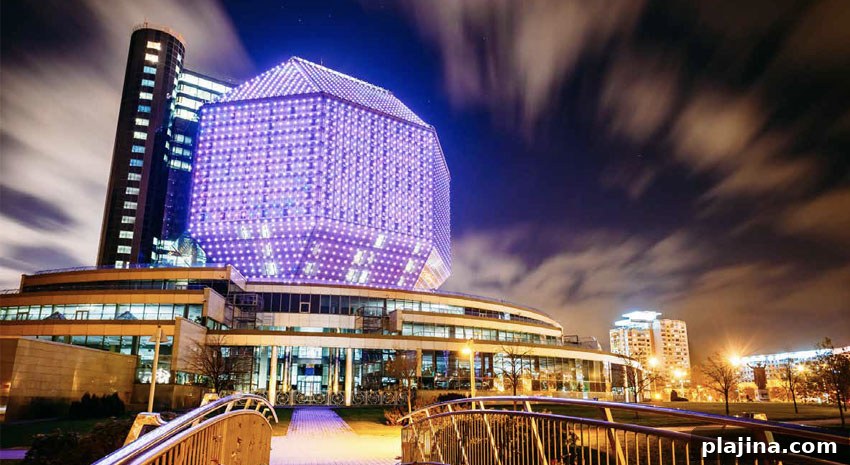
A pristine city of broad boulevards where monumental government buildings sit alongside carefully restored shops and churches. Friendly residents stroll along the winding riverbanks, pausing at cafés and bars to share borscht and sample local vodka. The city is dotted with museums, concert halls, parks, and two remarkable rounded buildings that house the Bolshoi Ballet and the Circus. These qualities describe modern Minsk, the capital of Belarus, which is increasingly emerging as an appealing destination for visitors.
Stability today offers relief to a nation repeatedly ravaged by war. Situated near the center of Europe, Belarus has long been a buffer zone and battleground: it resisted Mongol and Tartar invasions, endured fighting during the War of 1812, and suffered devastating battles in both world wars. During World War II Minsk was occupied by the Nazis, and combat between German forces and the advancing Red Army reduced much of the city to rubble.
After the war Minsk became part of the Soviet Union and, as the fourth-largest city in the U.S.S.R., was selected by Stalin to showcase Soviet achievement. Planners rebuilt the city from the ground up, lining broad avenues with imposing public buildings and high-rise apartment blocks in the Stalinist Empire style. Many historic landmarks were reconstructed in traditional styles, so visitors occasionally discover Gothic-style facades that, while faithful in detail, are much more recent than they appear.
Although the legacy of Soviet oppression means Stalin’s name is rarely mentioned, the buildings from that era remain. Unlike some faded cities elsewhere in the former U.S.S.R., Minsk’s grand interiors are generally well maintained. Theatergoers gather in vast marble foyers, shoppers browse the updated GUM department store, and people wander through the polished corridors of modern shopping malls. Visitors often remark on the city’s cleanliness.
Russian is still widely spoken, and Alexander Lukashenko has held power for decades. However, while Belarus retains strong ties to Moscow, Minsk—sometimes labeled “Europe’s last dictatorship”—has also shown gradual movement toward a more outward-facing approach. Preparations for international events like the 2014 World Hockey Championships and the 2019 European Games helped introduce tourist-friendly features that continue to benefit travelers.
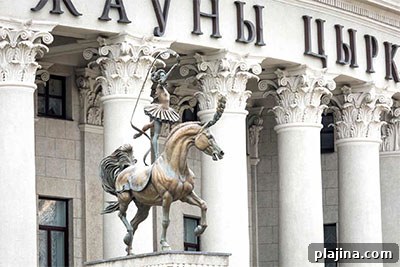
Belarus State Circus © MARIUSZ PRUSACZYK – DREAMSTIME.COM
Visa policy improvements allow many visitors to stay up to 30 days visa-free when arriving and departing through Minsk National Airport, a welcome change for business travelers and event attendees. Although Cyrillic signage can be challenging at first, the efficient metro system announces stops in English, museums include short English captions, and tour operators offer guided excursions in English. The local currency is the Belarusian ruble, but many prices are shown in euros, which can simplify planning for some travelers.
Visitors often find their money goes far in Minsk. Chain hotels with mobile check-in and reliable internet typically charge $50–$150 per night. A metro token costs roughly a quarter, while taxis from the airport to the city center run about $20–$25 for the 45-minute ride. Tickets for the opera or circus can start as low as $2–$4. Restaurants serve a wide range of international dishes, and a multicourse meal with local beer, wine, or vodka commonly costs under $30–$35.
International hotel chains such as Marriott, DoubleTree, Hilton, and Renaissance provide predictable meeting and conference facilities with standard amenities and ballrooms. At the same time, local venues and organizers can offer a stronger sense of Minsk’s distinctive character for events and gatherings.
The MICE in Minsk Project, a public–private initiative, collaborates with industry partners to promote Minsk and Belarus as a destination for conferences, congresses, corporate gatherings, team-building, incentive travel, and festivals. War memorials across the country reflect a turbulent past, but current construction cranes and development projects suggest Minsk is looking forward—expanding not only in size but in the ambition and openness it offers to visitors.
UNIQUE VENUES
Hotel Belarus, anchored by the Emir Casino, is a striking city landmark with abundant crystal, marble, and chandeliers. The hotel offers a range of meeting spaces across three floors and a business center equipped for modern needs. A ground-floor auditorium with tiered red velvet seating opens from the dramatic lobby, which is suitable for receptions and hors d’oeuvres. The Panorama Restaurant on the 22nd-floor observation deck provides memorable event settings and impressive city views.
The classic Minsk Hotel presents an Old-World alternative. Located in the heart of the city beside a large underground shopping complex and close to the metro, its cozy lobby bar is decorated with autographed photos of famous guests from film and politics. The hotel also houses a hammam spa and offers a variety of meeting rooms and conference halls that can be rented by the hour, making it a convenient choice for smaller gatherings seeking historic atmosphere.