
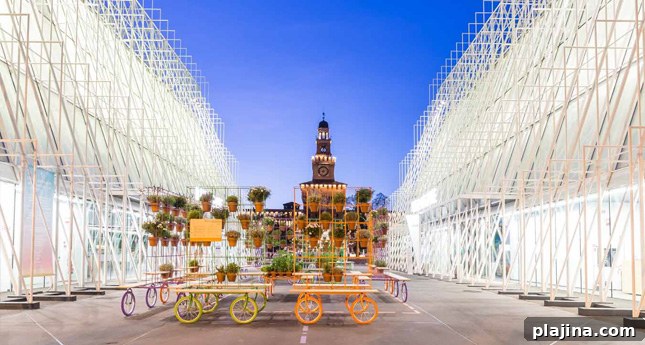
Milan still benefits from the legacy of Expo 2015, the major international exhibition on food sustainability that featured exhibits from 140 countries and drew 21.5 million visitors. A stylish, cosmopolitan city that houses art treasures such as Leonardo da Vinci’s Last Supper and the Gothic Duomo, Milan was a natural host for this global event. Long established as Italy’s financial center, the city’s history of major exhibitions dates back to the 1906 International World’s Fair, and its influence has only grown with trendsetting fashion weeks and important medical and technical conferences that boost its MICE profile.
“Expo showed the world what Milan can do,” says Fabrizio Conte, marketing manager at Fiera Milano, the organizer behind many large events. He points to flawless security, significant city upgrades and a new Metro line as lasting improvements from the Expo.
Milan continues to impress meeting planners with a wide range of facilities and services. For large-scale events, downtown offers the architecturally modern MiCo – Milano Congressi, Europe’s largest conference center, with capacity for 18,000 guests across 70 conference rooms and 581,000 square feet of exhibition space. On the city outskirts, the Fiera Milano fairgrounds provide 20 pavilions with 3.7 million square feet of indoor space and 646,000 square feet outdoors for exhibitions and trade shows.
Castello Sforzesco inner courtyard © Ioana Grecu | Dreamstime.com
“Every major hotel did some renovation for Expo,” notes Diana Cora Tenderini, head of international business development at Eventing Milan, which partners with Milano Congressi and local hotels to deliver tailored services for business planners. Among notable properties is the 235-room Excelsior Hotel Gallia, a Luxury Collection Hotel. Renowned architect Marco Piva updated this Art Deco landmark with contemporary touches, adding a terrace and spa. The hotel offers 12 meeting spaces, including the Duomo Room — Milan’s largest pillarless ballroom — with a bright foyer and seating for 420. Another five-star option, the 132-room ME Milan il Duca, sits near Corso Como and features modern amenities and private dining options, such as the STK restaurant’s private room.
Milan also provides many distinctive venues for events. The frescoed rooms of the Palazzo Reale museum, where Napoleon once hosted banquets, can accommodate gala dinners for up to 800 guests. In warm weather, the courtyards of Castello Sforzesco — designed in part by Renaissance architect Bramante — can host up to 1,000 people for cocktails or dinner and can include evening performances by top musicians and dancers. For a contemporary, eco-conscious setting, the UniCredit Pavilion in the Porta Nuova district offers a three-level complex with an auditorium seating 700 and spaces that connect to gardens.
The city’s accessibility strengthens its appeal. Three international airports serve Milan. Milan Malpensa, the largest, offers about 1,280 weekly flights to more than 100 destinations and is connected to the city center by the Malpensa Express, a 40-minute train service designed for travelers with luggage. Milano Linate links to dozens of destinations, while Orio al Serio (Bergamo) provides connections to many European and North African cities.
Inside Teatro alla Scala © Wang Haijie | Dreamstime.com
Meeting and incentive planners find a wide range of activities nearby. Eventing Milan can arrange golfing around Lake Como, shopping excursions to designer outlets, or boat trips to the Baroque garden islands of Lake Maggiore, all within easy reach. High-speed trains make daytrips to Florence and Venice possible in under three hours, expanding options for cultural programs and incentives.
Staying in Milan also invites visitors to enjoy la dolce vita: world-class art, cutting-edge fashion, an acclaimed music scene and exceptional cuisine. Museums include the Pinacoteca, rich in Renaissance masterpieces, and the contemporary Fondazione Prada. The Quadrilatero della Moda, or Golden Triangle, showcases flagship boutiques from Italy’s top designers. For classical music lovers, Teatro alla Scala remains one of the world’s premier opera houses and offers seatback electronic librettos for translations during performances.
Milan’s social life is lively: evenings often begin with an aperitivo — drinks accompanied by generous buffet-style snacks — and continue into late-night clubs where locals and visitors mingle. Culinary options range from casual trattorias serving risotto alla Milanese to an array of Michelin-starred restaurants, making the city a rewarding destination for both business and leisure travelers.