
When the Beatles arrived in Hamburg in August 1960 for their first international engagement, they signed on for a 48-night residency at the tiny Indra Club in the St. Pauli quarter. At that time St. Pauli still showed scars from World War II and had a reputation as a rough red-light district. Warehouses, sailor bars and the harbor area were places many locals avoided.
Today St. Pauli retains a small red-light area but also hosts numerous music clubs and Beatles-themed tours that visit the band’s early haunts. The neighborhood and nearby Schanzen have been transformed with design studios, boutique hotels, outdoor cafés and restaurants. New attractions such as the Ratsherrn Brewery offer group tours, full lunch and dinner menus and an atmospheric beer garden.
Over the last decade much of Hamburg has been revitalized. As one of Germany’s most prosperous cities, Hamburg has seen its former industrial riverside warehouses gentrified with new hotels and office buildings. HafenCity remains Europe’s largest urban redevelopment project, while the adjacent restored Speicherstadt district is a UNESCO World Heritage site. The striking Elbphilharmonie (Elbe Philharmonic Hall), designed by Herzog & de Meuron, rises as a 12-story glass addition atop a historic brick warehouse, overlooking the Elbe River at HafenCity’s western edge.
The Elbphilharmonie Hamburg project with its glass cube built over a former warehouse © Ron Bernthal
The Elbphilharmonie’s 1,100 curved glass panels mirror sky and water and have made it one of Hamburg’s most photographed landmarks. Opening in stages, the building will be a major draw for meetings, incentives, conferences and exhibitions (MICE). Its Grand Hall seats 2,100 with the orchestra placed centrally and the audience ascending around it. A 550-seat Recital Hall and a 150-seat Kaistudio in the former warehouse will host concerts, lectures, workshops and experimental programs.
The 244-room Westin Hamburg, scheduled to open within the Elbphilharmonie complex, will include 8,900 square feet of high-tech meeting space across seven meeting rooms and a ballroom. The Plaza — a spectacular, elevated public space between the warehouse base and the glass structure — will house the hotel lobby, a bistro and an information desk. Reached by a sweeping illuminated escalator, the Plaza provides panoramic 360-degree views over the city and harbor.
Construction on HafenCity began in 2001 following a 1997 master plan and represents an ambitious $14 billion redevelopment that should be fully completed by 2025. The district already contains corporate headquarters, hotels, restaurants, residential buildings, a university and a metro stop. Work by leading architects such as Richard Meier, David Chipperfield and Rem Koolhaas boosted downtown Hamburg by roughly 40 percent and created a lively riverside quarter with bridges, cruise facilities and striking contemporary architecture. Eventually more than 12,000 people are expected to live in HafenCity.
Hamburg offers a wide range of MICE venues and luxury hotels. The five-star Reichshof Hamburg, reopened after a $34 million restoration, showcases original 1910 features—Carrara marble columns, tile floors, Art Deco chandeliers and walnut paneling—alongside modern amenities. The hotel is minutes from the central rail station and provides large rooms, complimentary WiFi and nine meeting rooms.
The historic five-star Fairmont Hotel Vier Jahreszeiten on the western shore of the Outer Alster lake provides some 6,700 square feet of function space and multiple restaurants, including the two-Michelin-starred Haerlin. The Ameron Hotel Speicherstadt opened in the restored coffee exchange building within the Speicherstadt heritage zone and offers a riverside restaurant, meeting rooms connected by a glass-covered walkway and modern conference facilities. Park Hyatt occupies the top floors of a restored Art Deco warehouse near shops and cultural venues and includes nine multifunctional conference rooms and a private corporate dining room.
Cantinetta Ristorante in the Ameron Hotel Speicherstadt © AMERON Hotel Speicherstadt
Other downtown properties suitable for events include Le Méridien Hamburg, with 284 guestrooms, contemporary art and 13 meeting rooms, and the Scandic Hamburg Emporio, which features Scandinavian design, floor-to-ceiling windows, oak floors and an extensive fitness and sauna area, plus eight top-floor meeting rooms. The luxurious Grand Hotel Fontenay, opening with suites and modern glazed façades, promises high-end facilities, an upscale restaurant and an infinity pool overlooking the lake—ideal for executive retreats and seminars.
Hamburg’s off-site venues broaden event possibilities. The International Maritime Museum in a restored 1878 Speicherstadt warehouse houses one of the world’s most extensive private maritime collections, with ship models, miniature vessels and an advanced cargo ship simulator. Nord Event coordinates a wide range of venues including the Panorama Deck on the 23rd floor of the Emporio Tower and other iconic city locations. The historic Hamburg & Germania Rowing Club offers unique waterfront spaces with catering overlooking the Alster, while the VLET Kochschule provides hands-on culinary experiences for groups up to 50 with top local chefs.
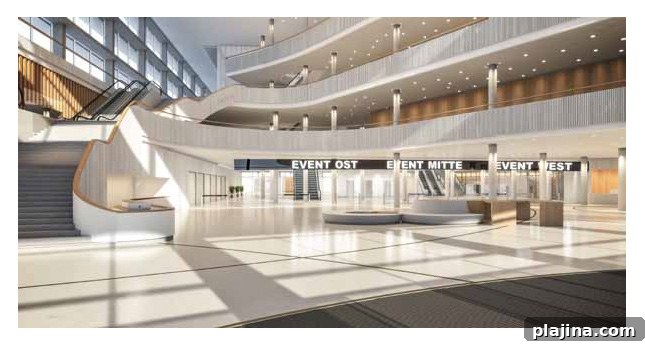
MICE travel to Hamburg generates roughly 2.5 million overnight stays annually. The Hamburg Convention Bureau reports most events are linked to industries such as financial services, medicine and medical technology, IT and communications, chemicals and pharmaceuticals, media and publishing, and logistics and transportation. The Congress Center Hamburg (CCH) is scheduled for a major renovation and expansion, reopening with significantly increased exhibition and foyer space and seating capacity across numerous halls. While the CCH is closed, large-scale events are held at Hamburg Messe, a major trade fair complex offering extensive indoor and outdoor exhibition space and multiple conference rooms.
The Hamburg Convention Bureau actively supports meeting planners with venue sourcing, hotel room blocks and specialist partners for incentive events, green meetings and local tours. With an international airport just a short drive from the city center, a comprehensive public transport network and waterfront areas earmarked for major development, Hamburg continues to position itself as a competitive and sustainable destination for international events and conferences.