
Following an international design competition in 2017, global architectural firm Foster + Partners was selected to design and oversee the expansion of Marseille Provence Airport in France. Construction began in 2021, with the project scheduled for completion in time for the Paris 2024 Olympic Games, which run from July 26 to August 11. Although Marseille lies approximately 497 miles south of Paris, the city will host several Olympic events, including sailing and multiple football matches.
© Foster + Partners
The terminal extension will strengthen Marseille Provence Airport’s role as the main gateway to France’s Provence region, accommodating millions of visitors each year. Passenger numbers have grown notably over the past decade: the airport handled about 9.4 million passengers in 2018, and forecasts suggested traffic could reach 11 million passengers annually by 2025.
When complete, the extension will increase capacity to around 12 million passengers per year and improve the overall travel experience by simplifying passenger flows and creating bright, easy-to-navigate spaces. The design focuses on clarity and comfort to reduce stress and make movement through the terminal more intuitive.
© Foster + Partners
The new scheme respects Fernand Pouillon’s original 1960s terminal layout while completing a long-missing connection to the 1992 extension by Richard Rogers. The project unifies the group of buildings by creating a new coeur (heart) that links the two existing halls of Terminal 1 and keeps arrivals and departures within a single, coherent building. A second terminal, Mp2, opened in 2006 and primarily serves low-cost carriers.
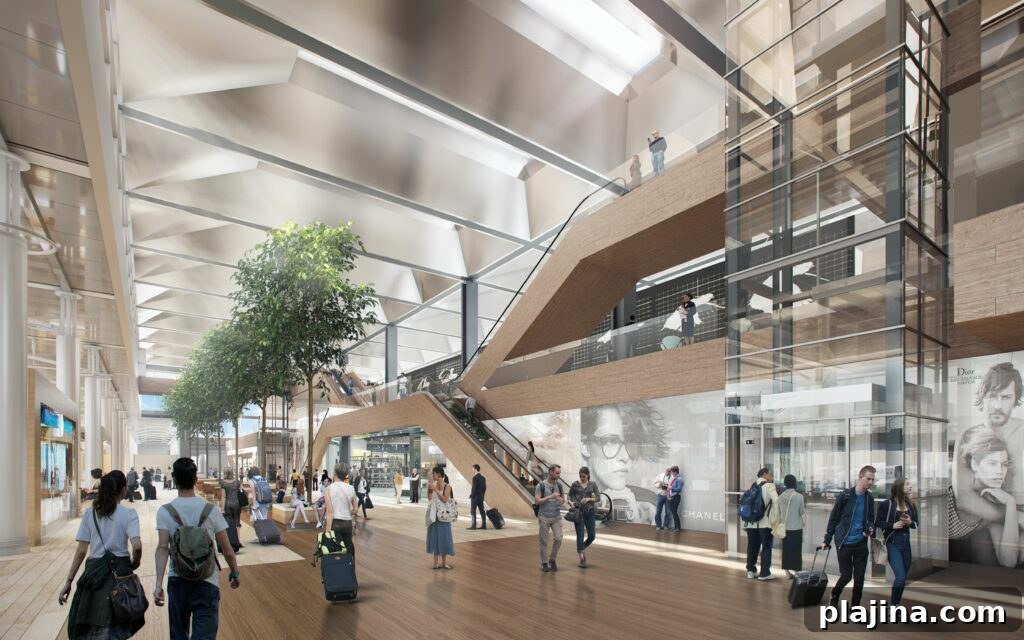
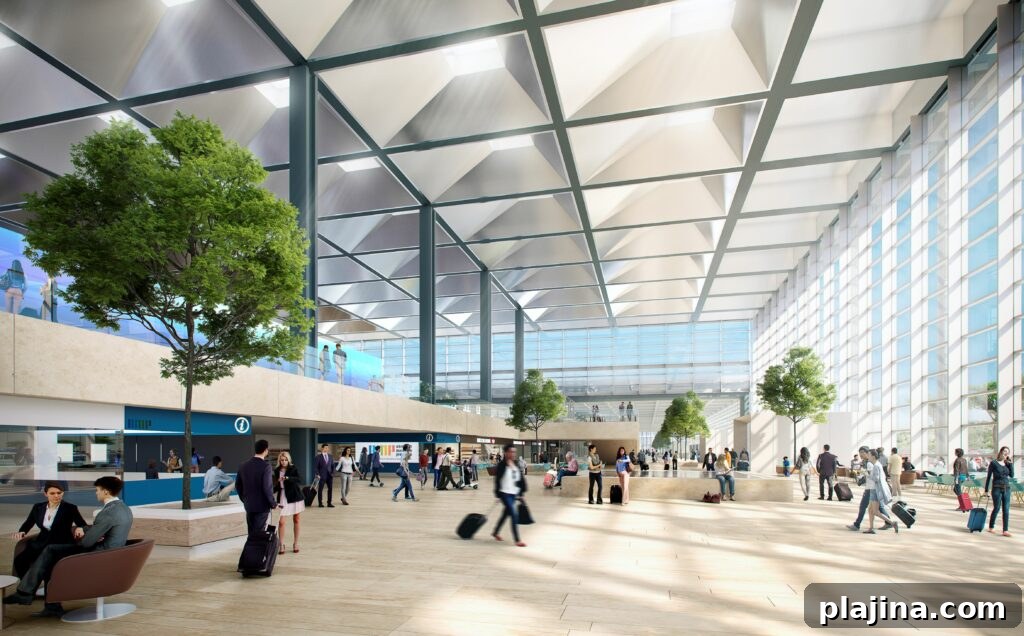
At the core of the redevelopment is a 72-foot-high glazed hall that echoes elements of Pouillon’s original terminal, including an inverted beam roof, a 108-foot-deep span and a continuous grid of skylights. The skylights, finished in polished aluminum, act as large lanterns that draw natural light deep into the interior and support natural ventilation, reducing the need for mechanical cooling. Large indoor trees introduce greenery into the space, creating a calm atmosphere for travelers.
© Foster + Partners
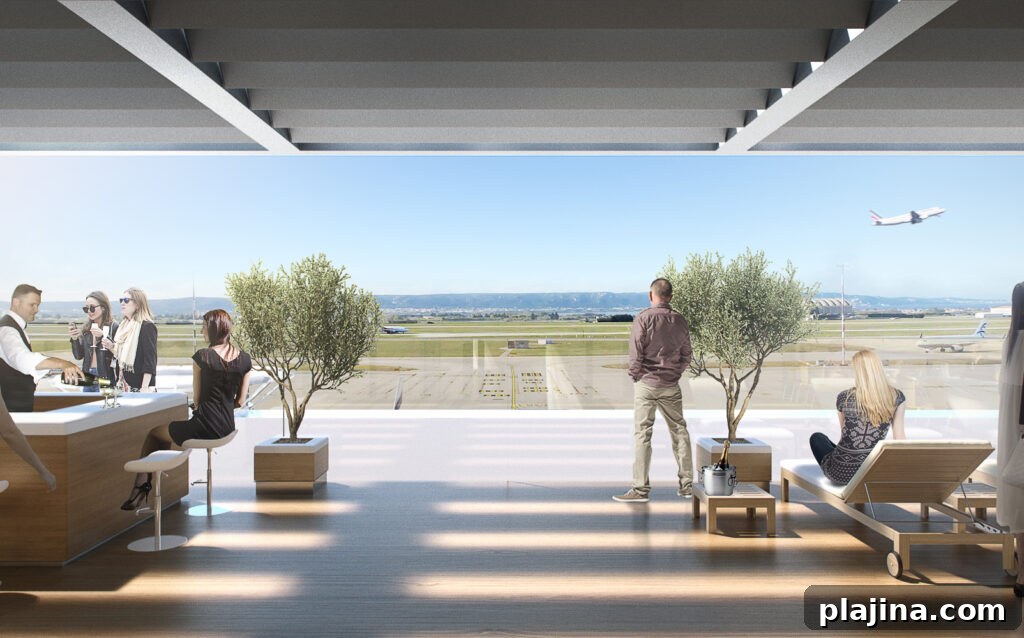
Passenger circulation follows a clear linear arrangement. Departing passengers pass through security screening on the first floor, which overlooks the arrivals level below. After screening they enter a generous double-height zone that houses shops, restaurants and quiet seating areas shaded by trees. From this central space, travelers have direct sightlines to the aircraft and gates, while lounges and a panoramic terrace occupy the upper levels.
Adaptations to the original design and careful reuse of existing structures have enabled improvements in environmental performance. The project is projected to reduce the terminal’s carbon footprint by approximately 15 percent compared with previous configurations. Reusing buildings and optimizing natural ventilation and daylighting contribute to an efficient and sustainable coeur d’aérogare.