
This past summer, hotel group Mama Shelter opened its newest property, Mama Shelter Dijon, in France’s Burgundy region.
© Francis Amiand
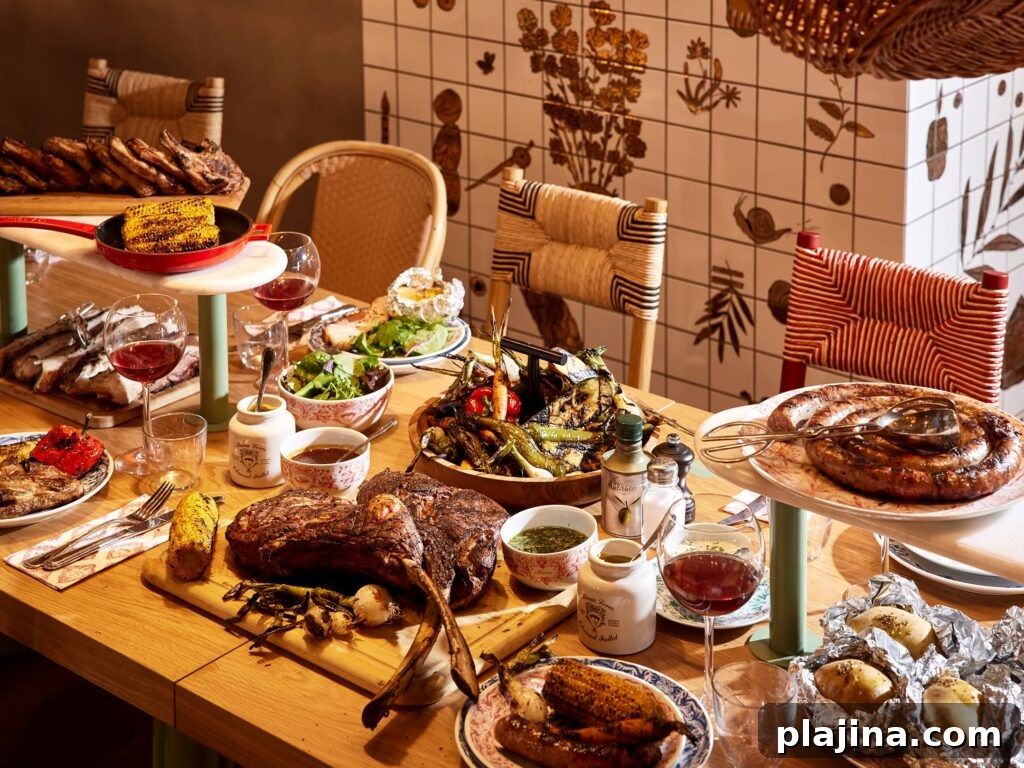
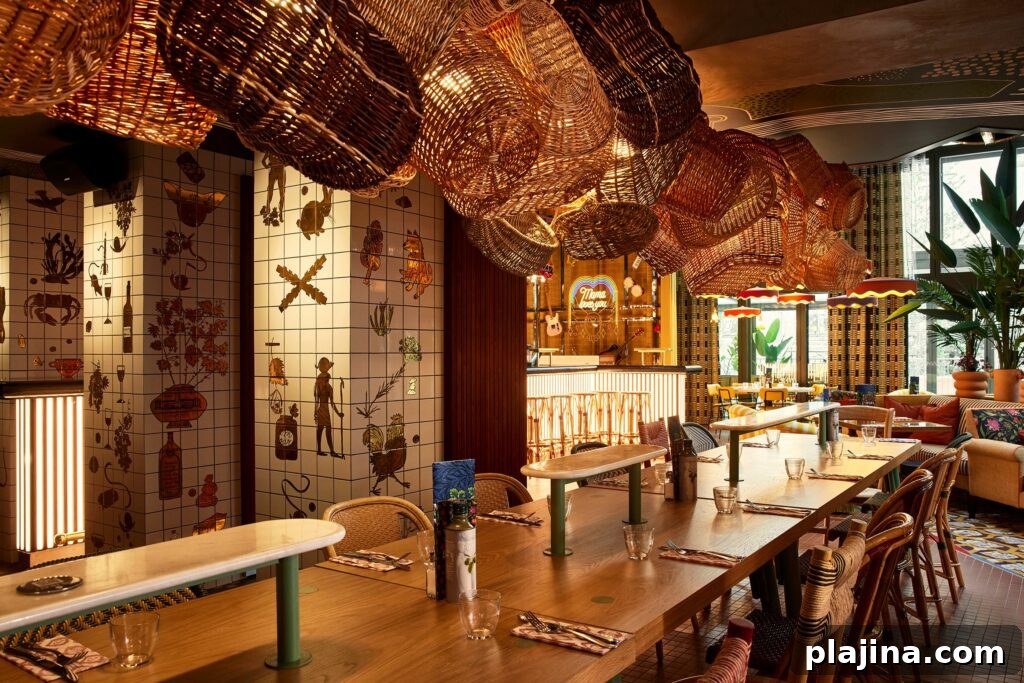
The hotel features a contemporary restaurant with 202 seats where guests can sample local cuisine, charcoal-grilled meats, classic Mama Shelter dishes and signature cocktails. The interior décor nods to Toile de Jouy patterns, creating a warm French country atmosphere, and the restaurant opens onto two outdoor spaces: a veranda terrace and a planted patio.
Among the property’s standout amenities is CineMama, a private 28-seat cinema ideal for screenings or video conferences. The hotel also offers two karaoke bars, four meeting rooms and a pétanque court. Pétanque is a boules sport in which players or teams throw metal balls toward a smaller target ball, aiming to place their boules closer than their opponents to score points.
© Francis Amiand
Exclusively at Mama Shelter Dijon, guests can buy the hotel’s own mustard, produced in partnership with Edmond Fallot, a family-run mustard maker founded in 1840. Fallot uses regionally grown seeds and traditional stone-ground methods to preserve flavor. The hotel offers jars of this mustard and a selection of Mama Shelter and Burgundy-flavored products to take home.
Dijon sits amid rolling countryside where world-renowned vineyards such as Gevrey-Chambertin, Nuits-Saint-Georges and the Côte de Beaune share the landscape with mustard fields and blackcurrant orchards, the latter used to make the classic Kir aperitif.
© Francis Amiand
About 1.5 hours from Paris by high-speed TGV and roughly two hours from Lyon, Dijon offers notable architecture and cultural attractions. The Palace of the Dukes of Burgundy, whose oldest sections date to the 14th century, is a city highlight. Dijon’s historic center has UNESCO recognition, and the city is celebrated as an International City of Gastronomy and Wine for its culinary traditions and proximity to Burgundy’s esteemed vineyards.
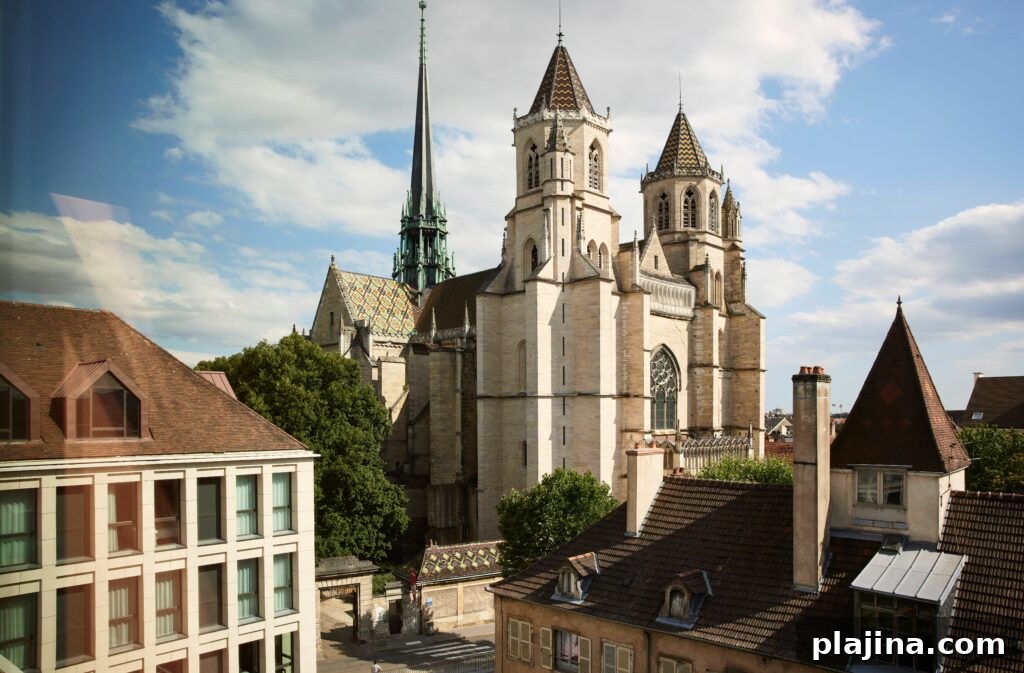
Mama Shelter Dijon is located near Saint-Bénigne Cathedral and Jardin Darcy. The hotel was created from the former city health insurance offices, a Brutalist 1960s building renovated by Benjamin El Doghaïli, head of design for Mama Shelter Hotels.
© Francis Amiand
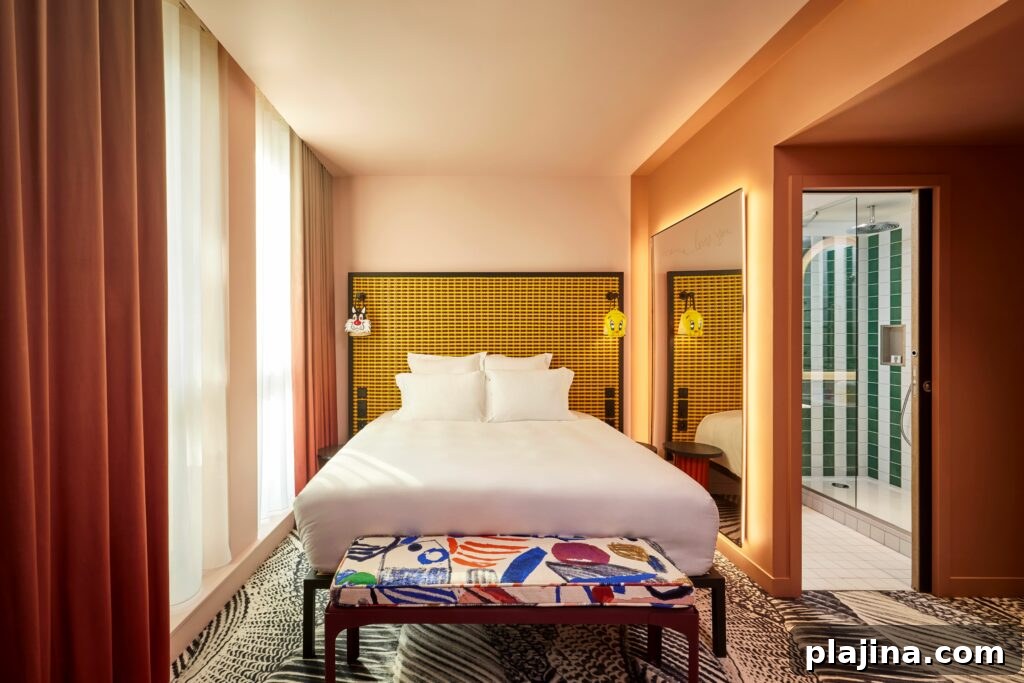
Design details reference Burgundy’s heritage: black-and-white carpeting by Lola Mercier evokes the region’s vineyards, while headboard patterns reflect the glazed roofs found on local buildings. In the lobby and restaurant, El Doghaïli turned structural pillars into artistic features with frescoes by Beniloys and golden ceramics by Arnold du Bazar d’Alger, complemented by cut-out silkscreens from Atelier Bingo. The restaurant floor is accented by two symmetrical carpets by Paris-based designer Laureline Galliot, whose motifs reference archaeological digs conducted during the building’s renovation.
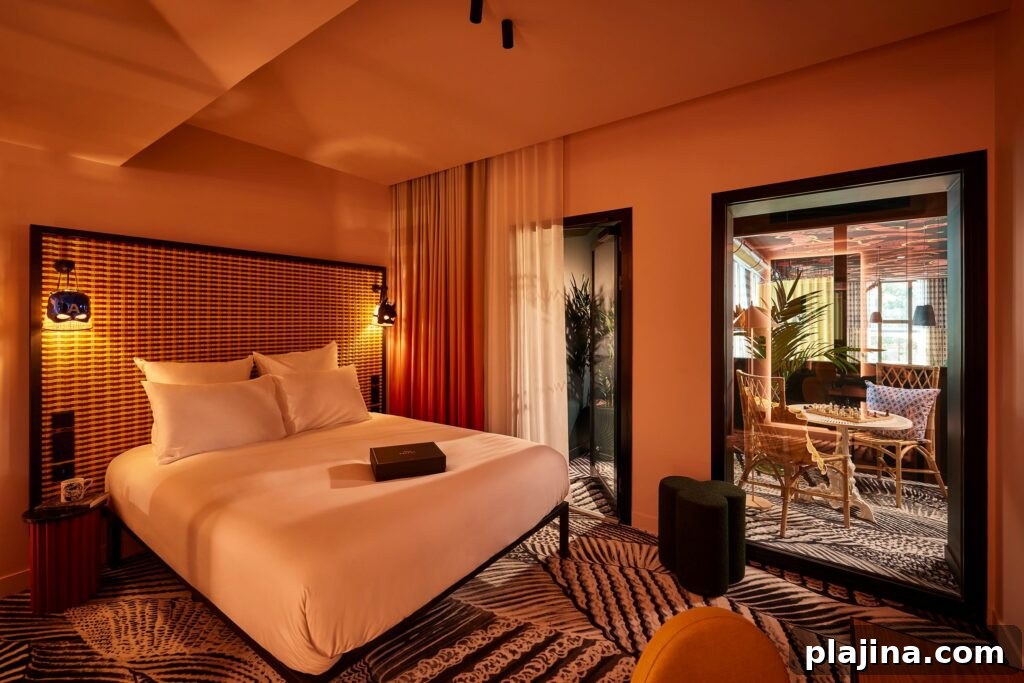
© Francis Amiand
The Musée des Beaux-Arts, established in 1787 and housed within the vast Palace of the Dukes, is a short 10-minute walk from the hotel and contains an extensive collection of paintings, sculptures, decorative arts and antiquities. Dijon’s streets showcase architectural styles spanning the past millennium, including Capetian, Gothic and Renaissance influences. Each autumn the city hosts an International and Gastronomic Fair featuring more than 500 exhibitors and drawing around 200,000 visitors.