
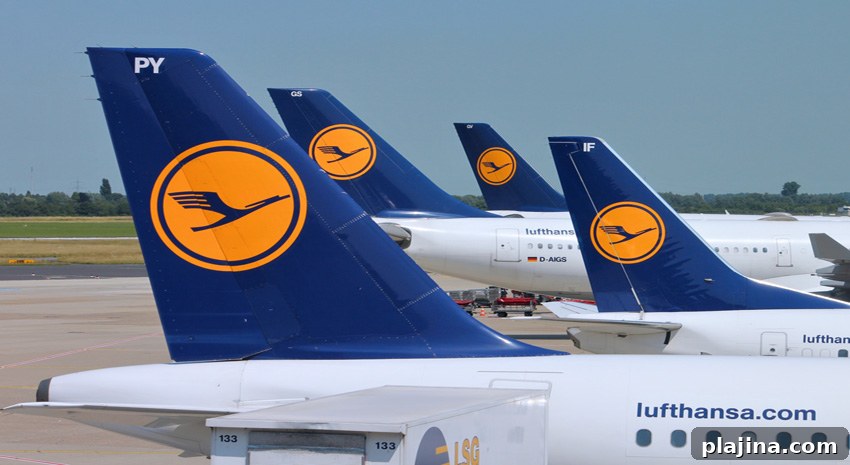
Lufthansa has placed an order for 40 new widebody aircraft—20 Boeing 787-9s and 20 Airbus A350-900s—to replace the group’s existing four-engine jets. Valued at roughly $12 billion, the deliveries are scheduled between 2022 and 2027.
“Replacing four-engine airplanes with newer models establishes a sustainable foundation for our long-term future. Alongside the cost advantages of the A350 and B787, the substantially lower CO2 emissions of this new generation of long-haul aircraft were decisive in our investment decision. Our environmental responsibility is becoming an increasingly important criterion for our choices,” said Carsten Spohr, CEO and chairman of the Lufthansa Group.
At present, the Lufthansa Group operates just under 200 aircraft. With this order, the group’s long-haul fleet will include some of the most fuel-efficient models in their class based on kerosene consumption per passenger per 100 kilometers. These new aircraft are expected to reduce operating costs by approximately 20 percent. Lufthansa also intends to pursue further savings by simplifying its fleet mix, which will help reduce maintenance complexity and associated expenses.
The move reflects a broader industry trend toward more efficient, twin-engine long-haul aircraft that deliver both economic and environmental benefits. By modernizing its fleet, Lufthansa aims to improve fuel efficiency, lower emissions, and achieve long-term cost reductions while maintaining its global network and service levels.
In adopting the A350-900 and 787-9, the airline is prioritizing aircraft that offer improved aerodynamics, advanced materials, and modern engines—elements that together contribute to lower fuel burn and reduced carbon output compared with older four-engine types. These efficiency gains support Lufthansa’s operational goals and its growing emphasis on sustainability as a core part of future fleet planning.
As deliveries begin, Lufthansa will phase the new aircraft into long-haul routes, gradually retiring older four-engine models. This phased transition is intended to preserve schedule reliability and passenger experience while realizing cost and emission benefits. Over the medium to long term, the updated fleet mix is expected to strengthen the airline’s competitiveness in international markets and align its operations with evolving environmental expectations from travelers and regulators.