
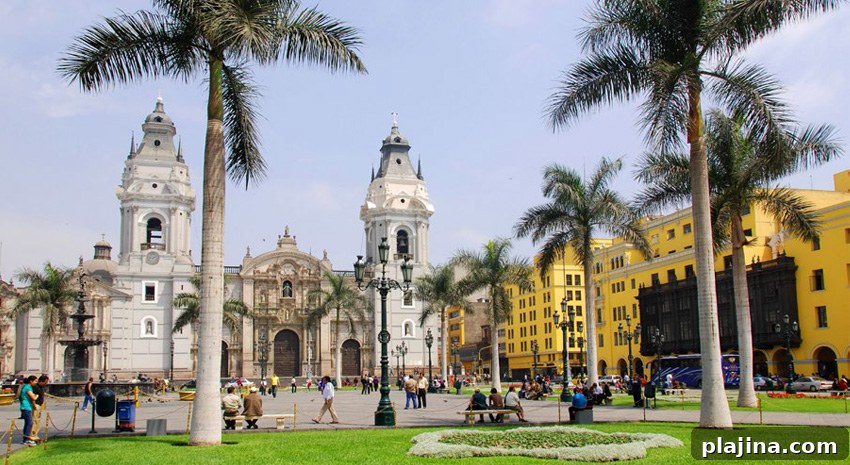
Once considered merely a stopover en route to Machu Picchu, Lima has emerged as a vibrant gateway to another famed South American destination, the Galápagos Islands. Yet the coastal capital deserves time of its own. Spend several days exploring UNESCO-listed colonial architecture, visiting pre-Columbian treasures housed in an 18th-century mansion, and sampling Lima’s celebrated culinary scene. Evenings here can be as lively as the days: sip pisco sours and listen to Afro-Peruvian music at a peña in Barranco or enjoy seaside views from Miraflores.
Begin your stay on the cliffs of Miraflores for sweeping Pacific Ocean vistas. A convenient base is the Belmond Miraflores Park, which places you close to both the shoreline and the historic center. A short taxi ride leads to Plaza Mayor, the birthplace of Lima, where colonial architecture and the cathedral’s gilded altar create an unforgettable tableau. Nearby, the Monastery of San Francisco, with its yellow-and-white façade and Moorish-style ceilings, is a highlight. The monastery’s library is impressive, and guided tours down the ancient stairways into the atmospheric catacombs are a striking experience.
No visit to Lima is complete without Museo Larco, the world’s largest private collection of pre-Columbian art. Housed in an elegant estate since 1926, the museum presents some 5,000 years of history, from intricate jewelry and textiles to evocative ceramic pieces and sections exploring ritual practices. For modern photographic work, Mate showcases Lima’s most famous photographer and features large-scale images and rotating exhibitions that reflect contemporary Peruvian culture.
Food and drink are central to Lima’s appeal. Happy hour often begins with a pisco sour paired with ceviche at one of the city’s outstanding cevicherías. Street markets and Mercado Central offer fresh seafood stands serving tuna and tilapia brightened with lime. For fine dining, Lima is home to internationally acclaimed restaurants: Central Restaurante, Astrid & Gastón, and Maido have all earned places on the World’s 50 Best Restaurants list, and the city has been recognized repeatedly as South America’s leading culinary destination.
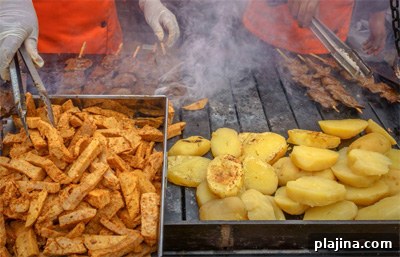
Preparing seasoned beef heart anticuchos in Lima © PACESP2002 | DREAMSTIME.COM
Peruvian cuisine reflects a rich blend of indigenous ingredients and global influences—Spanish, African, Italian, French, Japanese and Chinese. Local specialties include anticuchos (grilled skewered meat marinated in panca chili), tiraditos (sashimi-style raw fish in a spicy sauce), and escabeche (vinegar-marinated fish or poultry slow-cooked with onions). Street stalls and family-run restaurants provide authentic bites, while high-end establishments deliver inventive, world-class dining.
From Lima you can continue to the Galápagos, usually flying via Quito or Guayaquil in Ecuador. Most visitors explore the islands aboard one of the many small cruise ships and yachts that offer weeklong itineraries. For travelers with less time or who prefer staying on land, land-based options are increasingly popular: nearly half of recent visitors choose this approach, staying in small eco-lodges and traveling between islands by regional boats.
All Galápagos trips begin and end on Santa Cruz, the island closest to the main airport. Puerto Ayora on Santa Cruz is the archipelago’s principal hub and the departure point for excursions to other islands. Before you leave Santa Cruz, stroll to Los Gemelos (The Twins), two large sinkholes beside the road into Puerto Ayora, and watch for colorful birds such as the vermilion flycatcher.
Floreana stands out as one of the smallest, quietest islands—ideal for travelers seeking serene beaches and close wildlife encounters. Simple ocean-facing cabins offer comfortable stays and the chance to rise to fresh-squeezed juices and homemade bread. Local guides often lead hikes into the hills to view giant tortoises and take visitors through caves left by early settlers. Snorkeling from sheltered bays reveals sea turtles and playful sea lions that sometimes come ashore to nap beside visitors.
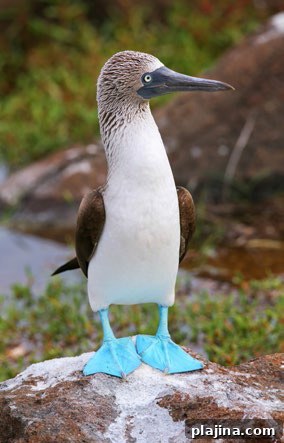
Blue-footed booby © DONYANEDOMAM | DREAMSTIME.COM
Isabela, the largest island, is a wildlife-rich destination where visitors can spot penguins, blue-footed boobies, land tortoises, sea turtles and flamingoes. The island hosts one of the Galápagos’ giant tortoise breeding centers, where hundreds of tortoises of all ages contribute to the successful recovery of the species. Cycling is a popular way to explore around Puerto Villamil: rent a bike and ride to flamingo-filled lagoons, coastal paths and historic sites such as the Wall of Tears, a remnant of past island outposts.
For relaxed evenings on Isabela, beach bars around town provide perfect sunset views and seafood menus featuring fresh wahoo, shrimp and lobster. Regardless of which island you visit, the Galápagos deliver a unique blend of wildlife encounters, striking landscapes and a sense of wonder that stays with most visitors long after they leave.
Lima/Galápagos Info to Go
Flights to Lima arrive at Jorge Chávez International Airport in Callao, about a 40-minute drive west of the historic center. Taxis to Miraflores typically cost around 60 Peruvian soles and the trip can take up to an hour depending on traffic. When traveling among the Galápagos islands, boat rides between islands can last around two hours on small vessels, and seasickness medication is advisable for those sensitive to motion. For land-based itineraries, organized packages that coordinate transfers, boats and guides simplify logistics and reduce the chance of delays when moving between islands.