
Situated in South Holland, Netherlands, about a 1.5-hour drive from Rotterdam, the village of Kinderdijk is famous for its 18th-century windmills. This carefully preserved network of mills, dikes, pumping stations and embankments showcases centuries of local ingenuity in water management. Designated a UNESCO World Heritage Site in 1997, Kinderdijk offers a vivid example of how communities engineered their landscape to survive below sea level.
Originally built to keep the low-lying Alblasserwaard dry, the mills at Kinderdijk form two rows that face one another, creating the iconic Dutch image of windmills framed by water and green fields. In total there are 19 windmills across the site, and these structures played — and continue to play — a crucial role in the Netherlands’ long history of reclaiming and protecting land from the sea.
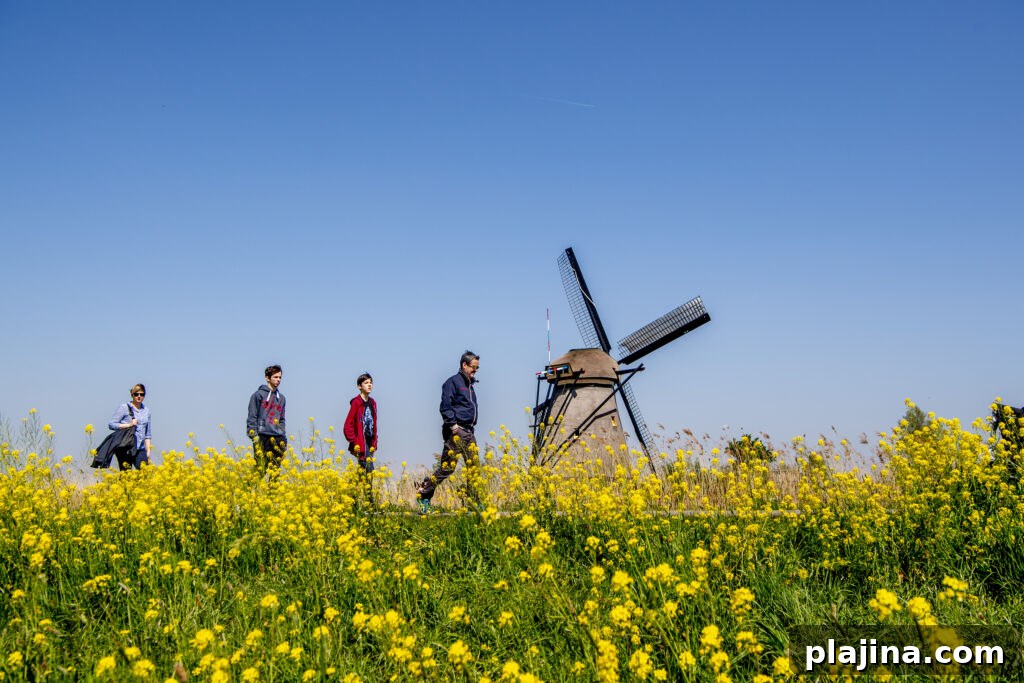
© Hollandse Hoogte / ANP Foto
Many of the windmills remain inhabited, and several families trace their presence in Kinderdijk back generations. For example, the Hoek family lives in Nederwaard mill No. 5; daughter Arie represents the 10th generation of her family to call the mill home, while her brother lives in the neighboring mill No. 4. Living in a historic mill carries responsibilities: at least one resident must hold a miller’s certificate allowing them to operate the milling machinery. For most millers, maintaining the household often requires additional work outside the mill, with occupations ranging from banking to carpentry and teaching.
Arie has found records showing a Hoek ancestor working in the mill as early as 1746. As she continues to live in her ancestral home, she reflects on how the village has changed over time, from a working landscape focused on water management to a place that also attracts many visitors.
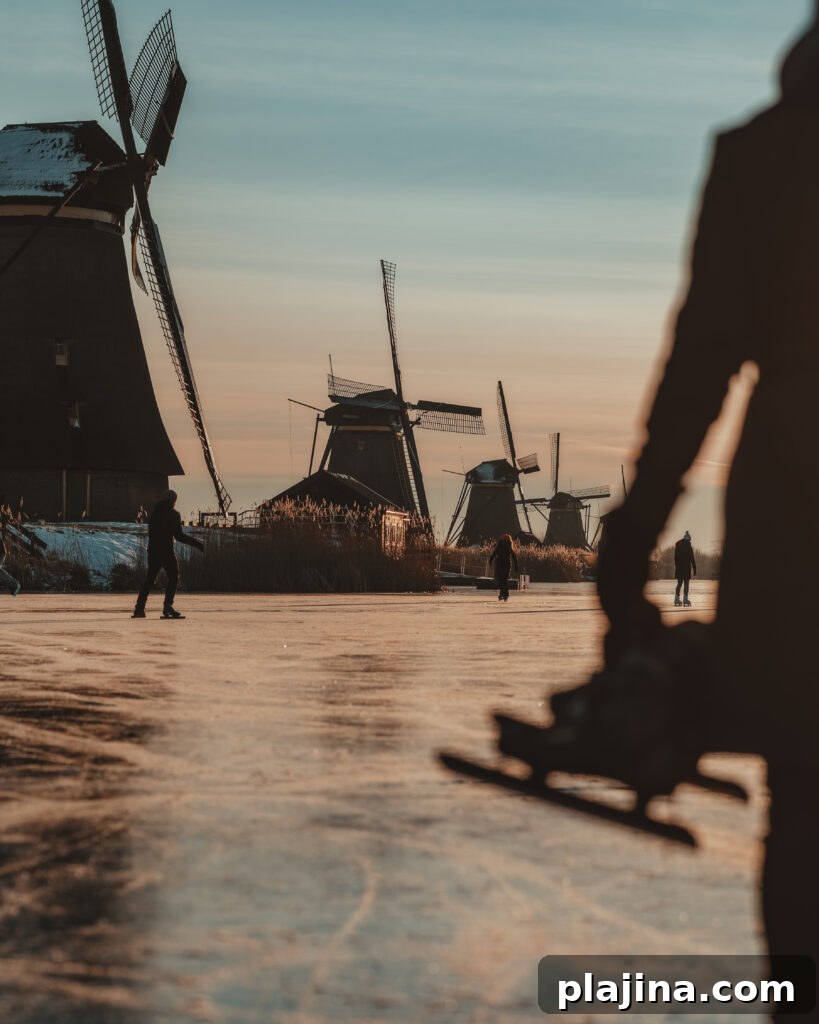
© Sjoerd Bracke & Cuno de Bruin
The site’s beauty and UNESCO designation have drawn increasing numbers of tourists eager to see the mills and learn about historic flood control systems. While tourism supports preservation and awareness, the growing number of visitors can strain the private lives of mill residents. Millers like Arie value quiet moments—listening to the birds and watching the sunset—so balancing public access with daily life is an ongoing concern.
Visitors who want to learn more can explore the three Museum Mills and watch the multiscreen film “De Fabriek Auxiliary Pumping Station,” which tells the story of the mill complex and the village’s history. Guided tours and informative displays explain how the mills were used to manage water levels and why their design was so effective for the low-lying Dutch landscape.
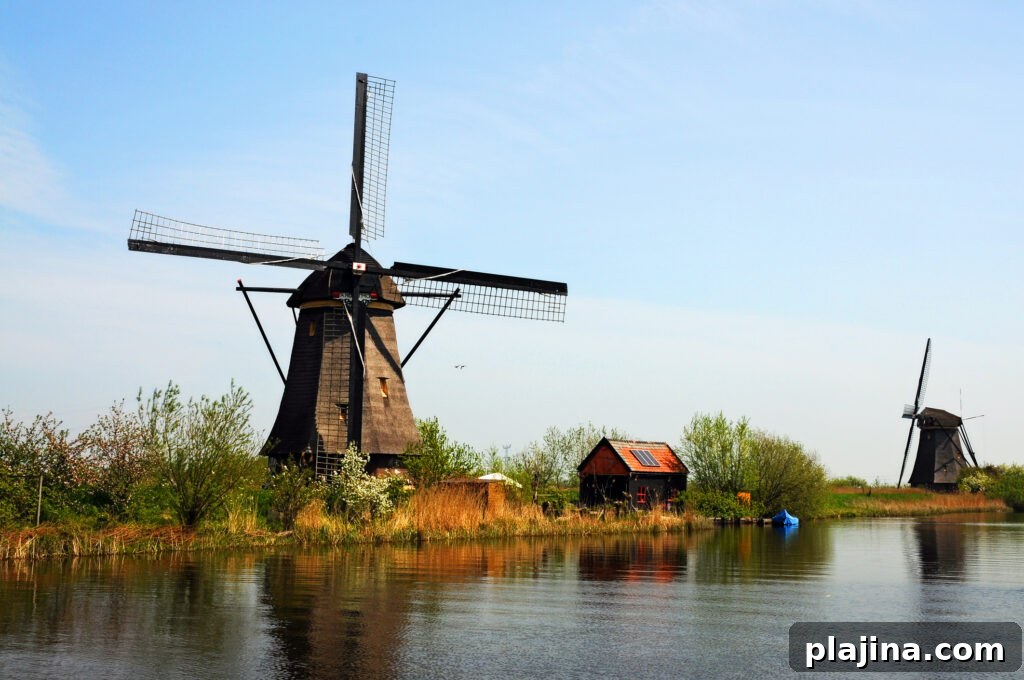
© Gunold | Dreamstime.com
For a different perspective, take a boat ride along the canals to view the mills from the water, then visit a mill workshop to see demonstrations of upkeep and operation. Kinderdijk also offers a broader lesson in Dutch engineering: the Netherlands has managed its waterways, dikes and locks for over a millennium, and the windmills of Kinderdijk stand as enduring symbols of that long tradition of innovation.