
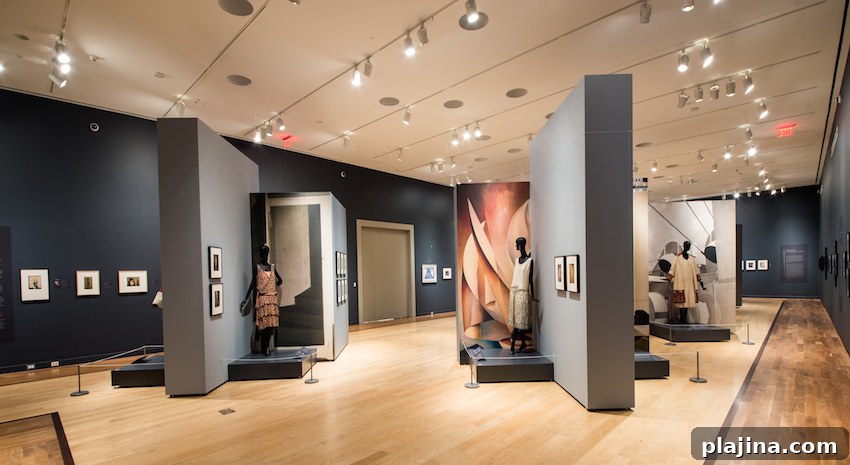
The James A. Michener Art Museum in Doylestown, Pa., presents a focused exhibition of photography by Philadelphia native Charles Sheeler. Titled Charles Sheeler: Fashion, Photography, and Sculptural Form, the show remains on view through July 9. Best known for his work with Condé Nast from 1926–1931, Sheeler produced a wide-ranging portfolio that includes fashion imagery as well as portraits for publications such as Vanity Fair and Vogue. This exhibition highlights a selection of Sheeler’s lesser-known photographs alongside works that reveal his shift from Impressionist training toward the clean, geometric style later identified as Precisionism.
Sheeler began photographing after acquiring his first camera in 1910, an event that launched a career spanning fashion, portraiture, and architectural photography. He is celebrated for striking images that capture the Machine Age—New York’s skyscrapers and Art Deco forms recast as formal subjects—and for bringing a sculptural sensibility to fashion photography. At the heart of the Michener exhibition is a loan of 85 portraits and fashion photographs from the Condé Nast archives in New York, which convey the Jazz Age’s glamour through portraits of starlets, models, and performers from the Ziegfeld Follies.
Complementing the photographs are several of Sheeler’s paintings and period garments that illustrate the visual dialogue between clothing, form, and modern architecture. Multimedia vignettes provide historical context, illuminating Sheeler’s methods and the cultural currents that shaped his work. Together, these elements trace the artist’s evolution from a painter influenced by Impressionism to a pioneer of Precisionist aesthetics, showing how he merged fine art and commercial practice into a cohesive visual language.
Visitors will find the exhibition both visually striking and historically informative. The Condé Nast selections emphasize fashion’s theatricality during the 1920s and early 1930s while Sheeler’s own paintings and architectural imagery reveal his disciplined attention to line, surface, and composition. The juxtaposition of garments, photographs, and paintings makes clear how Sheeler treated fabric and façade with similar formal concerns—texture, shadow, and simplified geometry—yielding images that feel sculptural rather than merely representational.
By presenting newly surfaced photographs alongside established works, the Michener exhibition offers fresh insight into Sheeler’s multifaceted career. It highlights his influence on modern visual culture and his ability to move between commercial assignments and fine-art ambitions without sacrificing formal rigor. Whether encountered for the first time or revisited with greater appreciation, Sheeler’s photographs in this show underscore the artist’s lasting contribution to both fashion photography and modernist aesthetics.