The breathtaking Bosporus Strait separates Europe and Asia in Istanbul, the historic city that once served as the capital of the Roman, Byzantine, Latin and Ottoman empires. Trade has shaped this crossroads since the Silk Road and Spice Route eras, and the city remains a vital global hub.
One of Europe’s largest cities, Istanbul is home to around 20 million residents and attracts roughly 20 million visitors each year, according to the Top 100 City Destinations Euromonitor International Index 2023. Türkiye ranked 33rd out of 190 countries on The World Bank’s Ease of Doing Business Index 2020. As of 2024, Istanbul contributes nearly 40 percent of the nation’s industrial output and tax revenue, and represents almost 60 percent of Türkiye’s imports and exports.
PHOTO: © HALIT SADIK | DREAMSTIME.COM
Modern Istanbul blends soaring skyscrapers, luxury waterfront residences and new cultural and commercial centers that strengthen both business and tourism. The Istanbul Finance Center opened on the Asian side in April 2023, featuring Gold LEED-certified offices, conference facilities, hotels and retail space. Galataport Istanbul, a redeveloped five-berth cruise terminal in Karaköy on the European shore, has transformed the waterfront with a mile-long promenade, an underground walkway, marina, shops, restaurants, The Peninsula Istanbul and the Renzo Piano–designed Istanbul Museum of Modern Art.
The city’s long history as a cultural crossroads produces remarkable culinary variety. Street food includes pide—an oblong, meat-topped flatbread—sesame-sprinkled simit rings and gözleme, thin pancakes sealed around savory fillings.
Meals often begin with meze: hummus, stuffed grape leaves, smoky eggplant purée, yogurt with cucumbers and muhammara, a spicy red-pepper, tomato and walnut relish. Classic dishes include börek, a flaky pastry layered with fillings like spinach, cheese or minced meat, and baklava, a rich dessert of layered filo pastry, chopped nuts and sweet syrup or honey.
CHECKING IN WITH İSMAİL BÜTÜN
General Manager, Türkiye Tourism Promotion and Development Agency, Turkish Tourism Board
What’s new in terms of development and business opportunities?
Recognizing Istanbul’s unique role in global tourism, the Türkiye Tourism Promotion and Development Agency aims to highlight the city’s diverse cultural and commercial offerings. Istanbul continually renews itself through restoration projects, high-profile openings and cultural initiatives that combine modern comforts with historic character. Neighborhoods like Karaköy, historically important as a commercial and transport hub, now flourish with art spaces, design shops and dining while preserving architectural heritage. Galataport’s transformation of the old port into a lively waterfront neighborhood has expanded luxury lodging, retail and dining, strengthening Istanbul’s appeal as both a tourist magnet and a financial center.
What’s happening politically and economically?
Istanbul’s development continues to emphasize culture and tourism while reinforcing its economic significance. Ongoing investments and positive trends suggest a strong future for the metropolis as a local and global hub. Visitor numbers have climbed steadily—breaking records in recent years—with more than 10 million arrivals in the first seven months of a recent year.
What are the strongest businesses and industries?
Tourism remains a cornerstone industry, with Istanbul solidifying its standing as a top global destination. The city keeps expanding accommodation options, including many luxury hotels from leading international brands, and attracts the MICE sector thanks to a wide variety of venues and services. The International Congress and Convention Association ranks Istanbul among the top 10 congress destinations worldwide.
Medical tourism is also growing, supported by high-quality healthcare services. Fashion thrives as a mix of traditional and contemporary influences appeals to domestic and international markets. Istanbul’s culinary scene is widely celebrated—its fine-dining restaurants and growing number of Michelin-recognized chefs, including many women, have raised the city’s gastronomic profile.
© GOTÜRKIYE
How will new development affect business and investment opportunities?
New projects improve Istanbul’s connectivity and business climate, attracting foreign investment and enhancing the visitor experience. Travelers can consult the Istanbul Bucket List on Türkiye’s promotion platform GoTürkiye for curated highlights—from iconic architectural sites like Hagia Sophia to wandering the Grand Bazaar, watching a Bosporus sunset and exploring the city’s diverse neighborhoods.
DIVERSIONS
Beyoğlu welcomes visitors for art, nightlife and entertainment. The Galata Tower, built by the Genoese in 1348, offers panoramic views after a climb up its 146 steps. Istiklal Caddesi draws around three million pedestrians a day who stroll or ride the restored tram along its mile-long avenue lined with 18th-century Neoclassical and 19th-century Art Nouveau buildings, ending at Taksim Square and the Atatürk Cultural Centre, home to the Grand Opera, cinema, boutiques, restaurants and a two-story art library.
From Beyoğlu, the Galata Bridge spans the Golden Horn toward the historic peninsula of Sultanahmet in Fatih. The former trading port has been reshaped into Tersane Istanbul with waterfront residences, hotels, event venues and museums. The Sultanahmet area, once a Roman-era Hippodrome, attracts crowds to its monuments, including the red granite Egyptian obelisk and numerous Roman-era remains.
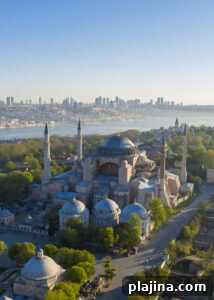
The plaza is flanked by two UNESCO World Heritage sites. Hagia Sophia, originally completed in 537 as a Byzantine basilica and later converted into a mosque, displays ancient mosaics. Nearby, the Hagia Sophia History & Experience Museum offers extended context for visitors. The Blue Mosque, dating to around 1616, reopened to the public and is notable for its six minarets.
© GOTÜRKIYE
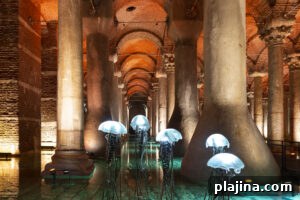
The recently restored Basilica Cistern, with 336 marble columns rising about 30 feet, dates to the sixth century and once stored filtered water for the sultan’s palaces, including Topkapi Palace and its harem and Treasury.
The Grand Bazaar houses some 4,000 shops selling gold, leather and other goods, while adjacent streets offer restaurants, hotels and specialty stores—though visitors should be aware that counterfeit luxury items are widely sold in certain areas. The Spice Bazaar, a short walk away, features fragrant stalls of saffron, cumin and pepper and sits near several historic hotels housed in Neoclassical buildings.
Istanbul is famous for its Turkish baths (hammams). Many historic hammams have been restored and remain popular for traditional steam and cleansing rituals. The Zeyrek Çinili Hamam, recently reopened after a lengthy restoration, is listed among Time’s World’s Greatest Places for 2024.
Beşiktaş is a major commercial and shopping district and home to Beşiktaş J.K., the city’s beloved football club. Dolmabahçe Palace, once the residence of several Ottoman sultans, fronts the Beşiktaş shore and faces Üsküdar on the Asian side. Ferries from Beşiktaş provide scenic transcontinental crossings to Üsküdar, where short transfers lead to Kadıköy’s market and the artistic neighborhoods and waterfront restaurants of Kuzguncuk.
INFO TO GO
Turkish Airlines operates daily flights between the United States and iGA Istanbul Airport, opened in 2018 and one of Europe’s busiest airports. Located roughly 20 miles from the Old City, it serves alongside Sabiha Gökçen International Airport on the Asian side, about 27 miles away. Both airports offer metro, taxi and shuttle services. A Tourist Transportation Card covers the metro, tram, buses, metrobus and ferries. Rental cars are generally not advised because of heavy traffic and limited parking.
LODGING
Çırağan Palace Kempinski Istanbul
This iconic former imperial palace features opulent public rooms and suites, a modern hotel wing, gardens, terraces, a pool deck and a Bosporus-side promenade.
Yıldız, Çırağan Cd. No:32, Beşiktaş/Istanbul
$$$$$
Conrad Istanbul Bosphorus
Opened in 1992 with a distinctive S-shaped profile, the hotel’s 2016 renovation enhanced vistas of the Bosporus from its hillside location.
Cihannüma, Saray Cd. No:5, Beşiktaş/Istanbul
$$$
Four Seasons Hotel Istanbul At Sultanahmet
Housed in a former 1918 prison and fully renovated in 2022, this 65-room hotel offers rooftop views of neighboring mosques and the Sea of Marmara from the Süreyya Terrace Lounge.
Sultanahmet, Tevkifhane Sk. No:1, Sultanahmet/Istanbul
$$$$$
DINING
Alaf
Chef Deniz presents Anatolian cuisine prepared in a wood-fired oven, earning recognition for value and quality; the rooftop terrace provides water views.
Kuruçeşme Cd. No:19, Beşiktaş/Istanbul
$$$$
Divan Brasserie Fuaye
An elegant bistro inside the Atatürk Cultural Centre with Bosporus views and a varied international menu from Turkish köfte to Italian risotto.
Mete Cd. No:2 D:1 Kat 2, Beyoğlu/Istanbul
$$$–$$$$
Pandeli Restaurant
A long-standing venue in the Spice Market offering classic Turkish dishes—meze, kebabs, grilled eggplant salad, wood-fired chicken and roast lamb—surrounded by blue mosaic tiles.
Rüstempaşa Mah. Balık Pazarı Kapısı Sokak Mısırcıarşı İçi 1, D:2, Fatih/Istanbul
$$–$$$
OFFICIAL LANGUAGE
Turkish
COMING AND GOING
U.S. citizens may visit Türkiye without a visa for stays up to 90 days but must carry a passport valid for at least six months with at least one blank page.
JUST THE FACTS
Time zone: GMT+7
Phone code: Country code: 90; city codes: 212 or 216
Currency: Turkish lira
Key industries: Textiles, food and tobacco processing, cement and glass production, plus tourism and medical tourism