When the World Water Council chose a location for the world’s largest forum on water resources, one city stood out: Istanbul.
“It was the ideal location, based upon its symbolic, geographical and geopolitical importance,” says Huma Gruaz, president and CEO of Alpaytac Marketing Communications, which handled public relations for the 2009 World Water Forum. “And obviously, as far as its different trade facilities are concerned, it’s a fantastic city.”
As the only major city that spans two continents—bridging Europe and Asia—Istanbul was a natural choice for a conference that emphasized global cooperation on water issues. Surrounded by water and with venues on the Golden Horn such as the Sütlüce Congress and Cultural Center and the Feshane International Fair Congress and Culture Center, delegates were often met by views of the Bosporus. Council members also valued Istanbul’s long history as a crossroads of civilizations, making the event both practical and memorable.
“It’s not like there’s just one nice palace or museum,” says Haldun Dinççetin, a spokesman for the Turkish Culture and Tourism Office. “Istanbul was the capital of two major empires, the Byzantine and the Ottoman—the Ottoman was one of the biggest empires in the world for more than 600 years. So it has the elements and monuments of the Eastern, Middle Eastern and Islamic worlds, with many different ethnic groups and cultures blended very well. You can still feel this culture when you visit the old neighborhoods.”
Istanbul’s profile as a global meeting destination has risen steadily. In 2000 the International Congress and Convention Association ranked Istanbul No. 40 among top meeting and convention cities; by 2009 it had climbed to No. 17, hosting some 80 major international events. Ease of access has helped: most European capitals are less than three hours away by plane and New York is under ten hours. Hotel rates in Istanbul remain more affordable than in many Western European capitals, and Turkey’s resilient economy has supported continued growth in tourism and events.
Visitors who expect the historic scenes of tiled mosques, bustling bazaars and traditional baths will find them, yet Istanbul also offers modern cultural venues and lively contemporary life. The Hagia Sophia and the Blue Mosque still dominate the skyline, while newer attractions include SantralIstanbul, a cultural complex built in the old Ottoman power plant, and the Sinan Erdem Dome, a 16,000-seat arena that hosted the 2010 World Basketball Championship. Traditional performances such as the whirling dervishes remain available at places like the Galata Mevlevihane, while the city’s cultural calendar now features museums, concerts and festivals alongside centuries-old rituals.
“I’ve lived in Paris, lived in New York and stayed in London and Holland. And I’ve never seen nightlife like the nightlife in Istanbul,” says Gruaz, who lives in Chicago. “I’ve never seen a nightclub where there’s a line in front of it at 5 a.m. But that’s how Istanbul is. In summer everything is outdoors and nightclubs stay open late, buzzing people in at 2 and 3 a.m. I don’t know how they go to work the next day.”
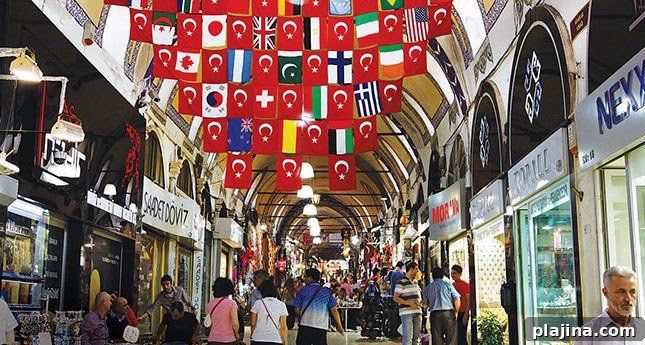
The Grand Bazaar’s 80 streets and some 4,000 shops offer both casual souvenirs and finely crafted goods for determined negotiators. Shopkeepers often welcome visitors with patience and hospitality; bargaining is a relaxed ritual rather than an aggressive sale. “They’ll offer you Turkish apple tea in little three-inch glasses shaped like an hourglass—and it’s the best tea ever—before they start talking about carpets,” recalls Ann Shoji, a visitor from San José.
Dining in Istanbul is typically unhurried, designed to savor flavors such as grilled chicken döner, lamb beyti and rich Turkish coffee. Many restaurants emphasize views: Ulus 29, for example, looks over the Bosporus and its bridges, while the waterfront suburb of Ortaköy and the Çırağan Palace Kempinski terrace provide relaxed settings for tea or dinner. Gruaz notes that the city’s appeal helped boost attendance at the World Water Forum—from an expected 10,000 delegates to nearly 28,000—calling the turnout unprecedented.
“We’ve never had such a huge attendance at the forum,” says Gruaz, the former president of the Turkish American Cultural Alliance. “Accommodating all those world-class delegates was a challenge, but the facilities were comfortable and technologically advanced. The food was excellent. And the feedback has been phenomenal.”
She adds with feeling, “It’s my favorite city in the world. My heart beats faster whenever I hear the name of Istanbul.”
Convention Centers
Istanbul’s conference and exhibition venues are grouped in three main clusters: the Airport District near Atatürk International Airport, the Golden Horn area, and the Conference Valley in the city center. Each cluster offers a range of facilities suited to trade shows, meetings and cultural events.
Airport District
The Airport District centers on the Istanbul World Trade Center Complex and the CNR International Exhibition Center. The complex, which opened in 1993 and has grown to eight exhibition halls, hosts roughly 65 trade fairs annually. Facilities include multiple restaurants, seminar rooms and a business center. Adjacent Mydonose Showland features a large open area, covered space with seating for 5,500 and a spacious foyer with shops and cafés.
Golden Horn
Along the Golden Horn, two historic industrial buildings have been repurposed as congress centers. The Sütlüce Congress and Cultural Center, once a slaughterhouse, now serves as a major event venue, while the Feshane International Fair Congress and Culture Center, a former 19th-century textile factory, operates as a versatile hall. Both venues are linked by the Galata Bridge and share access on the Golden Horn waterfront.
Conference Valley
Conference Valley’s centerpiece is the Lutfi Kirdar Istanbul International Conference and Exhibition Center, a flexible complex that hosts events ranging from technology conventions to cultural festivals. The main campus includes numerous meeting rooms, and the adjacent Rumeli Fair & Exhibition Hall adds further space and a large ballroom equipped for simultaneous translation in multiple languages.