You’re flying into Shannon or Dublin for your Ireland vacation and see green fields stretching to the horizon, divided by dark hedgerows and stone walls that turn the countryside into a patchwork quilt. Across Ireland, many fields and expanses are defined by dry stone walls, an ancient building method now recognized by UNESCO as an intangible cultural heritage practice. This designation is the fifth Irish tradition to be added to the list, following uilleann piping, hurling, Irish falconry and Irish harping.
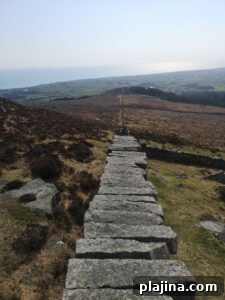
Mourne Wall © Tourism Ireland
Some dry stone walls in Ireland are millennia old, enduring through generations and weather. Other walls reflect long-standing agricultural practices that reach back to the Neolithic period, roughly 5,000 years ago, and offer tangible links to the island’s past.
If you want to see remarkable examples, start with Ireland’s two UNESCO World Heritage sites. Brú na Bóinne in County Meath and Sceilg Mhichíl (Skellig Michael) in County Kerry both feature dry stone construction that highlights the technique’s historical and cultural significance.
One of the most impressive continuous stretches of dry stone walling is the Mourne Wall in County Down. Stretching more than 21 miles, it crosses over 15 peaks in the Mourne Mountains, including Slieve Donard. Built almost entirely from local granite and begun in 1904, the wall took many years to complete and remains a striking feature of the landscape.
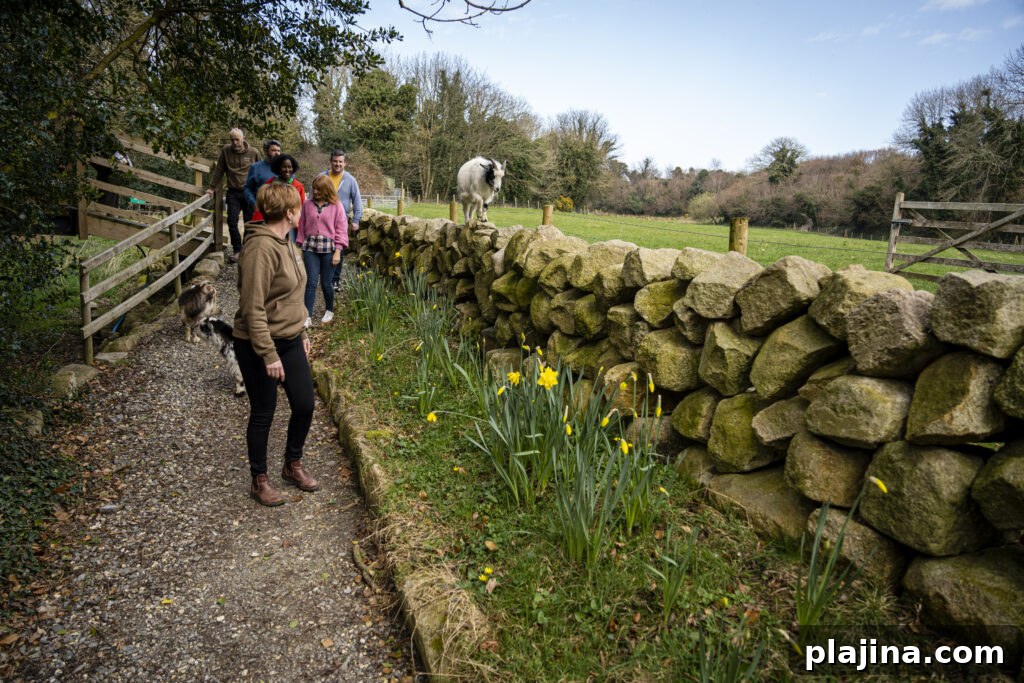
To experience the craft firsthand, consider joining Mourne Stone Walling. Hosts Jenny and Mark Hannah lead walks through woodland and upland terrain, sharing the history of dry stone walls and teaching practical skills. Mark has restored nearly 250 feet of granite walling, and on the experience visitors learn how to select, measure and place stones while hearing about the regional traditions and even picking up a few Gaelic words.
© Tourism Ireland
The hands-on sessions are designed for beginners and more experienced builders alike: participants learn to read the landscape, choose the right stone shapes, and place them to form stable, enduring walls without mortar. After the practical element, guests often relax with a picnic of tea and cake while admiring the restored work and the surrounding scenery.
Whether you’re drawn by history, landscape, or craftsmanship, exploring Ireland’s dry stone walls offers a rewarding way to connect with rural heritage. Many tours and local accommodation options make it easy to extend the visit; for a comfortable stay near Mourne Stone Walling, Green Holiday Cottages provide nearby lodging and a cozy base for further exploration.