Marianne Tiegen Interiors has reimagined Château La Banquière, set in a peaceful park of vineyards and centuries-old oaks near Montpellier, France.
Since 2023, Marianne Tiegen and her team have worked on the building and grounds to convert the property into a refined hospitality destination. Opening to guests this April, the chateau brings together architecture, landscape and textiles in a contemporary, sustainable expression of luxury.
© Jeremy Wilson
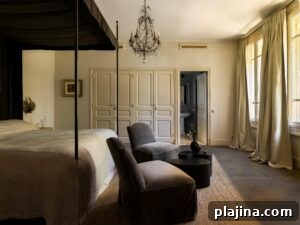
All 25 guestrooms are designed as a conversation with natural light and the surrounding landscape, balancing stone, wood and textiles to shape atmospheres that change throughout the day.
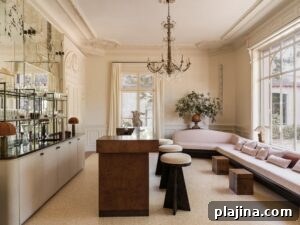
Textiles play a central role: they function as spatial anchors rather than mere decoration. Fabrics define rooms, soften acoustics, frame views and introduce a tactile warmth more commonly found in private homes. Marianne Tiegen Interiors used canopies, screens, bed throws and wall panels to create intimacy and comfort while respecting the chateau’s classical architecture.
© Jeremy Wilson
The textile palette is rooted in the Mediterranean surroundings. Working with botanical dyers and local specialists, the team developed colors such as Blush, extracted from grape seeds grown on the estate, alongside warm coral and apricot tones from garance (madder root) and soft blues and greys from woad (pastel des teinturiers).
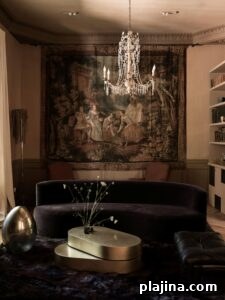
The interiors also include a curated selection of antique textiles—Provençal damasks, Venetian block-prints and couture-surplus fabrics—sourced through a network of collectors and dealers to bring historical depth and character to the rooms.
© Jeremy Wilson
Where original materials were fragile, the team either restored them, backed them with lightweight cotton or embraced their worn character—repairing rather than hiding imperfections to honor the building’s history.
The project celebrates European artisan skills revived from couture ateliers. Woven Belgian linens, hand-printed serigraphs from Lyon workshops and Venetian block-prints sit alongside embroidered panels made with haute couture techniques. A subtle bee motif stitched in the Pont de Beauvais technique references the estate’s biodiversity and the project’s regenerative, circular design approach.
Canopies, privacy screens and bed throws are built on metal frames or removable supports to combine grandeur with practicality—allowing pieces to be detached, cleaned, repaired or redyed over time without compromising the overall design.
© Jeremy Wilson
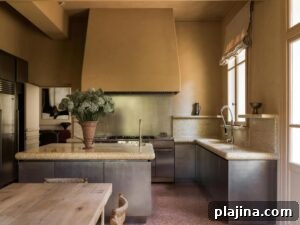
For Tiegen, La Banquière is a statement about sustainable hospitality: it is not austerity but thoughtful selection of materials and techniques that age gracefully, retain memory and support a circular design economy.
“Luxury today faces an identity crisis,” Tiegen said. “Its renewal lies in craftsmanship, authenticity and rarity. With La Banquière, we show that sustainability can be a form of true luxury, rooted in nature, in history and in care.”
Over time, the fabrics, colors and textures of La Banquière will accumulate their own stories—stories of place, patience and the lived beauty of carefully considered design.
The property will open in stages: the chateau rooms in April and the full domaine in June, which will include Chateau, Castle and Village rooms, plus a cottage on the estate.