
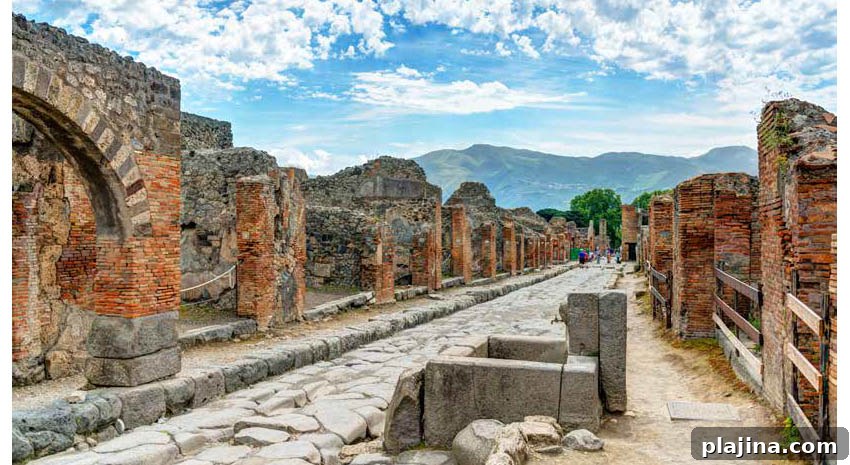
To stand in a place that 2,000 years ago was suddenly frozen in time is one of the most powerful travel experiences available. The ruins of Pompeii, south of Naples in Italy, offer precisely that: a five-square-mile archaeological site where a thriving Roman port town was buried by the eruption of Mount Vesuvius in 79 AD. The preserved streets, homes and public spaces present an intimate window into how Romans lived, worked and socialized before disaster struck.
Pliny the Younger, who witnessed the eruption, wrote vivid letters describing that terrifying August day: an umbrella-shaped plume rising from the mountain, a dark cloud sweeping over the land, frantic residents attempting to flee, and then the aftermath. “The sight that met our terrified eyes was a changed world, buried in ash like snow,” he wrote, capturing the suddenness and horror that befell the city.
Pompeii lay entombed beneath roughly 30 feet of ash until mid-18th century excavations began after the discovery of nearby Herculaneum. Since 1748 archaeologists have revealed a wealth of buildings and artifacts: richly frescoed villas, intricate mosaic floors, sculptures, shops, bakeries, laundries and taverns. The city’s vibrant social life is evident in its theaters—small stages for music and plays plus a large amphitheater for gladiatorial contests—its brothel decorated with explicit frescoes, and an imposing forum with marketplaces and temples. Public baths reveal remains of sophisticated heating systems that powered daily routines.
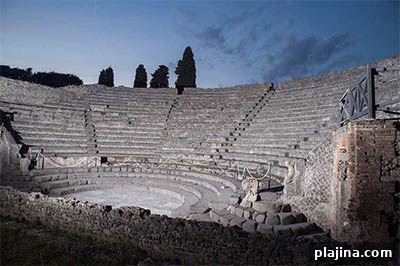
Teatro Piccolo © PRESS OFFICE, SOPRINTENDENZA ARCHEOLOGICA DI POMPEI
Among the site’s most poignant discoveries are the plaster casts made from hollows left by decomposed bodies. These casts preserve moments of panic and desperation: a man crouched with hands raised protectively, a woman frozen mid-scream, a dog curled in a last attempt to survive. While confronting, these figures personalize the tragedy and connect modern visitors to the individual lives lost. As Fiorella Squillante, a guide with Vesuvius vs Pompeii, notes, they add a deeply human dimension to the ruins.
Pompeii draws roughly 2.5 million visitors each year. The archaeological area covers 163 acres with winding streets and many dispersed highlights, so a knowledgeable guide makes the experience more meaningful and efficient. Vesuvius vs Pompeii is one such provider offering full-service tours tailored to different needs.
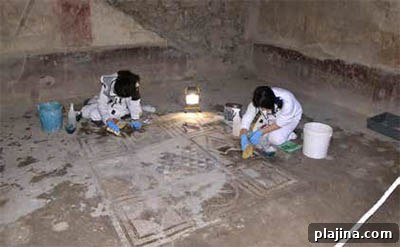
Restorers of Casa dell’Orso Ferito © PRESS OFFICE, SOPRINTENDENZA ARCHEOLOGICA DI POMPEI
“Now is the best time to visit Pompeii in decades,” says Squillante. The Great Pompeii Project invested millions of euros in conservation and restoration, reopening buildings that had been closed for years. Restored highlights include the elegant House of the Vettii and the House of Venus, with its garden fresco of the goddess reclining on a clam shell. Visitors can also explore the recently conserved laundry complex Fullonica of Stephanus and the House of the Bear, a wealthy residence notable for its exquisite mosaics.
Vesuvius vs Pompeii employs local Neapolitan guides who design tours around each client’s interests. They work with families, provide accessible options, and create interactive experiences for children—offering drawing classes and storytelling that reveal daily life in 79 AD. Guides point out small details travelers might miss on their own, from graffiti that reveals personal messages to anecdotes about social roles, the lives of slaves and the participation of women in Roman society.
The company also runs tours of the Naples Archaeological Museum, which houses many frescoes, mosaics and artifacts recovered from Pompeii. Local guides often incorporate regional culinary experiences, recommending notable pizzerias and pastry shops and arranging tastings to complement a day of exploration.

Grapes at Sorrentino Vini © SORRENTINO VINI WINERY
The volcanic soils of Vesuvius have supported vineyards since Roman times. Less than 10 minutes from Pompeii, family-run Sorrentino Winery continues that tradition, producing wines such as the classic red Lacryma Christi and white Falanghina, along with innovative sparkling varieties. The winery offers tastings and lunch and can arrange transport from the archaeological site, making for a pleasant excursion after a morning among the ruins.
After a tasting, visitors are welcome to stroll the vineyards and admire the view of Mount Vesuvius, a reminder of the natural forces that both devastated and enriched this landscape for millennia.
Pompeii Info to Go
Naples International Airport serves domestic and international flights and lies about 18 miles north of Pompeii. Bus service from Naples to Pompeii is an economical option, while taxis provide faster door-to-door travel. Regional rail options include the Circumvesuviana line or the Campania Express. Consider purchasing regional museum and site passes for combined entry savings when planning visits to multiple archaeological sites and museums in the area.