
Gyeonggi Province, South Korea’s most populous region, is rich in history and cultural experiences. It encompasses several of the nation’s most intriguing cities, including Seoul, the national capital; Suwon, the provincial capital; and Incheon, the country’s major transportation hub and port. Located about one to two hours apart by road or rail, these three destinations each offer distinct experiences, entertainment, and team-building opportunities.
Incheon International Airport handles flights for 100 airlines to and from 178 cities and provides convenient ground connections to the region. Travelers can use ride-hailing services and apps such as KakaoT in addition to trains and shuttle buses to reach Seoul, Suwon, or nearby locales. Note that global navigation tools may be limited in South Korea; download local navigation apps like Kakao or Naver for the best directions and transit information.
Seoul, a metropolis of roughly 10 million residents, combines cutting-edge urban development with deep-rooted Korean traditions. Ancient palaces sit beside gleaming skyscrapers, traditional markets operate near vast shopping centers, and historic teahouses coexist with contemporary cafés. For a quick coffee, local chains such as Ediya Coffee and Caffe Bene are widely available, while bakeries and garden-like cafés offer relaxed spaces for late starts or brunches.
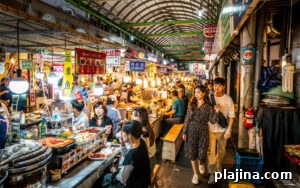
Take clients through a bustling Korean market such as Gwangjang, a century-old institution where fresh meats, dried ingredients, and live seafood are displayed alongside popular street food stalls. For dinner, Korean barbecue remains a classic group option, and an evening walk along the Seoul City Wall—originally built in 1396—reveals striking night views of the capital. Seoul’s variety makes it especially well-suited for business travelers, offering activities and sights that will appeal to diverse interests.
Between meetings, schedule a visit to Gyeongbokgung, the largest of Seoul’s five royal palaces, to introduce colleagues to the country’s royal history. Around the palace, it’s common for visitors to don hanbok, traditional Korean attire, which makes for memorable photos and a more immersive cultural visit. From there, a short walk leads to Bukchon Hanok Village, where residents still occupy traditional homes that preserve centuries-old architecture and charm.
Suwon offers a more compact, walkable alternative to Seoul and is home to major companies including Samsung Electronics. It provides a quieter setting for team outings and historical exploration. The 18th-century Hwaseong Fortress is a standout attraction, and groups can tour the walls on foot or by the sightseeing tourist trolley. For a distinctive aerial experience, consider arranging a hot-air balloon ride that provides panoramic views of the fortress and surrounding landscape. Nearby Yongin is also worth visiting for a traditional performance at the Korean Folk Village, a living museum showcasing historical customs and architecture.
For convenience and time-sensitive itineraries, staying close to Incheon Airport can be a practical choice. Incheon combines urban conveniences with natural beauty. Team-friendly options include Songdo Central Park for relaxed outdoor meetings and trips to nearby islands such as Jebudo, where the tidal phenomenon briefly reveals causeways to the shore. Incheon’s coastline and islands offer quick escapes into nature without straying far from the airport.
After a day of work, unwind with clients at Eurwangni Beach to watch the sunset, or organize a food-focused walk through Sinpo International Market to sample local specialties. A stroll through Songwol-dong Fairy Tale Village provides colorful murals and photo opportunities, while the illuminated Incheon Bridge creates a striking evening panorama. These experiences blend culinary variety, coastal scenery, and urban landmarks—an appealing mix for visitors based near the airport.
If schedules allow, a day trip to the Demilitarized Zone (DMZ) delivers a powerful, educational experience. The Dora Observatory offers binocular views into North Korea, and guided tours include access to tunnels that were discovered beneath the border—an extraordinary excursion that often becomes a lasting highlight for visitors. Such a visit can lend historical depth and memorable context to any business itinerary.
Whether you choose Seoul’s dynamic urban culture, Suwon’s historic and manageable setting, or Incheon’s coastal and airport-side conveniences, Gyeonggi Province provides a wide range of activities suited to business travelers and groups. Its combination of history, food, nature, and modern amenities makes it easy to craft meaningful, memorable experiences during corporate visits and team-building events.