
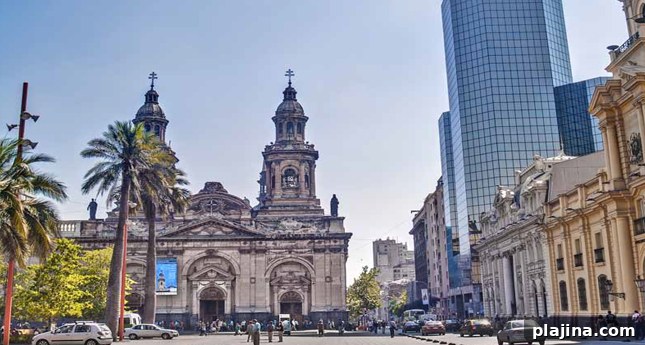
Nestled in a valley just beyond the foothills of the Andes, Santiago, Chile’s capital, is a vibrant cultural and commercial center. Though its metro population is around six million, the city has evolved from an unassuming mountain town into one of Latin America’s leading financial hubs.
Chile’s global trade profile—supported by more free trade agreements than most countries—has helped position Santiago as an important destination for international business. As one of the region’s most stable and prosperous democracies, Chile provides a predictable environment for companies and professionals operating in Santiago.
Despite rapid urban growth and a prominent role in global markets, Santiago retains many of its South American traditions and distinctive business customs. The city experienced a major business expansion over the past two decades, attracting multinational firms such as LAN Airlines, Microsoft, Nestlé and Yahoo. To support this growth, Santiago expanded its urban amenities with stylish restaurants, major museums and an extensive metro network that exceeds 64 miles of service—making it convenient for business travelers to navigate the city during brief stays. Travelers should avoid the busiest periods, known locally as horario punta (7–8:59 a.m. and 6–7:59 p.m.), when trains are crowded and fares can be higher.
Work culture in Santiago involves long hours: many offices list hours from about 8:30 a.m. to 6 p.m., but it is common for employees to remain at work until later in the evening. At the same time, the pace can be relaxed; siestas are still practiced in some places and many businesses close for a lunch break that can last one to two hours depending on the position.
Lunch is the main meal of the day, and for those who dine near the office, restaurants commonly offer a fixed-price menú del día or menú ejecutivo for roughly $6–11. These lunches typically include an appetizer, main course, beverage or a glass of wine, coffee and dessert—ideal for business meals. Osadía, near Avenida Nueva Costanera, offers slow, unhurried service and a relaxed patio setting, while Km0 is a popular upscale option for executives, known for a solid wine list and consistent service. Alcohol at lunch is not unusual in Santiago; a single glass of wine or a Pisco sour is commonly enjoyed with a midday meal.
Hierarchy still matters in Chilean business culture. Formal address, often using usted for senior colleagues, is common, and higher-level executives tend to keep distinct professional boundaries from lower-level staff outside the workplace. In the office, starting meetings with a handshake and exchanging business cards is customary. Personal greetings—such as kisses on the cheek among women or embraces among close male associates—are typically reserved for friends and long-standing colleagues. Business cards usually display two surnames (father’s and mother’s), though people commonly use the father’s surname in everyday interactions.
Communication in Santiago can be indirect. Chileans often avoid open confrontation, and a “yes” may indicate that someone understands a point rather than fully agreeing with it. For this reason, it’s important to follow up with colleagues and clients to confirm agreement and next steps. Because acknowledgments of received emails or calls are not always routine, business contacts may require additional follow-up to ensure alignment.
Dinner in Santiago tends to start late—rarely before 9 p.m.—and can continue well past midnight during the workweek. This schedule provides ample time to enjoy the city’s celebrated seafood and wines. Aquí Está Coco, in Providencia, is widely regarded for its raw bar and seafood courses prepared with Chilean flavors, and Bocanáriz Vino Bar in Lastarria is a favored spot for sampling Chilean wines after dinner. Standard tipping is about 10 percent at restaurants. While tipping taxi drivers is not necessary, parking and gas station attendants customarily receive 100–200 pesos for their assistance.
Santiago’s appeal extends beyond business. Nearby vineyards, world-class ski resorts, seafood markets and coastal beaches frame the city and offer leisure and adventure for visitors. Many cultural and sightseeing opportunities are within walking distance of the major business districts and hotels. The Singular, a luxury property in Lastarria near Iglesia de San Francisco and the Museo Nacional de Bellas Artes, is frequently recommended by business travelers for its amenities such as high-speed WiFi, a spa and 24-hour room service. At the Plaza de Armas, visitors can experience the city’s energy while enjoying mote con huesillo, a traditional sweet peach drink with wheat kernels and dried peaches.
Singers entertain lunch guests at Mercado Central. © Mvildosola | Dreamstime.com
A must-visit is Mercado Central, often praised as one of the world’s great markets. It showcases Chile’s culinary and cultural diversity with seafood stalls, grocery and butcher shops, restaurants, delis, bakeries, artisans and more. The market is an excellent place to introduce clients to local specialties such as caldillo de congrio (conger eel soup), ceviche and empanadas de mariscos (seafood empanadas).
U.S. visitors generally do not need a visa for short stays, though many must pay a reciprocity fee upon arrival. Despite modest entry requirements, the business and cultural experiences Santiago offers make it a rewarding destination for both work and leisure.