
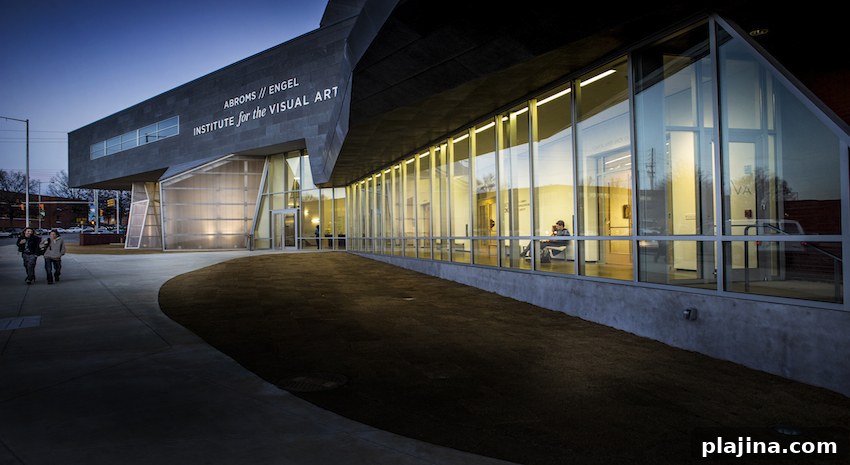
Regarded as a pioneer among post-modern photographers, David Levinthal’s work centers on miniature figures and toys, turning them into powerful subjects that explore memory, representation and cultural myth. The Abroms-Engel Institute for the Visual Arts (AEIVA) at the University of Alabama at Birmingham presents “David Levinthal: Playland” through March 10, featuring a significant selection of the artist’s large-format Polaroid images recently added to the AEIVA Permanent Art Collection.
Levinthal is known for several acclaimed series, including “Barbie,” “American Beauties,” “Blackface,” “Wild West,” “Mein Kampf” and “Passion.” In each series the artist recreates historical moments and cultural narratives with painstakingly arranged miniatures and careful lighting. By photographing these constructed scenes, Levinthal prompts viewers to reconsider how photographs function as evidence and how visual media shape collective memory and cultural identity.
Many images in “Playland” are directly inspired by real historical events or cultural touchstones, but they are deliberately staged and condensed into toy-sized tableaux. The resulting photographs blur the line between documentary and fabrication, inviting questions about the trustworthiness of photographic images and the ways in which images can both reflect and distort history.
David Levinthal, a native of San Francisco, studied studio art at Stanford University before earning a Master of Fine Arts in photography from Yale. His practice over decades has earned recognition for its conceptual rigor and visual wit, combining technical command of large-format photography with an acute awareness of the social and political resonances embedded in popular imagery.
The AEIVA will host a closing reception from 6–8 p.m. on March 2, preceded by an artist talk at 5 p.m. Both the talk and reception are free of charge and open to the public. “David Levinthal: Playland” offers a rare opportunity to see a major grouping of Levinthal’s large-format Polaroids, works that showcase how toys and miniatures can be used to probe serious themes—history, nostalgia, race, gender and the power of visual storytelling.