
FOR ALL ITS COSMOPOLITAN TRAPPINGS, Singapore remains, at heart, a tropical island. City planners have deliberately preserved greenery amid soaring concrete and glass, and pockets of jungle and mangroves that once covered the island still provide genuine escapes from the urban bustle. These habitats predate Sir Stamford Raffles’s 1819 trading outpost and continue to anchor the city’s natural identity.
Raffles’s outpost evolved into the modern metropolis we know today. But can nature truly persist in one of the most densely populated countries on Earth? Singapore’s survival depends on it, and the nation has recognized that for decades—protecting habitats and integrating nature into urban life are central to public health and civic planning.
PHOTOS: © VLADISLAV JIROUSEK – DREAMSTIME .COM
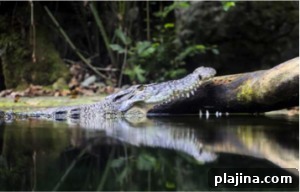
Sungei Buloh Wetland Reserve, on the island’s northern coast, is one of the most important of these preserved areas. Protecting roughly 320 acres, it serves as an essential stopover for migratory birds and supports diverse wildlife, including otters, snakes and occasional saltwater crocodiles.
The largest remaining tract of primary jungle sits in the island’s center, surrounding the main reservoirs and long home to the Singapore Zoo and the Night Safari. These attractions are now part of the broader Mandai Park redevelopment, an ambitious plan to unify nearby nature-based attractions. In 2019 a wildlife bridge was built to reconnect rainforest fragments divided by a highway, and the full Mandai project includes a new bird park, a rainforest park and elevated walkways. When completed, the eco-tourism hub is projected to attract millions of visitors annually.
Occupying an area about half the size of greater Los Angeles, Singapore has long treated environmental issues as core planning challenges rather than afterthoughts. Sustainability is woven into policy and development, helping the city-state earn recognition as one of the world’s most sustainable urban centers.
To reduce greenhouse emissions and promote energy efficiency, Singapore introduced a carbon tax last year. Companies emitting more than 25,000 tons of greenhouse gases pay a fee per ton, with revenue earmarked for green initiatives. While the measure may initially push up electricity costs, the policy aims to encourage more efficient energy use and long-term emissions reductions.
Living on a small island means Singapore imports more than 90 percent of its food, which increases the carbon footprint of its food supply. The country is responding with innovation: urban farming has become one of the fastest-growing sectors. Farms range from rooftop plots and narrow urban lots to climate-controlled, vertical facilities that produce leafy greens and berries year-round.
Some companies are pioneering indoor, multilayer agriculture that minimizes land use while maximizing yields through controlled environments and advanced technology. These approaches reduce reliance on imports and shrink food transportation emissions, contributing to a more resilient local food system.
Sir Stamford Raffles identified Singapore’s strategic location for trade, and the city-state remains a vital transport hub. Balancing that role with sustainability is a continuing priority. On the island’s southwestern corner, construction is progressing on the Tuas Mega Port, a multibillion-dollar, phased project designed to be highly automated and energy-efficient. Officials describe the initiative as an opportunity to rethink modern shipping and reduce the environmental impact of port operations.
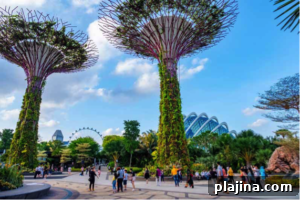
PHOTO: © KLANARONG CHITMUNG – DREAMSTIME.COM
Singapore often resembles the futuristic visions many of us imagined decades ago. Gardens by the Bay’s 160-foot manmade supertrees are emblematic: during the evening light shows, solar-powered LEDs transform the structures into a glowing, otherworldly landscape. The installation blends technology, sustainability and spectacle.
Other innovations are less theatrical but equally impactful. Confronted with limited space, Singapore has rolled out an Underground Master Plan that begins with shared-service tunnels carrying water, waste, power and communications beneath city streets. Over time, the plan envisions moving more transport and storage underground, using natural caverns for reservoirs and other utility needs—freeing surface land for people and nature.
Above ground, automated aerial systems are already in use. Drone delivery trials—including shoretoship services—demonstrate how unmanned aircraft can move goods efficiently and reduce certain transport emissions. These pilot programs are stepping stones toward broader applications, from urban deliveries to potential passenger services.
CHECKING IN WITH RUSSELL BOYMAN
Commercial director, Omnicom Media Group
How long have you been in Singapore, and what brought you here?
I moved here 2.5 years ago from Shanghai after accepting a regional role offered by a rival American-owned marketing services firm.
What opportunities does Singapore offer American investors?
Beyond the well-known advantages—low corporate taxes, an entrepreneurial culture, excellent infrastructure and advanced digital ecosystems—Singapore provides a stable, English-speaking environment where investors can do business confidently. Changi Airport’s global connectivity adds a strong logistical advantage for operations across Asia.
What cultural differences should American business visitors be aware of?
Singaporeans are highly customer-focused and adaptable. Business culture blends influences from the Chinese-majority population with global practices: deal-making and a willingness to prioritize work when necessary are common. Tipping is generally unnecessary, and business courtesy matters. Foreign visitors should be prepared to rely heavily on mobile connectivity—local digital services are integral to daily life and business here.
Which future developments should observers watch?
Singapore continues to welcome foreign investment, increasingly orienting toward regional Asian markets. While the city maintains strong ties to Western partners, policymakers and businesses are paying close attention to shifts in Asia, particularly developments involving China and India.
Which local attractions do you recommend?
Singaporeans cherish food and shopping, so Marina Bay and Gardens by the Bay are must-sees, as is Jewel at Changi for its indoor rainforest and dramatic waterfall. For green spaces and wildlife, the Botanic Gardens and Kranji Marshes offer quieter, more natural experiences.
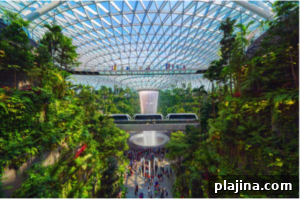
PHOTO: © TAMPATRA1 – DREAMSTIME.COM
DIVERSIONS
Millions of travelers have visited Singapore without ever leaving Changi Airport, and there’s a reason: Changi functions as a destination itself. Jewel, the airport’s lifestyle hub, features an indoor rainforest, a seven-story circular waterfall beneath a glass dome, suspended walkways and family-friendly attractions. Transit passengers and local day-trippers mingle there year-round.
Changi also incorporates sustainability measures into its design—maximizing natural light, using recycled materials and converting food waste into useful byproducts—illustrating how major transport hubs can reduce environmental impact.
In downtown Singapore, land scarcity prompted ambitious reclamation and development projects. Marina Bay, created through reclamation, added a new 890-acre district where iconic structures such as Marina Bay Sands and the supertrees of Gardens by the Bay shape a distinctive skyline. Observatories and elevated walkways offer striking city and waterfront views.
Despite its modern achievements, Singapore preserves its colonial-era heritage. The Colonial District, centered on the Padang, retains red-roofed, white-columned buildings from the British period, and a statue of Sir Stamford Raffles overlooks the Singapore River—reminders of the island’s historical roots.
COMING AND GOING
U.S. citizens need a passport valid for at least six months beyond the intended stay. No visa is required for visits under 90 days. Frequent travelers may apply for the Singapore-United States Trusted Traveler Program to speed immigration clearance.
LODGING
RAFFLES HOTEL
An icon of colonial elegance since 1887, Raffles reopened in 2019 after an extensive renovation that preserved its historic character.
1 Beach Road
$$$$
SIX SENSES DUXTON
A row of conserved trading houses has been transformed into a stylish, carbon-neutral hotel by designer Anouska Hempel.
83 Duxton Road
$$$$
THE WAREHOUSE HOTEL
A converted 19th-century riverside spice warehouse offers boutique accommodation that blends industrial heritage with contemporary design.
320 Havelock Road
$$$$
DINING
328 KATONG LAKSA
A no-frills institution often cited as one of the best places to try laksa, a spicy noodle soup native to the region.
51 E. Coast Road
$$
FOLKLORE
This popular restaurant explores Singapore’s multicultural heritage through dishes inspired by Chinese, Malay, Indian and European traditions.
Destination Hotel, 700 Beach Road
$$$
ZÉN
A fine-dining destination led by a chef with Three Michelin stars, offering an elaborate tasting menu for special occasions.
41 Bukit Pasoh Road
$$$$
INFO TO GO
International flights arrive at Singapore Changi Airport, about 11 miles northeast of downtown. The Mass Rapid Transit system provides the most affordable and efficient transport into the city; tickets can be purchased at stations. Taxi fares to downtown typically range from $20–30.
JUST THE FACTS
Time zone: GMT +8
Phone code: 65
Currency: Singapore dollar
Key industries: Banking, financial services, biotechnology, petrochemicals, construction, tourism
OFFICIAL LANGUAGES
English, Malay, Tamil and Mandarin. English remains the primary language for education, administration and business.