
Founded during the Spanish conquest in 1537, Guayaquil is Ecuador’s largest city, home to roughly 2.5 million people and the country’s primary business center and port. Over the past two decades this tropical city—bright with fruit trees, flowering palms, native plants and wild orchids—has undertaken extensive urban revitalization projects that have attracted foreign investment, improved safety, restored historic areas and increased leisure tourism.
© IRINA BRESTER | DREAMSTIME.COM
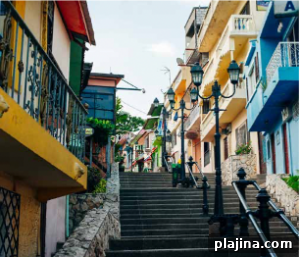
The Malecón 2000 project reclaimed about 1.5 miles of riverfront along the Río Guayas, from Mercado Sur to Santa Ana Hill and the Las Peñas neighborhood north of downtown. Lined with restaurants, a museum, a performance space, a movie theater and shops, the malecon provides a safe, pleasant place to stroll and discover the city. At the northern end, visitors can climb 444 steps through narrow alleys of multicolored houses to reach the Santa Ana Lighthouse and panoramic views of the city.
What was once the polluted Estero Salado has been transformed into a waterfront park where birdwatchers, joggers and families enjoy a 1,300-foot boardwalk and green space. Nuevo Parque Histórico, created in a mangrove wetland between the Daule and Babahoyo rivers where they form the Río Guayas, celebrates the region’s natural and cultural heritage. In 2013 two modern pedestrian bridges were built to connect downtown Guayaquil with Santay Island and the town of Durán, making it easier for residents and visitors to access ecotourism areas to the east of the city.
The next major initiative, still in the design phase, promises to be even more transformative. Ciudad Nueva Guayaquil will redevelop the 593-acre site currently occupied by the city’s airport into three distinct districts—Marina, Central and Garden—once the airport relocates outside the center. The existing terminal will be repurposed as a transportation hub with retail and entertainment offerings.
This mixed-use development will be connected by a central boulevard and an extensive linear park with a stream, green spaces, bike and walking paths, cafés and gathering areas. According to Perkins Eastman, the project’s design firm, the multi-billion-dollar development will include a new Guayaquil Convention Center and a Charles Darwin museum. Planners expect the project to spark economic growth, cultural activity and entertainment and to shape Guayaquil’s evolution into a modern, future-facing city.
Guayaquil hosts Ecuador’s largest seaport, handling about 70 percent of the country’s external trade. Together with the city’s industrial and agricultural base, Guayaquil contributes roughly 25 percent of Ecuador’s GDP. Its sophisticated consumer market attracts international firms aiming to reach southern Ecuador.
Retail expansion in Guayaquil illustrates this trend. In 2021 Bath & Body Works opened an outlet at the upscale San Marino Shopping Mall, its first in Ecuador. The mall also welcomed Victoria’s Secret and has drawn other global brands seeking to serve local demand for international and exclusive products.
The city is home to operations from numerous international companies across diverse sectors, including Johnson & Johnson, Nestlé, Deloitte, Audi, IBM, Unilever, Kimberly-Clark, Whirlpool, Cargill, PwC and Anheuser-Busch InBev.
CHECKING IN WITH FELIPE CORREA
Founder and managing partner, Somatic Collaborative; professor and chair of architecture, University of Virginia School of Architecture
Many Guayaquil colonial buildings have been lost. Has the city done a reasonable job of restoring its historic structures?
The Las Peñas neighborhood is a strong example of conservation that revitalized the area while highlighting 19th-century architecture. Much of downtown’s urban fabric dates to the 20th century, but notable civic buildings—such as the Municipal Palace, Mercado Municipal Sur and the Moorish Clock Tower—showcase the public architecture of the early 1900s.
Other than the Ciudad Nueva project, what other urban revitalization projects are in the planning stages?
In the last 20 years Guayaquil has prioritized public space and park development. Projects like Parque Los Samanes—planned to become one of the largest parks in Latin America—will provide important green infrastructure and water-management capacity. Such initiatives are critical as the city prepares to confront sea-level rise and other environmental challenges.
What would you suggest first-time visitors see and do in Guayaquil?
I recommend exploring Guayaquil’s aquatic landscape: the mix of waters between the Daule River and the Estero Salado forms a unique urban ecology and offers insight into how the city engages its natural environment.
As an architect, what cultural attractions in the city do you find especially enjoyable?
I frequently visit the Centro Cultural Simón Bolívar and the Museo Antropológico y de Arte Contemporáneo for their rotating exhibitions and the archaeological collections on display.
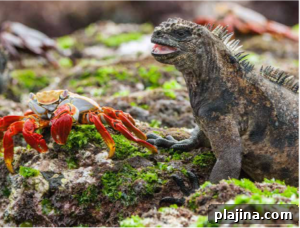
PHOTO: © SERGEY URYADNIKOV | DREAMSTIME.COM,
DIVERSIONS
For many visitors, the Galápagos Islands are a must-see destination reachable from Guayaquil. Flights to the Galápagos (about 1 hour 45 minutes) depart from Guayaquil and arrive at Baltra or San Cristóbal. The archipelago of 19 islands lies roughly 620 miles off Ecuador’s Pacific coast and is a protected UNESCO World Heritage site. Visits to many islands require a licensed guide from Galápagos National Park; smaller cruise vessels carrying 16–32 passengers are often the best way to experience the islands. Book multiday cruises several months in advance and arrive in Guayaquil one to two days before departure.
If you have extra time, consider visiting Cuenca in the Andes—about 3.5 hours east of Guayaquil—home to the important Inca site Ingapirca. Closer to Guayaquil, the Pacific coast near Salinas offers some of Ecuador’s best beaches, roughly a two-hour drive away, with miles of sand and numerous small restaurants serving local ceviche and grilled seafood.
LODGING
Hotel del Parque
A 5-star Relais & Châteaux property within Guayaquil Historical Park, Hotel del Parque has 46 rooms furnished with Ecuadorian details, marble bathrooms and a riverfront restaurant, Casa Julián.
Km. 1½ vía a Samborondón, Av. Los Arcos y Río Guayas, Samborondón
Oro Verde Guayaquil
This large hotel offers 236 rooms and suites, a spa, outdoor pool, airport transfers, free parking and multiple dining options. Executive club rooms include dedicated administrative services.
Av. 9 de Octubre 414 y García Moreno, Guayaquil
Wyndham Guayaquil
A 175-room property on the boardwalk with river views, complimentary breakfast, airport shuttle, fitness center, spa and rooftop pool. It’s within walking distance of shops and Santa Ana Hill Lighthouse.
Calle Numa Pompilio Llona S/N, Ciudad del Río – Puerto Santa Ana
DINING
Anatto
A restaurant blending Peruvian and regional seafood traditions—try the surf-and-turf, prawns, mushroom risotto and salads for a refined dining experience.
Q4F5+C8, Citadel La Saiba, La Saiba, Mz E villa 12, Guayaquil
Mami-T
A boardwalk eatery in Puerto Santa Ana known for fresh fish dishes and classic Ecuadorian fare like morocho-style rice and lentils. Sangria or a cold local beer complement the warm coastal climate.
Edificio Riverfront II, local 5 y 9
Terra Market
A creative venue inspired by Ecuadorian and Latin American cuisines, popular with both expatriates and locals for its inventive dishes and cocktails.
Km. 1.5 vía Samborondón, Edificio Xima local 2
INFO TO GO
Guayaquil’s José Joaquín de Olmedo International Airport is 4.5 miles from the city center with both international and domestic flights from a modern terminal. Ground transportation options include rental cars (several outlets in the terminal) and taxis (typically around $10 one way); drive time to downtown ranges from 10 to 25 minutes depending on traffic. Many hotels offer complimentary shuttle service.
JUST THE FACTS
Time zone: GMT-5
Phone codes: Country code: 593; City code: 4
Currency: U.S. dollar
Key industries: Agriculture and beverage processing, shipbuilding, iron foundries, cement and chemical production, petroleum products, flower and food export (bananas, coffee, cacao, shrimp and fish), pharmaceuticals, construction and tourism.
OFFICIAL LANGUAGE
Spanish is the official language. Indigenous languages are official in the regions where they are spoken. English is commonly spoken in hotels, larger shops, restaurants and businesses.
COMING & GOING
U.S. citizens need a valid passport for visits up to 90 days; for longer stays a visa must be obtained prior to arrival.