The city of Valletta was originally built as a stronghold to keep outsiders at bay. Its two natural harbors provide strategic shelter in the central Mediterranean between Italy and the coast of Africa, and any ship approaching the city is met by imposing walls of warm, golden limestone.
These fortifications are more than decorative; they carry the marks of countless assaults, including the prolonged siege during World War II when German and Italian forces besieged the island for two years, five months, one week and two days. In recognition of their courage, the Maltese population was collectively awarded Britain’s George Cross, the highest civilian gallantry honor, now proudly displayed on the national flag.
In recent decades Malta has become far more open to visitors. Blessed with about 300 days of sunshine, attractive beaches and rich historical sites, tourism is a vital part of the economy, contributing roughly 15 percent of GDP. Like many destinations, Malta’s tourism industry suffered dramatically during the pandemic, but the nation adapted, endured and prepared to welcome visitors again.
Meetings, incentives, conferences and exhibitions (MICE) are playing a key role in the sector’s recovery. In April 2021 the government introduced a grant of $160 for each MICE delegate brought to the country, encouraging event organizers to choose Malta as a destination.
While Malta hosts a number of modern, standard conference facilities similar to those found in many cities, the island also offers distinctive venues with strong local character. The Mediterranean Conference Centre (MCC), housed in a 16th-century hospital built by the Knights of the Order of St. John, is the island’s flagship venue and a striking example.
Perched at the tip of Valletta’s peninsula with sweeping views over Grand Harbour, the MCC has been carefully restored to retain its historic atmosphere while incorporating contemporary amenities and technology. Stone corridors are lined with ancient suits of armor and the staircases bear the polished traces of centuries of use. La Vallette Hall, one of seventeen event spaces within the MCC, can host up to 1,500 guests beneath a vaulted stone ceiling, making it ideal for events that embrace the site’s medieval charm.
Among the MCC’s varied rooms—from theater-style auditoria to intimate boardrooms—the Grand Harbour Terrace stands out. This rooftop outdoor space offers panoramic views across the harbor, and events held here at sunset are especially memorable.
Malta’s largest current indoor venue is the Malta Fairs & Conventions Centre, located on a former airbase in Ta’ Qali, central to the island. Its vast, tent-like structure can accommodate up to 13,000 people and has hosted large-scale concerts and exhibitions.
Several premium hotels on the island also offer substantial MICE facilities. The Westin Dragonara Resort in St. Julian’s, just along the coast from Valletta, recently completed a major refurbishment and now provides 15 event rooms. A new Hard Rock Hotel in St. Julian’s, due to open soon, will offer 370 rooms, a spa and around 37,000 square feet of event space, positioning it among the island’s largest convention properties.
© ZOLTAN GABOR | DREAMSTIME.COM
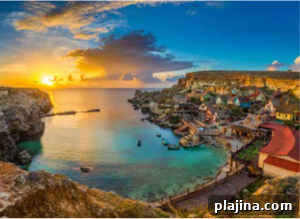
As a tourist-focused Mediterranean destination, Malta boasts a wide variety of attractions. On the lighter, more playful end of the spectrum is Popeye Village, originally the set for the 1980 film starring Robin Williams; today it operates as a theme park and hosts corporate events and team-building activities. At the other end are sites that reveal Malta’s deep history: Valletta itself contains treasures ranging from the Hal Saflieni Hypogeum, a remarkable subterranean archaeological site dating back to 3000 B.C., to the Lascaris War Rooms, the underground complex used during World War II. Visitors can also admire St. John’s Co-Cathedral, the Grandmaster’s Palace (which houses the office of Malta’s president) and the contemporary City Gate designed by Renzo Piano.
Twice daily, at noon and 4 p.m., six cannons fire a salute from the city walls toward Grand Harbour. Best viewed from the Upper Barrakka Gardens, the salute is a thunderous reminder of the island’s martial past and offers a dramatic moment for visitors standing behind the ramparts, watching the smoke drift away over the harbor.
UNIQUE VENUES
Beyond the main island, a short ferry ride of about 45 minutes takes visitors to the quieter, more rural island of Gozo. With a rocky landscape farmed since around 5000 B.C., Gozo presents a contrasting pace and scenery that appeal to groups seeking something different.
The Maltese government launched the “MICE in Gozo” initiative in 2020 to strengthen the island’s event infrastructure. Notable locations to benefit include the Cittadella, a remarkable 14th-century citadel that dominates Victoria, Gozo’s charming capital—an atmospheric setting particularly suited to outdoor evening events.
Gozo’s leading hotel, Kempinski San Lawrenz, sits amid palm trees in the countryside and features four function spaces that accommodate groups from about 15 up to 400 guests, making it well suited for smaller conferences and incentive programs.
With its blend of historic character, scenic settings and growing event facilities on both Malta and Gozo, the islands offer meeting planners and delegates a memorable combination of culture, sunshine and convenience.