
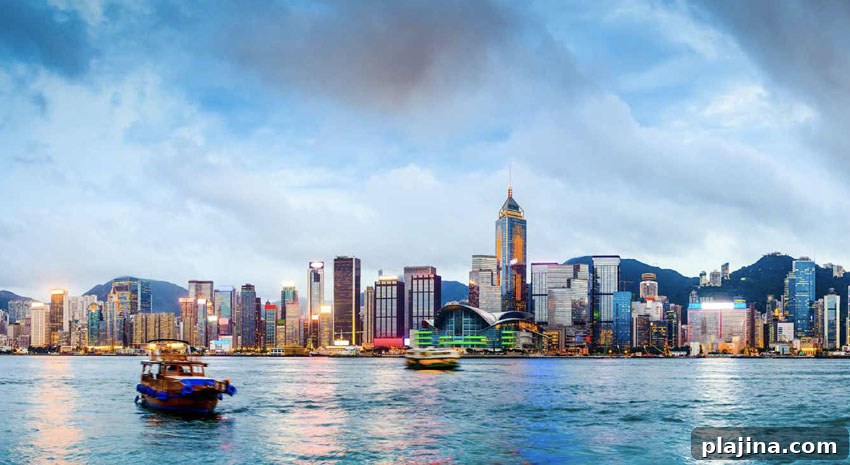
OVERLOOKING STUNNING VICTORIA Harbour, Hong Kong is a dynamic, cosmopolitan city where soaring skyscrapers, world-class infrastructure and international business coexist with rich cultural traditions, peaceful green spaces and a population of around 7.39 million people who enjoy the best of East and West.
Hong Kong is continually redefining itself. While the region’s history spans more than a thousand years, the modern city we know today has been shaped significantly by events of the last two centuries. In 1842, following the First Opium War, the Qing Dynasty ceded Hong Kong Island to Great Britain. For more than 150 years Hong Kong developed as a British colony, becoming a major international trading port and an important manufacturing center during the early 20th century.
On July 1, 1997, Hong Kong returned to China and became a Special Administrative Region under the principle of One Country, Two Systems. This arrangement grants Hong Kong a high degree of autonomy, including an independent judiciary, the rule of law, freedom of speech, and a capitalist, free-trade economy.
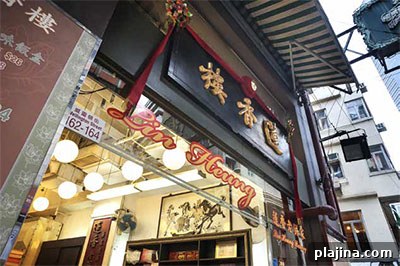
Lin Heung Tea House © STRIPPEDPIXEL | DREAMSTIME.COM
That autonomous, free-market system remains central to Hong Kong’s economic success. The city has frequently earned top global rankings: it has been named the world’s freest economy by the Heritage Foundation for more than two decades, ranks highly in international competitiveness and ease-of-doing-business reports, and features prominently in surveys of the best countries for business. These recognitions reflect Hong Kong’s strong legal system, open markets and strategic position in Asia.
Hong Kong hosts a major financial sector, with about 70 of the world’s top banks operating in the city. The Hong Kong Stock Exchange has led global IPO fundraising in several recent years and remains a top destination for capital raising in the region. Beyond finance, Hong Kong serves as a regional hub for corporations and startups, with thousands of overseas and mainland firms maintaining regional headquarters or offices here.
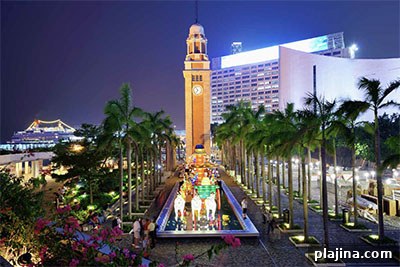
The Hong Kong Clock Tower is a remnant of the original Kowloon Station on the Kowloon-Canton Railway. © SEAN PAVONE | DREAMSTIME.COM
Key industries include financial services (banking, insurance and stock brokerage), trading and logistics, tourism, and professional and producer services. To remain competitive, the city is also encouraging technology startups and exploring growth in biotech and other innovation-led sectors. Hong Kong’s proximity to Shenzhen, strong university base and established financial ecosystem position it well for hardware, fintech and other tech-driven initiatives.
Arts and culture are receiving increasing attention and investment. The West Kowloon Cultural District, built on nearly 100 acres of reclaimed land along Victoria Harbour, is a major development that brings museums, an opera center, performance venues, public art spaces and a waterfront promenade together to form a creative precinct for residents and visitors.
While proud of its history, Hong Kong is focused on the future and invites people to explore the opportunities the city offers.
CHECKING IN WITH BRIAN YEN
Executive Director, MIT Hong Kong Innovation Node
What about Hong Kong attracted MIT to launch its MIT Entrepreneurship and Maker Skills Integrator program in the city?
The Node was established to enrich educational experiences for MIT and Hong Kong students in areas of innovation, entrepreneurship and rapid prototyping. For programs like MEMSI and the new MEFTI (MIT Entrepreneurship and FinTech Integrator), Hong Kong was an ideal choice because of its proximity to Shenzhen for hardware development, its world-leading financial center for fintech, a welcoming East-meets-West culture for visiting students, and a high concentration of quality universities to partner with.
What type of tech is coming out of the startup bootcamp? What are the results so far?
MEMSI focuses on small electronic hardware projects with an emphasis on learning. While the bootcamp is primarily educational rather than a direct product accelerator, many participants go on to found companies or join startups. Some bootcamp ideas have evolved into ventures—for example, a smart contraception pill case emerged from a 2017 cohort and continued development beyond the program.
What do you think is the future of tech and startups in Hong Kong?
Hong Kong’s government has committed significant resources to nurture startups, and early signs of growth are visible. With world-class universities supplying talent and a supportive ecosystem for finance and manufacturing partnerships, Hong Kong is on a positive path to becoming a major tech hub in the region.
Things to Do in Hong Kong
Hong Kong offers a wide range of attractions. Start at Victoria Harbour and stroll the promenade for spectacular skyline views. For elevated perspectives, ride the Hong Kong Observation Wheel, take the historic Peak Tram to the highest point on Hong Kong Island, or visit the sky100 observation deck for 360-degree vistas from 100 floors up.
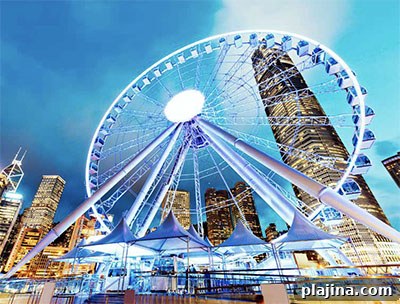
Hong Kong Observation Wheel © ESTHERPOON | DREAMSTIME.COM
Explore distinct neighborhoods that feel like cities within a city: Wan Chai blends East and West; Wong Tai Sin showcases temples and traditional culture; Yau Tsim Mong is known for bustling night markets; Old Town Central offers vibrant arts, dining and historical streetscapes. Each district has its own character and history to discover.
Find calm in the city’s parks. Visit the historic Hong Kong Zoological and Botanical Gardens in the heart of the island, join a guided bird-watching walk in Hong Kong Park, or watch tai chi in Victoria Park. Kowloon Park’s Chinese Garden and lotus ponds are peaceful spots amid urban life.
Hong Kong is also home to numerous ornate Buddhist and Taoist temples where ancient rituals continue and colorful festivals are celebrated throughout the year. With so much to see and do, you may want to extend your stay to experience more of what the city offers.
Hong Kong Info to Go
Direct flights from the United States to Hong Kong are offered by several major carriers. On arrival at Hong Kong International Airport, travelers can use metered taxis, private cars or the high-speed Airport Express train, which reaches Hong Kong Island in about 24 minutes. Within the city, the MTR network of 11 rail lines connects most major districts and destinations.
Hong Kong: Just the Facts
Time zone: GMT +8
Phone code: Country code: 852
Currency: Hong Kong dollar
Key industries: Financial services (banking, insurance, stock brokerage), trading and logistics, tourism and professional and producer services.
COMING AND GOING
U.S. citizens need a passport valid for at least one month beyond their intended stay; tourist visas are not required for visits under 90 days. Visas are required for work or study and must be obtained before travel.
OFFICIAL LANGUAGE
Chinese and English
Where to Stay in Hong Kong
MANDARIN ORIENTAL, HONG KONG The flagship luxury hotel opened in 1963 and is known for exceptional service and accommodations, including several Michelin-starred dining options. The Landmark, 15 Queen’s Road, Central District $$$$$
THE POTTINGER HONG KONG A 68-room boutique hotel located on one of the city’s historic stone slab streets, blending heritage and modern comforts. 74 Queen’s Road, Central District $$$$
THE UPPER HOUSE Designer Andre Fu created a tranquil, modern luxury retreat with spacious studios and suites. 88 Pacific Place, Queensway, Central District $$$$$
Restaurants in Hong Kong
HO LEE FOOK A lively restaurant inspired by old-school Hong Kong and late-night Chinatown scenes, drawing adventurous diners. Ground floor, 1-5 Elgin St., SoHo $$–$$$
LIN HEUNG TEA HOUSE One of Hong Kong’s oldest tea houses, serving traditional dim sum from bamboo baskets and trolley carts since 1926. 162 Wellington St., Sheung Wan $$–$$$
YAN TOH HEEN Renowned for refined Cantonese cuisine and seasonal specialties, earning two Michelin stars. InterContinental Hong Kong, 18 Salisbury Road, Kowloon $$$$–$$$$$