
“Zdravstvuyte,” said the bikini-clad Chinese woman who approached me, holding a stack of brochures for recently opened dance clubs. I shook my head.
“I don’t speak Russian,” I said, taking in the view of the half-empty beach and aquamarine water before flipping over in the warm sand.
During my four-night stay in Sanya, on Hainan Island off China’s southern coast, many residents assumed I was Russian. Hainan—often nicknamed the “Chinese Hawaii”—has long been a winter retreat for mainland Chinese and visitors from Russia. Increasingly, though, Western travelers are finding their way to the island’s white-sand beaches and well-formed surf, just a 90-minute flight from Hong Kong and around three hours from Shanghai.
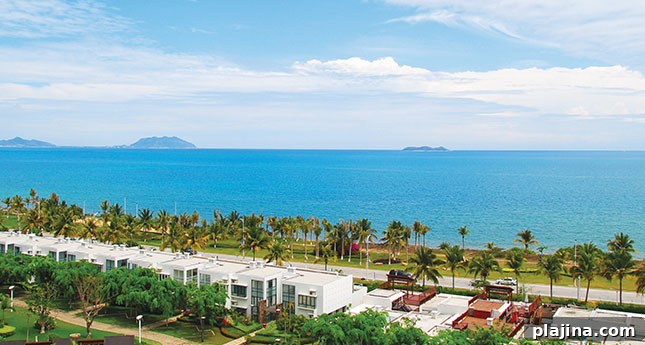
Compared with the often-muted palettes of many mainland cities, Hainan feels painted in Technicolor: vivid blues, greens and yellows saturate the landscape. Despite rapid tourism development, much of the island’s flora and fauna remain intact, and dense jungle—with its tangle of vines—reaches close to the shoreline in many places.
Once a remote backwater inhabited by exiled officials and the Miao people, Hainan became a Special Economic Zone in 1988, triggering a construction boom. Sanya stretches roughly 25 miles along the island’s southern coast and exists largely to serve visitors, with new four- and five-star resorts appearing frequently.
For years Sanya’s hotels leaned toward ostentatious themes—African safaris, Mayan temples—and catered primarily to mainland tourists. Recently, however, international brands such as Ritz-Carlton, Marriott and Banyan Tree have opened properties, raising the profile of Yalong Bay and other resort areas.
Dadonghai Beach on the western end of Sanya is busier and lined with midrange hotels, concrete high-rises and informal stalls selling souvenirs and produce. To the east, Yalong Bay is home to a string of luxury resorts, each with its own private stretch of sand.
Because major Chinese holidays fall in January and February, my May visit found Yalong Bay surprisingly quiet; walking several miles of hotel beaches revealed only a few dozen people. We began our stay with a budget-friendly $73-per-night room at the Universal Resort, whose animal-print décor and oversized elephant statues soon felt excessive. By contrast, the Mangrove Tree Resort impressed with tasteful landscaping, secluded hammocks, a lagoon pool and a floating bar serving gelato and baked Alaska on hot afternoons. Rooms there start at about $130 without ocean views but include outdoor balcony showers that contribute to an open-air atmosphere.
For those seeking privacy and top-tier pampering, the Banyan Tree Resort on Luhuitou Bay offers villas around a sculpted tropical lagoon. Starting around $250 per night, the villas sit within meticulously designed grounds and provide access to multiple outdoor pavilions offering signature spa treatments. The property also features a Rainforest trail with alternating hot and cold hydrothermal cabins.
While resort dining covers a wide range of cuisines—from Thai and Chinese to international fusion—venturing into downtown Sanya reveals lively local options. When the midday sun became too strong, we wandered through Jiefang Road’s Number 1 Market, sampling fried squid, fresh tropical fruit and cold drinks amid the bustling stalls.
In the evening, Cyrillic signage around town reminded me of the island’s Russian connections, and we joined a large international crowd at the Wooden House Russian Restaurant. There we enjoyed draniki, pelmeni and vodka flights for reasonable prices compared with Western standards.
Hainan is the only place in China where surfers can reliably find surfable waves, so anyone wanting lessons or board rentals should check out Surfing Hainan in Dadonghai. The shop, run by Americans, also organizes trips to more remote breaks during the winter season. In summer the surf can be modest, but I was fortunate one afternoon when a perfect set rolled through Yalong Bay; floating alone in clear, warm water, I decided Hainan might be my favorite surf spot yet.
Not every visitor is drawn only to beaches. Kevin Westmoreland, an English teacher visiting from Ningbo, said he preferred the island’s interior. Leave Sanya and the neon signs and concrete fade within minutes into forested hillsides, terraced fields of rice, coffee and coconuts, and small farms with water buffalo. At dusk we headed for Hainan’s famed mineral springs, passing smoke rising over fields and shifting mountain clouds along the way.
Nantian Hot Springs offers dozens of pools with varying temperatures and experiences; some pools carry names like Imperial Concubine Spring. One of the most unusual attractions is the Fish Therapy pool, where tiny Garra rufa fish nibble dead skin—an experience once popular in Turkish spas and now offered at resorts in the region.
Hainan’s attractions are not limited to water. About 15 miles west of Sanya lies Tianya Haijiao, a boulder-strewn beach known for its dramatic rock formations that even appear on China’s two-yuan note. The site figures in famous Chinese love poems and is a popular destination for newlyweds seeking symbolic blessings. A further 12 miles along the coast brings visitors to the Nanshan Culture Tourism Zone, home to one of China’s largest Buddhist centers. The massive bronze statue of the bodhisattva Guan Yin—enshrined in 2005—is among the largest statues in the world and draws pilgrims from across Greater China.
For Western travelers, Hainan can still be surprisingly affordable, especially during the summer off-season when hotels offer discounts. Adding a flight to Sanya to an existing China itinerary is often economical, though growing Western interest may change that in the years ahead.
Personally, I’m eager to tell others about Hainan not just for the beaches and surf but because it’s where, early one quiet morning, my boyfriend proposed on an empty stretch of sand.
Diversion
Surfing Hainan (Dadonghai Beach) is the island’s primary surf shop for rentals, lessons and local break advice. Lessons typically include transportation and equipment.
Golfers can play at Yalong Bay Golf Club, a Robert Trent Jones Jr. design shaped like a dragon’s claw that overlooks the water. The course has hosted professional events and offers visitor tee times and greens fees.
Nantian Hot Springs, set in lush jungle about 30 minutes from Yalong Bay, features more than 60 pools, a variety of spa services and the Fish Therapy experience. Shuttle buses run from select resort areas; taxis are also readily available.
Tianya Haijiao’s boulder beach is about 15 miles west of Sanya. Tourist buses connect popular attractions like Underwater World, Tianya Haijiao and the Nanshan Culture Tourism Zone at regular intervals.
Info To Go
Flights from Beijing, Hong Kong, Shanghai and Guangzhou arrive at Sanya’s Fenghuang International Airport (SYX). Taxis to Yalong Bay (about 15 miles from downtown Sanya) cost roughly $10; trips between Yalong Bay and central Sanya are approximately $6. Many upscale hotels provide airport transfers.
Lodging
Banyan Tree Sanya
Private pool villas surround a sculpted tropical lagoon with multiple outdoor pavilions offering signature spa treatments. Luhuitou Bay.
The Ritz-Carlton, Sanya
Secluded grounds on Yalong Bay with multiple pools, luxury shopping and a large spa. Yalong Bay National Resort District.
Yalong Bay Mangrove Tree Resort
A five-star, Thai-style property with an open-air feel, outdoor balcony showers and hammocks amid palm trees. Yalong Bay National Resort District.
Dining
Number 1 Market
A bustling downtown market where fresh seafood, including fried squid on a stick, and tropical fruit make for satisfying, inexpensive meals. Jiefang Road, Sanya.
Rainbow Café
An American-style bar serving ribs, burgers and beers with live entertainment from local bands and DJs.
Wooden House Russian Restaurant
A popular spot for tourists to sample authentic Russian dishes such as stroganoff, pelmeni and potato pancakes in a lively setting. Yuya Road, Sanya.