
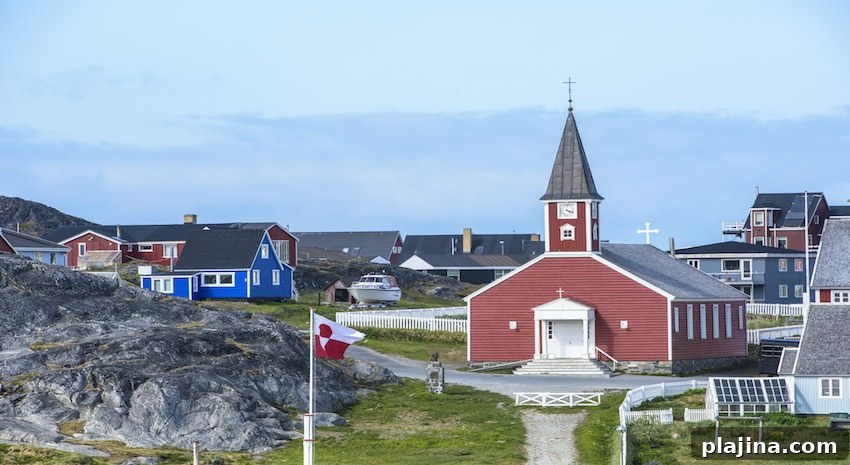
Inuit culture and Norse history come together to form a compelling portrait of Greenland’s past. At the Nuuk Art Museum in the capital city of Nuuk, visitors can trace the country’s cultural heritage through an important collection of carvings in wood, tooth, bone and soapstone, alongside paintings and other works that reflect Greenland’s unique artistic traditions.
The museum’s permanent exhibition features historic works by artists such as Emanuel A. Pedersen (1894–1948), Harald Moltke (1871–1960) and Christine Deichmann (1869–1945). Equally significant are pieces by contemporary Greenlandic artists including Miki Jacobsen (born 1965), Buuti Pedersen (born 1955), Naja Rosing Asvid (born 1966) and the late Anne-Birthe Hove (1951–2012). Together these works offer a broad view of Greenlandic life and identity across generations, from traditional craftsmanship to modern interpretations of place, myth and community.
Adjacent to the museum, The House of Niels Lynge offers a rare, intimate glimpse of daily life in Greenland during the mid-20th century. Preserved as it was when Niels Lynge—painter, pastor and poet—lived there, the house functions as a time capsule of the 1950s and 1960s. Lynge transformed the interior walls into canvases, painting directly on the surfaces and framing those images in situ; he noted that this approach helped ensure the paintings would remain part of the home and not be removed. The result is a domestic environment where art and everyday life are inseparable.
The Nuuk Art Museum operates seasonal hours and welcomes visitors throughout the year. While the museum maintains regular opening times, access to The House of Niels Lynge is by appointment, and individual visits can be arranged in advance. These visits provide a concentrated, personal experience of Greenlandic art and material culture, illuminating how artists have interpreted local narratives, historical encounters and the Arctic landscape.
Exhibitions at the museum emphasize the continuity and change in Greenlandic artistic practices. Traditional carvings—rendered in bone, tooth and soapstone—showcase technical skill and ancestral knowledge, while paintings and contemporary mixed-media works engage with modern concerns: identity, colonial legacies, language and the environment. Displaying both historical and recent works allows visitors to appreciate how artists adapt materials and motifs to address shifting social realities.
For travelers and scholars alike, the Nuuk Art Museum and The House of Niels Lynge are essential stops for understanding Greenland beyond stereotypes. The museum’s collection demonstrates the depth and diversity of Greenlandic creativity, and the preserved interior of Lynge’s home gives visitors a sense of how art infuses everyday spaces. Together they offer a thoughtful, human-centered perspective on a place shaped by both Inuit traditions and Norse influences.
Visitors planning a trip should check current opening hours before arrival and consider scheduling an appointment if they wish to see The House of Niels Lynge. Guided visits and staff insights can enrich the experience, providing context for the works on display and the stories they tell about Greenland’s past and present.