
PHOTO: © LAURENTIU IORDACHE | DREAMSTIME
No matter how often you watch the dramatic scenes from Titanic—the desperate scramble for lifeboats, the final farewells between characters, or Celine Dion’s familiar refrain—you can’t truly grasp the scale of the disaster until you encounter an iceberg in person. Gliding through fog and suddenly finding your path blocked by a hulking mass of ice the size of a village is an experience that rewrites your sense of scale and fragility.
The most direct way to encounter that moment is on a Greenland cruise.
Arctic tourism has been growing. Before the pandemic, Greenland Statistics recorded nearly 44,000 cruise passengers—travelers drawn by remote landscapes and the chance to see the island’s vast ice fields before they change further due to climate warming. While NASA and other scientific agencies document substantial ice loss, roughly 80–90 percent of Greenland remains covered by ice. Glaciers flow toward the sea and periodically calve, producing clear, blue icebergs that drift among floes of sea ice.
Many cruise itineraries combine Greenland with Iceland, eastern Canada or passages through the Arctic, but several lines now operate voyages devoted solely to Greenland. Choices range from luxury ships to expedition vessels rated for ice navigation with polar class levels from PC7 to PC1. The cruising season is short—typically July through September—and because ice and weather make a full circumnavigation difficult, most voyages concentrate on either the east or west coast.
© HEL080808 | DREAMSTIME.COM
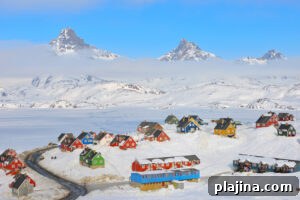
The eastern coast emphasizes raw nature and expedition-style travel. Operators describe these trips not as conventional cruises but as true expeditions, where vessels steer close to towering, ice-blue glacial faces. Kayak and Zodiac excursions weave among icebergs, offering views of puffins, seals resting on floes, and the occasional thunder of a calving glacier. Settlements are sparse—places like Tasiilaq on Ammassalik Island and remnants of former military sites are among the few inhabited locations—making the east ideal for those seeking pure Arctic landscapes and wildlife encounters.
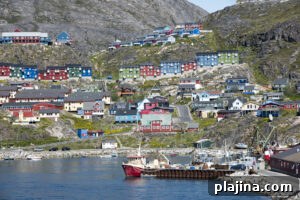
The west coast offers a mix of scenery and cultural experiences. Many itineraries include the relatively cosmopolitan capital, Nuuk, as well as visits to traditional Inuit villages and vibrant coastal towns such as Qaqortoq. Shore excursions often feature open-air fish markets, Norse ruins like Brattahlið, and museums displaying ancient tools, artifacts, and reconstructed turf houses in places like Sisimiut. Polar-rated ships can reach as far north as the Ilulissat Icefjord, a UNESCO World Heritage site where the Sermeq Kujalleq glacier calves prodigious quantities of ice—one potential source of the ice that drifted into the North Atlantic in 1912. Optional activities may include helicopter flights, dog sledding, or soaking in geothermal pools near southern towns. Whale sightings are common; belugas, minkes, narwhals, and occasionally sperm and bowhead whales regularly appear in Greenland’s coastal waters.
When planning a trip, pay attention to the ship’s polar class and the itinerary’s focus—nature or culture. Onboard lectures and talks, especially when delivered by Inuit speakers, add valuable context and personal perspectives. Many voyages offer practical comforts such as complimentary parkas, warm vests, and onboard boot rental. Travelers should also expect flexibility: fog, rough seas, and heavy ice can alter plans, and itineraries may shift for safety and environmental reasons. For the adventurous, rituals like the polar plunge attract those who want a memorable, if chilly, firsthand experience of Arctic waters.

© AZURITA | DREAMSTIME.COM
GREENLAND GASTRONOMY
Greenland’s cuisine is a rewarding complement to the landscape. Cruise ship menus may include familiar international dishes, but sampling local specialties deepens the experience. As an autonomous territory within the Kingdom of Denmark, Greenland’s food scene includes Danish influences—open-faced smørrebrød sandwiches, cured fish, herring, mayonnaise-based salads, and pastries for breakfast—alongside indigenous flavors.
For adventurous eaters, traditional foods such as whale steak and muktuk—the skin and blubber of bowhead, narwhal, or beluga—offer a direct taste of Arctic subsistence. Muktuk is often described as oily and nutty; it can be eaten raw, fried, boiled, frozen, or pickled, and is sometimes served with condiments like brown sauce or soy sauce depending on local preference.
Fine-dining options also highlight regional ingredients. In Nuuk, restaurants such as Sarfalik showcase cured reindeer, fermented cabbage, grilled whale carpaccio, musk ox, and other local proteins, often paired with creative preparations and desserts that use Greenlandic seaweed, creating a culinary bridge between traditional ingredients and contemporary gastronomy.