
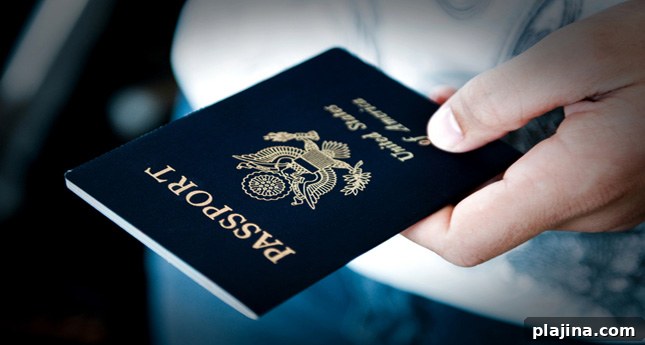
World passport rankings were recently published by 2ndPassports.com, revealing which national passports grant the broadest visa-free access around the globe.
At the top of the list is the German passport, which provides its holders visa-free or visa-on-arrival access to 177 countries across North America, South America, Southeast Asia, Southern Africa, Western Europe and other regions. Close behind is the Swedish passport, offering access to 176 destinations. Several other strong passports include those of the United States, Belgium, Denmark and the Netherlands, each granting entry to 174 countries.
Not all passports offer equal mobility. Major economies such as Russia, India, China and Saudi Arabia are placed in the mid to lower tiers of the ranking, providing significantly fewer visa-free destinations than the highest-ranked countries. The passports with the most limited travel freedom are Afghanistan, Pakistan, Iraq and Somalia, each permitting access to 30 or fewer countries.
The report highlights a clear advantage for European Union passports. Of the 28 EU countries included in the assessment, 25 provide passports that allow travel to at least 160 countries without a prior visa. The three EU members that fall short of that threshold are Bulgaria, Romania and Croatia. Outside the EU, several non-European passports demonstrate similarly strong global reach: the United States, Japan, Singapore, South Korea, New Zealand and Australia all appear near the top of the rankings.
These passport rankings reflect a combination of bilateral visa agreements, diplomatic relations and immigration policies that shape international travel freedom. For travelers and global citizens, the results underscore how nationality continues to be a powerful determinant of mobility, influencing where people can go without advanced visa arrangements.
Travel planners, expatriates and anyone considering citizenship options may find this information useful when evaluating visa requirements and entry freedoms for different countries. Understanding which passports offer the most uncomplicated access can help with long-term planning for business travel, study abroad, retirement overseas or global mobility strategies.
Overall, the 2ndPassports.com ranking offers a snapshot of current travel freedoms around the world, illustrating both regional patterns—particularly the strength of many European passports—and the substantial differences that still exist between countries.