
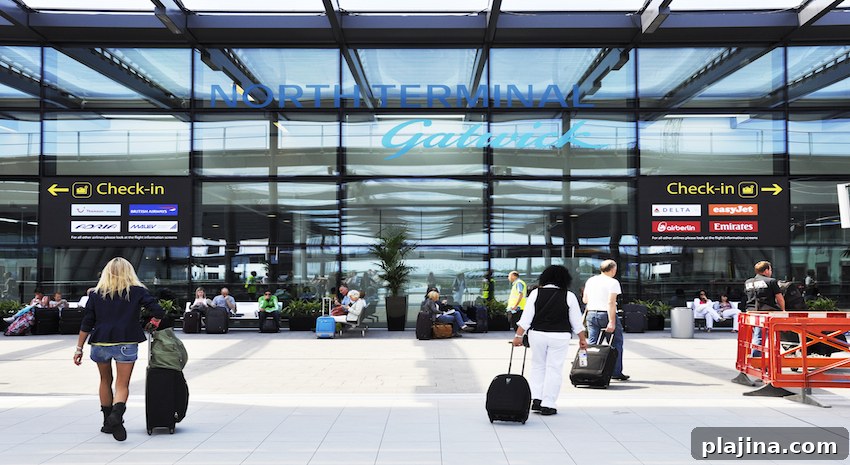
A new bilateral agreement between the United Kingdom and China will significantly increase the number of permitted passenger flights between the two countries, a development welcomed by London Gatwick Airport.
Under the updated arrangement, the weekly cap on passenger flights from each country will rise from the current limit of 40 to as many as 100. This expansion is expected to encourage greater tourism, strengthen business connections, and create more travel options for passengers and companies operating between the U.K. and China.
Gatwick has been actively lobbying the U.K. government to expand routes and capacity to China. The airport has already taken steps to grow its China network this year, including hosting Tianjin Airlines, which currently operates the U.K.’s first—and so far only—direct services to Chongqing (CKG) and Tianjin (TSN). Gatwick has also seen the return of Cathay Pacific with flights to Hong Kong (HKG), adding to the airport’s long-haul portfolio.
Stewart Wingate, chief executive of Gatwick Airport, said the agreement will create significant opportunities for trade and tourism. He noted that China remains one of the U.K.’s most important growth markets and that the expanded flight allowance will enable airlines to develop new routes and increase frequency on existing services.
Gatwick has positioned itself as a major hub for long-haul travel, currently operating more than 50 long-haul services alongside a growing number of routes to China. The airport’s strategy has focused on building exclusive links to high-growth Chinese markets and improving connectivity for both leisure and business travelers. Increased flight rights are expected to help airlines offer more direct options, reduce travel times, and make it easier for companies to move people and goods between the two economies.
The rise in permitted flights also brings broader economic benefits. More frequent connections can support inbound tourism to the U.K., bringing higher visitor numbers that benefit hotels, attractions, and local businesses. For outgoing travel, better connectivity offers U.K. businesses improved access to Chinese markets and supply chains, while also making it easier for students, professionals, and families to maintain links across countries.
Airlines will now be able to propose new services or add frequency on existing routes, subject to regulatory approvals and commercial viability. That process typically involves planning for aircraft allocation, crew scheduling, and landing slots, as well as assessing demand and pricing strategies to ensure viable operations.
Gatwick’s leadership argues that the airport’s existing infrastructure and route network make it well placed to take advantage of the new bilateral terms. With a mix of long-haul services and a focus on growing outbound and inbound markets, the airport expects to support additional carriers and expand passenger choice.
While the precise impact will depend on airline plans and market demand, industry observers say the agreement is an important step toward rebuilding and expanding international aviation links following recent years of travel disruption. Increased flight capacity between the U.K. and China is likely to unlock new opportunities for tourism, trade, and cultural exchange—benefits that both governments have highlighted as they implement the revised traffic rights.