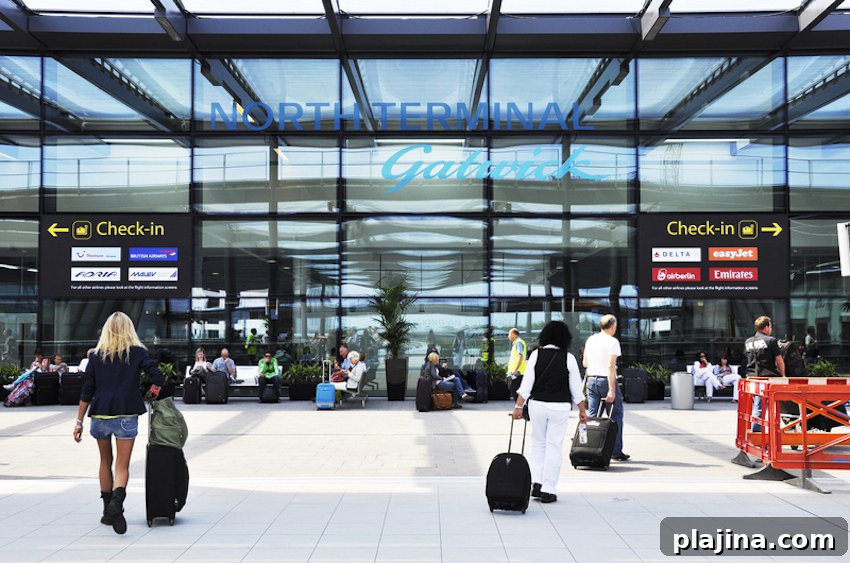
Gatwick Airport has teamed up with low-cost carrier easyJet to pilot new biometric boarding technology. The trial will involve about 10,000 easyJet passengers on European routes and gathers personal data during self-service bag drop. That data is then used to recognise travellers at automated self-boarding gates.
The system compares passport information, facial images and boarding passes to confirm that all elements match. The airport says the verification takes under 20 seconds. Passengers without checked luggage who wish to participate can use the facial scanners located at the entrance to the boarding gate area.
The trial will run for approximately three months and will cover 43 easyJet routes operating from Gatwick.
Chris Woodroofe, Gatwick’s chief operating officer, commented: “Gatwick prides itself on providing innovative solutions to enhance the passenger experience at every touch point. With the rate of growth we have experienced, it is essential we are able to find more efficient ways of processing passengers through the airport safely and securely. Self-boarding technology is the obvious next piece in the jigsaw following extensive investment in our automated check-in and security processing areas.”
The pilot aims to shorten boarding times and reduce queues by automating identity checks while maintaining security standards. By linking data captured at bag drop to the boarding area, the airport hopes to create a smoother, quicker flow through departure gates without replacing existing manual ID checks for those who prefer them. Participation remains voluntary, and passengers can opt out simply by using traditional boarding procedures.
Beyond convenience, the airport and carrier expect the biometric system to improve operational reliability. Faster verification at gates can help airlines maintain schedules and reduce delays caused by lengthy manual checks. The trial will also generate data on passenger acceptance and system performance, informing potential wider roll-out if results meet safety, privacy and efficiency benchmarks.
Gatwick emphasises that data collected during the trial will be handled in line with applicable data protection laws and the airport’s privacy policies. Collected data is used solely to verify identities for boarding and to support the operation of the trial; it is not repurposed for unrelated activities. Passengers taking part will be provided with clear information about how their data is used and how long it is retained.
If the pilot is successful, automated biometric boarding could be introduced more broadly across departures at Gatwick and adopted by other airlines, reducing the need for manual document checks while preserving security controls. For now, the trial represents a measured step toward easier, faster boarding for those travelling on participating easyJet flights from Gatwick.