Awash in haute-couture flair, world-famous restaurants, revelatory museums and iconic landmarks, Paris is widely regarded as one of the most magnificent cities in the world. But beyond beauty and culture, this industrious capital contributes more than 30 percent of France’s gross domestic product through a diverse economy that includes pharmaceuticals, cosmetics, aeronautics and digital systems. Paris also hosts 27 Top 500 corporate headquarters—more than any other city in Europe—and ranks among the world’s largest urban economies.
For business travelers, that economic strength translates into practical advantages: a robust transportation network, plentiful venues for meetings and entertaining, a wide range of lodging options and a workforce experienced with international visitors. These resources make it easy to combine productive work with the pleasures of the city.
Begin with transportation. Two large international airports make Paris accessible from nearly anywhere in the world. Once you’ve landed, the RER regional trains, the easy-to-navigate Metro and abundant taxis can have you in the city center within an hour of clearing immigration. Travel between districts is straightforward, letting you schedule meetings across the arrondissements with confidence.
Lodging choices are equally plentiful. Hotels are spread across Paris’s 20 arrondissements; selecting accommodation near the city center ensures quick access to most destinations via the Metro. If your agenda includes breakfast meetings, consider a larger hotel with a dedicated dining room where you can avoid crowded buffets and background noise. For example, Hôtel Ritz Paris offers L’Espadon, a bright dining room beneath a domed skylight that serves a full breakfast daily. Its location on Place Vendôme places you within easy reach of many business and cultural destinations. On the Left Bank, where boutique properties predominate, the full-service Hôtel Lutetia stands out after its restoration; its L’Orangerie offers a sophisticated breakfast menu that includes organic and gluten-free options.
If you prefer to discuss business over a meal later in the day, a midday lunch is usually more appropriate than dinner, which is often a more social occasion in France. Even at lunch, it’s tactful to reserve detailed negotiations or contract talk for later in the day; begin with conversation about culture, cuisine and shared interests, and avoid topics like politics or personal issues until a closer rapport has been established.
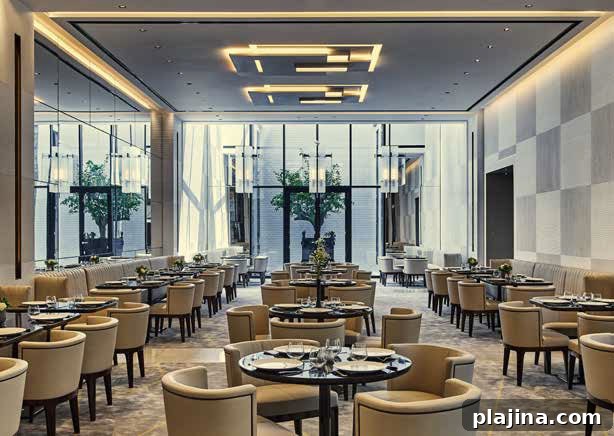
Hôtel Lutetia’s L’Orangerie © HÔTEL LUTETIA
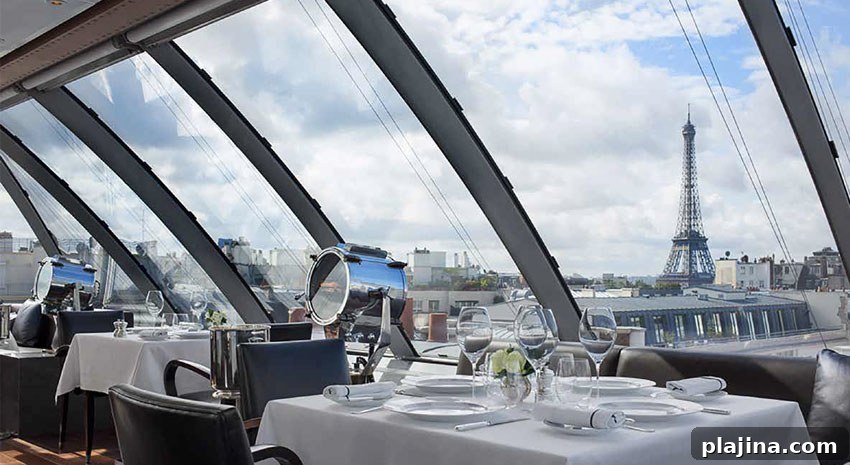
Reservations are essential at most Parisian restaurants. For a refined dining experience, Alain Ducasse’s restaurant at Le Meurice offers an elegant, Versailles-inspired setting with top-tier cuisine. For sweeping city views, the rooftop dining room at The Peninsula Hotel, L’Oiseau Blanc, provides a memorable backdrop of Paris lights. La Dame de Pic, led by chef Anne-Sophie Pic—one of the first women to receive three Michelin stars—delivers modernized French classics in a polished, comfortable setting; when possible, request a corner table for added privacy and a better vantage point.
Dinner in France tends to be a leisurely, multi-course affair that can last several hours and often includes wine pairings. After the host says bon appétit, diners savor each course at an unhurried pace. Bread is typically served as an accompaniment rather than an appetizer; it’s common to place your bread on the table beside your plate rather than nibbling it before the meal begins. Good table manners in France emphasize keeping both hands visible on the table; avoid resting elbows on the tablecloth.
Although many Parisian businesspeople speak English, making an effort to use a few French phrases—such as hello, please, thank you, nice to meet you and good evening—will be appreciated and viewed as a courtesy. When introducing yourself, give your first and last name and your professional title. Address colleagues as Monsieur or Madame until they invite you to use their first names.
One of the greatest benefits of a business trip to Paris is the opportunity to enjoy the city’s iconic sights during downtime. The Eiffel Tower, built in 1889 as a temporary structure, captivates from any distance and offers distinct perspectives from each of its three levels. From the top-floor balcony of the Musée d’Orsay, which occupies a former train station, the Seine’s graceful curve and the city’s rooftops unfold before you. Climbing to the viewing platform atop the Arc de Triomphe rewards visitors with a striking vista down the tree-lined Champs-Élysées. For a shorter cultural interlude between meetings, the Rodin Museum—a beautiful 18th-century townhouse—houses thousands of sculptures and drawings by Rodin as well as works by other masters, all set amid the boutiques and cafés of Saint-Germain-des-Prés on the Left Bank.