
When I first visited Hong Kong at 17, I could not read a single Chinese neon sign. Forty years later both the city and I have changed. Today I point my phone at unfamiliar characters, open a translation app, and the signs transform into plain English: Shoe Store. Office Supplies. Laundry. Dentist. Insurance Broker.
Arrivals feel less exotic now. The thrilling approach into the old Kai Tak Airport—once a dramatic, skyline-skimming descent—has been replaced by the routine landing at Chek Lap Kok Airport, built on reclaimed land away from the city. An expanded terminal and an additional runway under construction will boost capacity by 2030. Meanwhile, Kai Tak’s abandoned runway is being redeveloped into a mixed-use district with residential towers, a hospital, a cruise terminal and a 50,000-seat stadium.
© PIXELPROFESSIONAL
2019 | DREAMSTIME
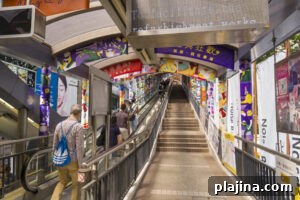
Buildable land has always been scarce in Hong Kong, one of the most densely populated places on Earth. Most people live on Hong Kong Island and the Kowloon peninsula, separated by Victoria Harbour. Much of the territory is steep and mountainous, and the contours show even among the skyscrapers. On Hong Kong Island, outdoor escalators help residents and visitors traverse some of the steepest streets.
Hong Kong’s value stems from its strategic position. For centuries it served as a gateway between South Asia and East Asia. In the 19th century it became a crucial trading hub for the British Empire, handling silk, tea, porcelain and, controversially, opium. To secure resources for the growing colony, Britain leased the New Territories in 1898 for 99 years; the lease’s 1997 expiration marked the end of British rule.
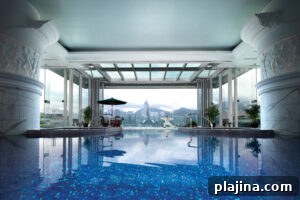
PHOTO: © SPA AT THE PENINSULA HONG KONG
Although Hong Kong is now part of China, it retained many distinct features under the “one country, two systems” arrangement, preserving its free-market economy and independent judiciary. British influences remain visible in street names, green post boxes, a tea culture, double-decker trams and buses, left-side driving and preserved historic buildings. The Peninsula Hong Kong, for example, still serves afternoon tea in its lobby as it has since 1928.
Over the decades the skyline has climbed higher, and the territory has been reshaped. Reclamation projects have altered shorelines and created new neighborhoods. One major development is the West Kowloon Cultural District, a 99-acre flat expanse jutting into Victoria Harbour that will include parks, museums, theaters, exhibition space and residences.
After four decades of visiting, I still do not pretend to fully understand Hong Kong. One truth stands out: this is a city defined by change.
CHECKING IN WITH CONNIE PONG
Director of Spa & Wellness, The Peninsula Hong Kong
How is the wellness sector evolving in Hong Kong?
Wellness in Hong Kong is shifting toward integrated, sustainable approaches as residents and visitors search for balance amid a fast-paced urban life. The Peninsula’s “Life Lived Best” program emphasizes three pillars: Physical Fitness, Mental Health and Nutrition, reflecting a broader trend toward holistic well-being.
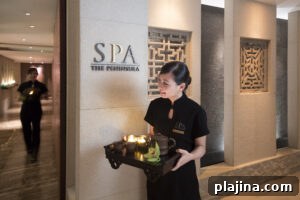
PHOTO: © SPA AT THE PENINSULA HONG KONG
What sets The Peninsula apart from other luxury hotels in Hong Kong?
The Peninsula Spa & Wellness Centre blends traditional Chinese therapies with modern techniques. Beyond classic spa treatments, the center offers relaxation rooms, hammam-style steam rooms, saunas, aromatherapy showers and cooling ice fountains. Exclusive treatments use premium products and include advanced facials and full-body therapies. The spa’s warm marble, rustic wood and textured granite create a calm refuge from the city.
What cultural differences should American visitors note?
Many local treatments emphasize holistic methods such as acupressure, meridian massage, Gua Sha and hot jade stone therapy, aimed at improving circulation and relieving tension. Western-style spa services focusing on relaxation and anti-aging are also common. Unlike the United States, tipping is not customary in Hong Kong; service charges are typically included, so extra tipping is not expected.
Which local attractions do you recommend?
For wellness and scenic variety, Victoria Peak offers panoramic views and hiking trails, while Repulse Bay provides a peaceful beach setting. Sai Kung Waterfront Park is ideal for outdoor activities and waterfront dining. Hidden trails and secluded beaches across the territory offer quiet spots to relax and recharge, making Hong Kong an appealing destination for nature lovers and wellness seekers.
DIVERSIONS
Before anything else, get an Octopus Card to prepay public transport, taxis and many shops and eateries. The card costs an initial $20 and can be topped up at stations and via apps.
Getting around is part of the experience. The Star Ferry across Victoria Harbour between Kowloon and Hong Kong Island doubles as an inexpensive sightseeing cruise. On Hong Kong Island, ride a ding-ding—one of the iconic double-decker electric trams running since 1904.
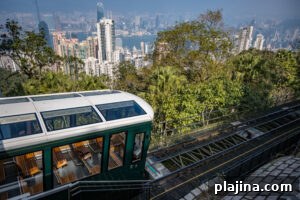
PHOTO:
© DANICA CHANG
| DREAMSTIME.COM,
On clear days, Victoria Peak rewards visitors with sweeping views—accessible by the Peak Tram funicular, by bus or on foot. The Ngong Ping 360 cable car crosses Lantau Island’s wild landscape; choose a glass-floor cabin if you want a thrill. Each evening at 8 p.m., the Symphony of Lights—an elaborate multimedia show involving 43 buildings on Hong Kong Island—can be best viewed from Kowloon’s Avenue of Stars.
LODGING
OASIS AURUM 181
Located on the waterfront of Hong Kong Island, this hotel offers spacious rooms with panoramic views of Victoria Harbour (city-view Urban Rooms are a lower-cost option).
181 Connaught Road W., Sai Wan, Hong Kong
$$$
THE PENINSULA HONG KONG
A long-standing luxury icon, the Peninsula mixes its original colonial building with a modern tower designed in the same classic style. Afternoon tea remains a signature tradition.
Salisbury Road, Kowloon, Hong Kong
$$$$
THE FLEMING
A stylish boutique hotel in Wan Chai celebrating industrial-chic design inspired by the cross-harbor Star Ferry.
41 Fleming Road, Wan Chai, Hong Kong
$$$
DINING
CAFÉ HUNAN
A local chain focused on spicy Hunan cuisine; the original outlet is in Western District.
420-424 Queen’s Road W., Western District, Hong Kong
$$
ENG KEE NOODLE SHOP
A family-run, no-frills spot serving authentic Cantonese noodle soup—popular for dining in or taking out.
32 High St., Sai Ying Pun, Hong Kong
$
FORUM
A Cantonese institution since 1977, Forum offers high-end Cantonese dining and has earned top culinary recognition.
1/F Sino Plaza, 255-257 Gloucester Road, Causeway Bay, Hong Kong
$$$$
JUST THE FACTS
Time zone: GMT +8
Phone code: 852
Currency: Hong Kong dollar
Key industries: Financial services, trade and logistics, tourism
COMING AND GOING
U.S. citizens must travel with a passport valid at least one month beyond the date of departure, show proof of sufficient funds and proof of onward travel. Visitors from the U.S. may stay in Hong Kong up to 90 days without a visa. A separate visa is required for travel to mainland China.
OFFICIAL LANGUAGE
English and Yue Chinese (Cantonese)
INFO TO GO
International flights arrive at Hong Kong International Airport (Chek Lap Kok), about 20 miles west of Kowloon. Road tunnels under Victoria Harbour connect the mainland to Hong Kong Island; you can also cross by metro or ferry. The airport train reaches downtown in approximately 24 minutes with stops in Kowloon and on Hong Kong Island.