The air above the shallow fire pit shimmered from heat rising off glowing rocks and coals. Young men from Beqa, wearing ceremonial grass skirts and floral leis, used sticks to arrange the stones while an elder issued ritual commands in an old Melanesian dialect.
When the rocks were ready, the men formed a line by the pit. The elder began a slow, resonant chant, and each man walked across the white-hot embers. Some paused in the center with arms outstretched, part of ritual tradition and part dramatic pose for observers. It was a daring spectacle that made my feet twitch in my sandals.
Beqa’s firewalkers have a reputation across the South Pacific for their bravery. There is no definitive scientific explanation for how members of the Sawau tribe can traverse scorching stones without burning their feet. According to local legend, a Vu, or spirit god, taught the great Sawau warrior Tui na Iviqalita the art of firewalking, and his descendants continue to pass the practice on. Firewalkers observe strict pre-ceremony rules: no female contact and abstaining from certain foods for three weeks beforehand, or they risk serious burns.
The firewalking was followed by a meke — a traditional Fijian song-and-dance ceremony — and a customary cup of kava. Kava is a traditional drink made from the dried roots of the mildly narcotic Piper methysticum shrub. It has a strong, earthy taste, but visitors take a small sip as a gesture of respect to their hosts.
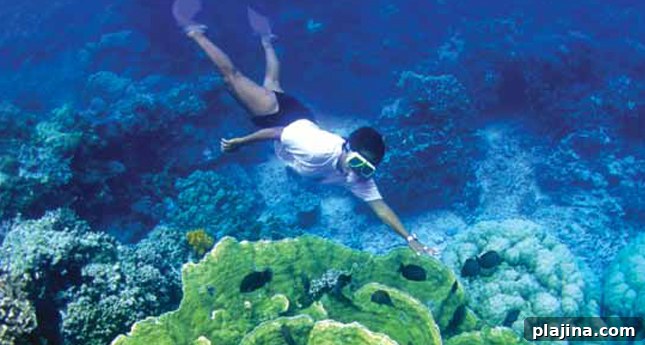
Beqa (pronounced “mben-ga”) is not only famous for firewalking. The island is also home to Beqa Lagoon, one of Fiji’s premier dive locations. Think of it as a vast, natural aquarium—roughly 100 square miles—fringed by spectacular reef. The lagoon is celebrated for its clusters of pink, red and purple soft corals and dense schools of tropical fish, but its main attractions are electrifying shark and manta dives.
After attempting, with little success, to match the dancers’ moves at the kava ceremony, I put on my dive gear and joined Beqa Adventure Divers for a shark dive. Unlike many shark dives where only one or two species appear, Beqa’s sites regularly attract eight different shark species, including tiger sharks up to 15 feet and bull sharks up to 10 feet. We descended into calm blue water to about 100 feet and settled on a sandy shelf amid vibrant corals. Giant trevally jacks and barracuda circled above as if anticipating the show. A curious hammerhead inspected us briefly before slipping away as other sharks arrived.
Within minutes, dozens of gray, blacktip and whitetip sharks swam around us, sometimes within an arm’s length. When the shark feeder opened his container of fish scraps, the scene erupted: sharks swooped like hungry birds to snatch fish heads and tails while trevally darted in to nab smaller bits. The frenzy lasted about 20 minutes, then most sharks vanished. Scanning the blue, our dive master tapped his tank and pointed: two large bull sharks and a massive tiger shark were approaching from the depths.
There is clearly a hierarchy beneath the waves. The tiger shark eased in and took a fish head from the feeder, followed by the two bulls. Sated with only a snack, the large predators soon lost interest and swam off. As the big sharks departed, the smaller, less selective species returned, hungrier than before.
My day on Beqa—a one-hour boat ride from Viti Levu—was one of many memorable experiences across Fiji’s 332 islands. Many travelers choose to relax on a single island, but island hopping reveals a fuller picture of Fiji’s cultural and natural variety.
Stepping off the plane, you quickly notice that Fiji’s people reflect diverse roots. About half the population are indigenous Fijians (Melanesian) and about half are Indo-Fijian, descendants of Indian indentured workers brought by the British in the late 1800s to work sugarcane fields. For the most part, these communities coexist peacefully and contribute to Fiji’s rich cultural fabric.
Most visitors begin on Viti Levu, Fiji’s largest island, often called the “mainland.” Suva, on the wetter east coast, is the cosmopolitan capital and home to roughly half the country’s population. On the drier west coast is Nadi, where the main international airport sits and where resort areas such as Denarau Island concentrate.
Suva sits in a broad bay and is the South Pacific’s largest city — an excellent starting point for exploring Fiji. Its mix of modern and colonial architecture and sizable Indian community give parts of Suva a colonial Raj feel. Near the central square stand the 1909 Suva City Library and the Parliament Buildings, with a statue of Ratu Cakobau, the chief who forged a united Fijian kingdom in 1871. Thurston Gardens houses the Fiji Museum, where exhibits of musical instruments, cooking tools and war clubs illuminate the islands’ past and cultural diversity.
Nadi, Fiji’s third-largest city, serves as a gateway for many travelers. The drier west coast hosted most of the island’s upscale resorts, concentrated between the airport and Nadi Town, and along Denarau Island. Mangrove forests line portions of the coastline, so not every stretch here matches the picture-postcard beaches you might expect, but Nadi offers excellent shopping and dining and is a convenient place to acclimatize before island excursions.
One of Nadi’s standout attractions is the Sri Siva Subramaniya Swami Temple, the largest Hindu temple in the South Pacific. Completed in the early 1990s and crafted in traditional Dravidian style, the temple’s ornate statues were created by Indian artisans and underscore Fiji’s cultural diversity.
About 40 minutes south of Nadi, the Coral Coast features Natadola Beach, a secluded mile-long arc of soft white sand ideal for swimming, horseback rides at sunset and quiet relaxation. For souvenirs and handicrafts, Jack’s of Fiji has multiple outlets on Viti Levu selling tapa cloth, bula shirts, sulu wraps and traditional items like lali masks and carved war clubs; larger stores in Nadi also sell black pearl and gold jewelry.
Pacific Harbour’s Arts Village Cultural Centre offers immersive cultural experiences. A log drum summons visitors to board a drua, a double-hulled canoe, and travel through mangrove-lined canals to a recreated 18th-century fortress village. Costumed performers demonstrate traditional crafts and activities—dyeing tapa, spear fishing, basket weaving—and perform song and dance.
Just offshore from Nadi, the 20 Mamanuca Islands feature many luxury resorts and postcard-perfect beaches. With more than 300 sunny days a year on average, the Mamanucas are popular for snorkeling, diving, deep-sea fishing and windsurfing, with regular catamaran services from Nadi.
To the north, the Yasawa Islands form a string of scenic, largely undeveloped islands with some of Fiji’s best beaches. Hillier and greener than the Mamanucas, the Yasawas were filming locations for both the original Blue Lagoon and the 1980 remake. Daily high-speed ferries and cruise options make them easy to reach.
For a leisurely day trip, Captain Cook Cruises sails the brigantine Ra Marama to Tivua Island. Ringed by white sand and coral reefs, Tivua is perfect for snorkeling and sunbathing. Tours typically include a substantial buffet featuring local dishes such as kakoda—marinated fish in coconut cream and lime—barbecued chicken and tropical drinks.
Fiji’s cultural diversity and warm, welcoming people make it an ideal place to unwind. And along the way you’ll learn the local philosophy captured by the phrase Singa na lenga — “No problem.”
Info To Go
Air Pacific (now Fiji Airways) offers daily flights from many U.S. gateways into Nadi International Airport (NAN); other international carriers also provide service. It’s roughly a 20-minute drive from the airport to Denarau Island resorts; taxis and shuttle buses are readily available. Domestic carriers offer regular flights to many outer islands.
Lodging
Sheraton Fiji Resort & Villas
This luxury complex shares facilities with neighboring Sheraton and Westin properties, including multiple pools and a full-service spa. Denarau Island South, P.O. Box 9761, Nadi $$$$
Viwa Island Resort
An intimate resort in the Yasawa chain with traditional thatched bures and vaulted interiors for a secluded island experience. Viwa Island, Yasawa Islands $$$$
Vomo Fiji Island Resort
Located on a private Mamanuca isle, Vomo features villas with sun decks steps from the beach and personalized service. P.O. Box 5650, Lautoka $$$$
Dining
Bonefish Seafood Restaurant
A top seafood spot offering platters with lobster, crab, prawns, tuna and squid. Port Denarau, Denarau Island $$$
Indigo Indian & Asian Restaurant & Bar
Noted for Indian and Asian specialties like crab masala and lamb rogan josh. Port Denarau, Denarau Island $$$
Outrigger on the Lagoon
Hosts meke performances and a lovo (luau) on Tuesday nights, often capped by a Beqa firewalker demonstration. Sigatoka, Viti Levu $$$$
Weblinks
Arts Village Cultural Centre
Beqa Adventure Divers
Blue Lagoon Cruises
Captain Cook Cruises
Fiji Museum
Jack’s of Fiji
Tourism Fiji