
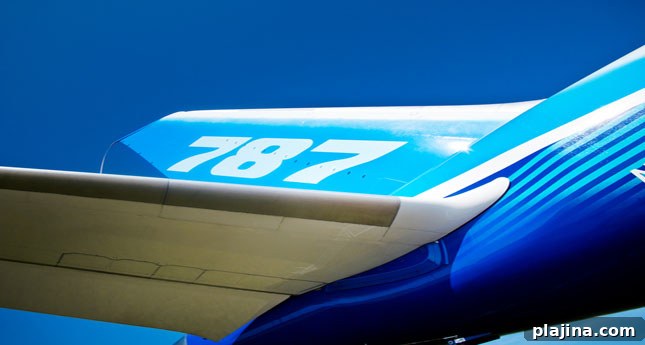
The Federal Aviation Administration has approved a Boeing plan to address battery problems on the 787 Dreamliner. Boeing will begin testing the proposed fixes while the FAA continues its safety review.
Boeing’s plan consists of three main elements: redesigned battery components to reduce the risk of failure; more rigorous testing during the manufacturing process; and a containment system that prevents an overheated battery from impacting surrounding aircraft systems. Each stage of the plan must be successfully completed and validated before the FAA will authorize the resumption of commercial 787 operations.
“Our team has been working around the clock to understand the issues and develop a solution based on extensive analysis and testing following the events that occurred in January,” said Jim McNerney, Boeing chairman, president and CEO. “The FAA’s approval is an important milestone toward returning the fleet to service and fulfilling the promise of the 787.”
The approved measures focus on preventing battery failures from occurring and, if they do, limiting their impact. The redesign targets the battery’s internal components and connections to reduce the likelihood of thermal runaway. Enhanced production testing adds multiple inspection points and stress tests to catch defects before aircraft leave the factory. The containment solution surrounds the battery with insulation and shielding designed to direct heat and gases away from nearby systems, minimizing the chance of secondary damage.
Regulators and Boeing will use the upcoming testing period to validate these changes in real-world conditions and through simulated fault scenarios. The FAA has emphasized that verification must demonstrate a high level of confidence in both the preventive and protective measures. Only when regulators are satisfied that the modifications meet safety standards will commercial 787 flights be permitted to resume.
The industry and passengers alike are watching the process closely, as the 787 Dreamliner is a key long-range aircraft for many airlines. Restoring confidence in the aircraft’s electrical and battery systems is essential for its return to service. Boeing has committed resources to thorough analysis and transparent reporting of test results as they become available to regulators.
For now, flights will remain suspended until all required testing and validation steps are complete and approved. The FAA’s conditional approval to start Boeing’s testing program represents progress in a methodical, safety-focused approach to resolving the Dreamliner’s battery concerns.