
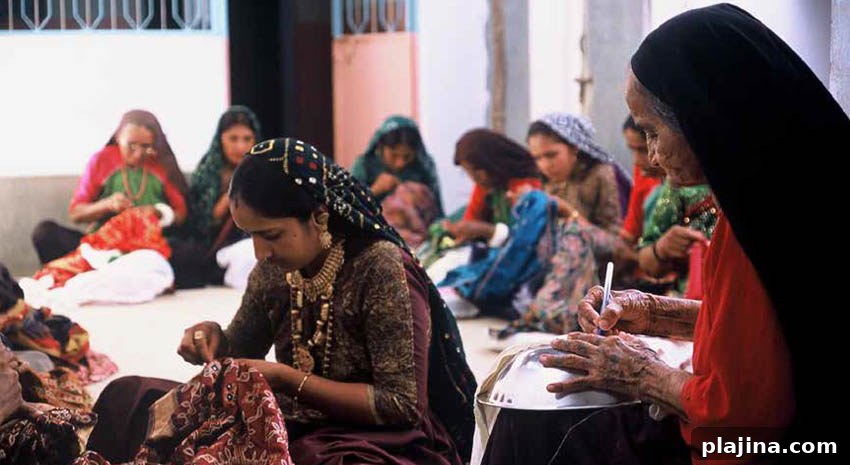
ROOTED IN HISTORY, with a Gujarati culture that spans millennia, Ahmedabad—often called “Amdavad”—lies in India’s western state of Gujarat at a cultural crossroads shaped by Persian and Indian influences.
Travelers seeking a calmer alternative to the bustle of Mumbai or Delhi arrive in this compact, dynamic city and discover a place where family life and traditional values form the backbone of daily life.
Gujarat is largely vegetarian, and its cultural norms reflect that preference. For many years the state was dry, and alcohol was difficult to find. Recently the rules have been relaxed for visitors: a limited number of hotels may now serve alcohol to guests who present valid photo ID and travel documents.
Ahmedabad is nicknamed the “Manchester of the East” for its historic textile industry along the Sabarmati River. The city also holds national significance as the home of Mahatma Gandhi and an important center of the Indian independence movement. In 1930, Gandhi launched the Salt March from his ashram in Ahmedabad to the coastal village of Dandi, a defining event in modern Indian history.
To make the most of the city’s layered history, consider a guided tour with an experienced operator who can provide context and access to heritage sites. Local guides and specialized tour companies develop custom itineraries that explore Ahmedabad’s textile legacy, architecture, and cultural traditions.
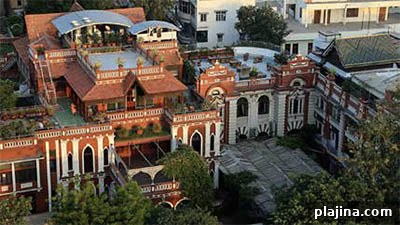
The House of MG © ILONA KAUREMSZKY
A great place to begin exploring is The House of MG, a beautifully restored mansion that once belonged to a prosperous textile merchant. Now a boutique hotel in the old city, it preserves Old World charm and attentive service. The hotel is a common starting point for heritage walks and is known for Agashiye, its rooftop restaurant, where diners enjoy traditional Gujarati thali beneath the open sky.
Start a heritage walk at Sidi Saiyyed Mosque, built in 1573 and famed for its intricately carved Tree of Life jali (lattice window), an unofficial emblem of Ahmedabad. From there, walk south along Bhadra Road to Bhadra Fort. This 600-year-old fort stands within the walled Old City and reflects elements of the early Mughal era. Nearby is the colorful Bhadrakali Mandir, devoted to the goddess Bhadrakali Mata. A short walk east brings you to the Jama Masjid, considered the city’s finest mosque, constructed in 1423 by Sultan Ahmed Shah, Ahmedabad’s founder.
Around the Old City, life pulses with commercial energy. Narrow pols—traditional lanes—feed into bustling bazaars overflowing with color, sound and activity. The streets are a vivid tableau of daily life, where vendors, shoppers, and the occasional cart or animal move amid centuries-old architecture.
Finish this neighborhood tour with a visit across the Sabarmati River to Gandhi’s Sabarmati Ashram. The ashram, where Gandhi lived and developed his philosophy of nonviolence, is now a museum and a tranquil riverside retreat. It offers insight into Gandhi’s life and work and provides a peaceful counterpoint to the city’s lively markets and historic streets.