
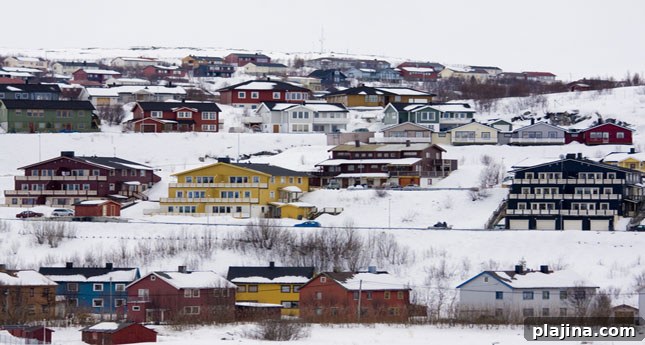
“Kirkenes was the second-most important town in Europe during World War II,” guide Ronny Ostrem said as he unlocked the metal door of the Andersgrotta air-raid shelter. Positioned just 124 miles from Russia’s ice-free Murmansk Harbor, this small city in Finnmark—Norway’s largest and northernmost county—earned the grim distinction of being one of Europe’s most-bombed towns. It suffered fewer attacks than Malta but more than Dresden.
“Terror came three times each night,” Ostrem recalled, adding a personal detail: “My mother said she didn’t take off her clothes in the night for three years.” Kirkenes’ strategic importance to the Allied operations prompted Hitler to station over 40,000 troops there with a single objective: to control the harbor and town. The Soviet forces struck back repeatedly.
“The air-raid siren sounded more than 1,000 times, with 320 confirmed attacks, each involving more than 100 planes; the raids lasted about 12–15 minutes,” Ostrem said. Each time, residents fled to cave-like tunnels designed by engineer Anders Elvebakk and carved into a hillside at the city center. Those shelters, including the Andersgrotta, provided protection during the intense bombing campaigns.
The Red Army liberated Kirkenes on October 25, 1944, but the German forces had already retreated and systematically burned the town behind them. In the aftermath, survivors carried the physical and emotional scars of occupation and destruction. As Ostrem noted, people chose to focus on rebuilding and the future rather than dwell on the trauma they had endured.